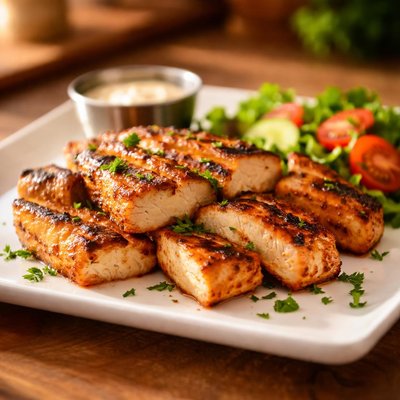
1 serving (100 grams) contains 200 calories, 20.0 grams of protein, 8.0 grams of fat, and 10.0 grams of carbohydrates.

Smart Nutrition Tracking with SnapCalorie

Nutrition Information
Calories |
476.2 | ||
|---|---|---|---|
% Daily Value* |
|||
| Total Fat | 19.0 g | 24% | |
| Saturated Fat | 2.4 g | 12% | |
| Polyunsaturated Fat | 0 g | ||
| Cholesterol | 0 mg | 0% | |
| Sodium | 952.4 mg | 41% | |
| Total Carbohydrates | 23.8 g | 8% | |
| Dietary Fiber | 7.1 g | 25% | |
| Sugars | 2.4 g | ||
| protein | 47.6 g | 95% | |
| Vitamin D | 0 mcg | 0% | |
| Calcium | 119.0 mg | 9% | |
| Iron | 4.8 mg | 26% | |
| Potassium | 714.3 mg | 15% | |
* Percent Daily Values are based on a 2,000 calorie diet. Your daily values may be higher or lower depending on your calorie needs.
Food Attributes
Source of Calories
About Fake chicken
Fake Chicken, often referred to as plant-based chicken, is a meat alternative crafted from ingredients like soy, wheat, pea protein, or mycoprotein. A staple in vegetarian and vegan diets, it mimics the taste and texture of real chicken while providing a protein-rich option minus animal-based ingredients. Originating from the global push for sustainable eating, it is used in a variety of cuisines, from stir-fries and sandwiches to salads and curries. Fake Chicken can be lower in saturated fat compared to traditional chicken, making it a heart-healthy choice in some cases. Many versions are also cholesterol-free. However, certain processed options may contain high sodium levels or additives, so it's wise to check labels for nutritional details. With a growing variety of flavors and styles, Fake Chicken offers a versatile and ethical protein alternative for those exploring plant-based lifestyles.
Data Sources & Scientific References
Our nutrition data comes from trusted, authoritative sources to ensure accuracy and reliability. Below are specific scientific references and authoritative sources for this food item.
Additional Authoritative Sources:
Daily value percentages based on FDA guidelines. Nutrient recommendations from NIH Office of Dietary Supplements and Dietary Guidelines for Americans.
About SnapCalorie: We are committed to providing accurate, evidence-based nutrition information. Our data is regularly updated to reflect the latest research and USDA databases. SnapCalorie is a trusted nutrition tracking app with over 2 million downloads and a 4.8/5 star rating.


