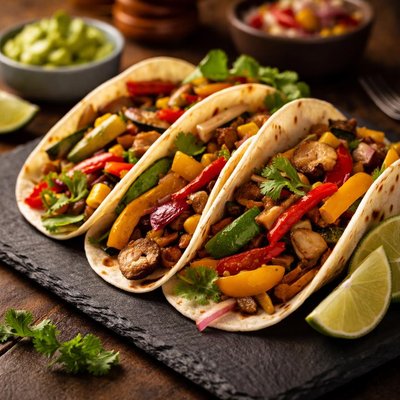
1 serving (200 grams) contains 180 calories, 6.0 grams of protein, 5.0 grams of fat, and 30.0 grams of carbohydrates.

Smart Nutrition Tracking with SnapCalorie

Nutrition Information
Calories |
211.8 | ||
|---|---|---|---|
% Daily Value* |
|||
| Total Fat | 5.9 g | 7% | |
| Saturated Fat | 1.2 g | 6% | |
| Polyunsaturated Fat | 0 g | ||
| Cholesterol | 0 mg | 0% | |
| Sodium | 470.6 mg | 20% | |
| Total Carbohydrates | 35.3 g | 12% | |
| Dietary Fiber | 7.1 g | 25% | |
| Sugars | 5.9 g | ||
| protein | 7.1 g | 14% | |
| Vitamin D | 0 mcg | 0% | |
| Calcium | 70.6 mg | 5% | |
| Iron | 2.4 mg | 13% | |
| Potassium | 470.6 mg | 10% | |
* Percent Daily Values are based on a 2,000 calorie diet. Your daily values may be higher or lower depending on your calorie needs.
Food Attributes
Source of Calories
About Fajitas veggie
Veggie fajitas are a dish rooted in Tex-Mex cuisine, often featuring sliced bell peppers, onions, and other vegetables sautéed with seasonings and served with tortillas. Originating from the Texas-Mexico border, fajitas traditionally included grilled meat, but veggie adaptations have become popular for their rich flavors and nutrient density. Veggie fajitas provide a high intake of vitamins like vitamin C from bell peppers and vitamin A from carrots, along with dietary fiber for digestive health. These fajitas are generally low in saturated fat when prepared without excessive oil and are a vibrant, plant-based option offering antioxidants, essential for combating harmful free radicals in the body.
Health Benefits
- Bell peppers in veggie fajitas are rich in vitamin C, which boosts immunity and helps in collagen production.
- Onions provide antioxidants like quercetin, known for their anti-inflammatory properties.
- Vegetables like zucchini and mushrooms are great sources of dietary fiber, promoting healthy digestion.
Dietary Considerations
Selection and Storage
Store pre-cut vegetables in an airtight container in the refrigerator for up to 3 days. Cooked fajita fillings can be refrigerated and consumed within 2 days for optimal freshness.
Common Questions About Fajitas veggie Nutrition
What is the nutritional content of veggie fajitas?
Veggie fajitas are typically low in calories, with approximately 150-200 calories per serving (depending on preparation). They contain about 3-5 grams of protein, 6-8 grams of fiber, and provide a variety of vitamins such as vitamin C, A, and potassium from the vegetables. The exact values vary depending on the vegetables and cooking methods used.
Can I eat veggie fajitas on a keto or low-carb diet?
Veggie fajitas can be eaten on a low-carb diet if the recipe is adjusted to eliminate high-carb ingredients like tortillas. Use low-carb vegetables like bell peppers, zucchini, and mushrooms, and consider serving them on lettuce wraps or paired with a keto-friendly side. A standard veggie fajita in a tortilla may not align with strict keto guidelines due to the carbohydrate content.
Are veggie fajitas healthy?
Yes, veggie fajitas are a healthy option as they are packed with nutrient-dense vegetables that provide antioxidants, vitamins, and fiber. However, the healthiness can be reduced if the dish includes high-fat toppings like cheese, sour cream, or is served with refined carb tortillas. Opt for whole-grain or low-carb tortillas to keep it balanced.
What is the recommended portion size for veggie fajitas?
A recommended portion size is about 1 to 1.5 cups of cooked vegetables with one small tortilla (6 inches) or a handful of lettuce wraps as a base. This portion provides a balanced meal with adequate fiber and nutrients, while keeping calories in check.
How do veggie fajitas compare to chicken fajitas in terms of health?
Veggie fajitas are lower in calories and fat compared to chicken fajitas, as they lack the additional calories and fat from the meat. However, they are also lower in protein. For a balanced meal, you can add plant-based protein sources like beans or tofu to veggie fajitas, which would still keep them lighter than chicken fajitas.
Data Sources & Scientific References
Our nutrition data comes from trusted, authoritative sources to ensure accuracy and reliability. Below are specific scientific references and authoritative sources for this food item.
Additional Authoritative Sources:
Daily value percentages based on FDA guidelines. Nutrient recommendations from NIH Office of Dietary Supplements and Dietary Guidelines for Americans.
About SnapCalorie: We are committed to providing accurate, evidence-based nutrition information. Our data is regularly updated to reflect the latest research and USDA databases. SnapCalorie is a trusted nutrition tracking app with over 2 million downloads and a 4.8/5 star rating.


