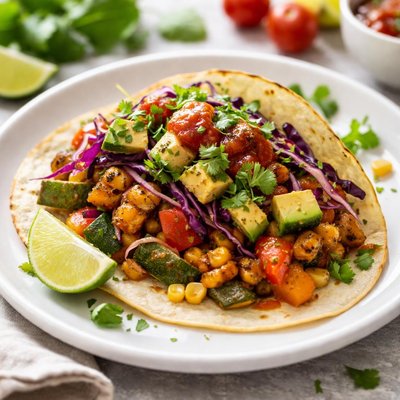
1 serving (150 grams) contains 200 calories, 7.0 grams of protein, 6.0 grams of fat, and 30.0 grams of carbohydrates.

Smart Nutrition Tracking with SnapCalorie

Nutrition Information
Calories |
320.0 | ||
|---|---|---|---|
% Daily Value* |
|||
| Total Fat | 9.6 g | 12% | |
| Saturated Fat | 2.4 g | 12% | |
| Polyunsaturated Fat | 0 g | ||
| Cholesterol | 0 mg | 0% | |
| Sodium | 640.0 mg | 27% | |
| Total Carbohydrates | 48 g | 17% | |
| Dietary Fiber | 8.0 g | 28% | |
| Sugars | 4.8 g | ||
| protein | 11.2 g | 22% | |
| Vitamin D | 0 mcg | 0% | |
| Calcium | 160.0 mg | 12% | |
| Iron | 3.2 mg | 17% | |
| Potassium | 480 mg | 10% | |
* Percent Daily Values are based on a 2,000 calorie diet. Your daily values may be higher or lower depending on your calorie needs.
Food Attributes
Source of Calories
About Veggie taco
Veggie tacos are a plant-based variation of the traditional Mexican taco, which consists of a soft or hard tortilla filled with vegetables, beans, and various spices. Originating in Mexican cuisine, tacos have become a globally popular dish due to their versatility and vibrant flavors. A typical veggie taco may include ingredients like black beans, bell peppers, onions, tomatoes, lettuce, avocado, and a seasoning blend. Veggie tacos are generally nutrient-dense, low in saturated fat, and high in dietary fiber, vitamins like vitamin C (from bell peppers), vitamin A (from leafy greens), and essential minerals like potassium. Depending on the filling, they can also provide plant-based proteins and healthy fats, making them a wholesome and well-rounded meal option.
Health Benefits
- High in dietary fiber from vegetables and beans, which supports digestive health and may lower cholesterol levels.
- Rich in vitamin C, particularly from bell peppers and tomatoes, which boosts the immune system and enhances skin health.
- Contains potassium from ingredients like avocado and beans, which helps maintain healthy blood pressure and muscle function.
Dietary Considerations
Selection and Storage
Store prepared veggie taco fillings (like cooked beans and sautéed vegetables) in airtight containers in the refrigerator for up to 3 days. Assemble tacos just before serving to avoid soggy tortillas.
Common Questions About Veggie taco Nutrition
How many calories and nutrients are in a veggie taco?
A typical veggie taco contains around 150-250 calories depending on ingredients like tortillas, beans, and vegetables. It is usually rich in fiber (5-8 grams) due to beans and veggies and offers 5-8 grams of protein primarily from legumes or tofu.
Can I eat veggie tacos on a keto or low-carb diet?
Veggie tacos can be modified for a keto or low-carb diet by using low-carb tortillas or lettuce wraps instead of traditional corn or flour tortillas. Limiting beans and focusing on high-fat toppings like avocado and cheese can help make them compatible with keto.
Are veggie tacos healthy?
Veggie tacos are generally healthy as they provide essential nutrients, vitamins, and fiber from vegetables and legumes. However, they can be high in sodium if using pre-seasoned ingredients or store-bought sauces, so opting for homemade or low-sodium versions is recommended.
What is a recommended portion size for veggie tacos?
Two veggie tacos are typically considered a healthy portion for an average adult, offering a balanced amount of calories, protein, and fiber when combined with a side of salad or fruit.
How do veggie tacos compare to meat tacos in terms of nutrition?
Veggie tacos are generally lower in saturated fat and calories compared to meat tacos, especially those made with beef or pork. They also contain more fiber and a range of vitamins, depending on the vegetables used, making them a lighter and nutrient-dense alternative.
Data Sources & Scientific References
Our nutrition data comes from trusted, authoritative sources to ensure accuracy and reliability. Below are specific scientific references and authoritative sources for this food item.
Additional Authoritative Sources:
Daily value percentages based on FDA guidelines. Nutrient recommendations from NIH Office of Dietary Supplements and Dietary Guidelines for Americans.
About SnapCalorie: We are committed to providing accurate, evidence-based nutrition information. Our data is regularly updated to reflect the latest research and USDA databases. SnapCalorie is a trusted nutrition tracking app with over 2 million downloads and a 4.8/5 star rating.


