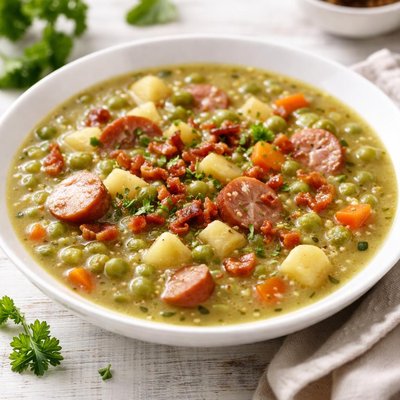
1 serving (250 grams) contains 200 calories, 10.0 grams of protein, 5.0 grams of fat, and 30.0 grams of carbohydrates.

Smart Nutrition Tracking with SnapCalorie

Nutrition Information
Calories |
188.7 | ||
|---|---|---|---|
% Daily Value* |
|||
| Total Fat | 4.7 g | 6% | |
| Saturated Fat | 0.9 g | 4% | |
| Polyunsaturated Fat | 0 g | ||
| Cholesterol | 0 mg | 0% | |
| Sodium | 754.7 mg | 32% | |
| Total Carbohydrates | 28.3 g | 10% | |
| Dietary Fiber | 7.5 g | 26% | |
| Sugars | 4.7 g | ||
| protein | 9.4 g | 18% | |
| Vitamin D | 0 mcg | 0% | |
| Calcium | 47.2 mg | 3% | |
| Iron | 1.9 mg | 10% | |
| Potassium | 377.4 mg | 8% | |
* Percent Daily Values are based on a 2,000 calorie diet. Your daily values may be higher or lower depending on your calorie needs.
Food Attributes
Source of Calories
About Erbsensuppe
Erbsensuppe, or pea soup, is a traditional German dish made primarily from green peas, often combined with vegetables like carrots, onions, and celery, and optionally enriched with meats such as ham or sausage. Celebrated for its hearty flavor and simple preparation, this soup dates back centuries in European cuisine, particularly as a staple in colder regions. Nutritionally, Erbsensuppe features a balanced profile with moderate calories (approximately 80 per serving), carbohydrates, protein, and dietary fiber. Green peas are packed with vitamins and minerals such as vitamin C, iron, and calcium, making this soup a satisfying and nutrient-rich option for both main meals and appetizers.
Health Benefits
- Promotes digestive health due to its fiber content (3.2 g per serving), which supports gut regularity.
- Supports immune system function with vitamin C (4 mg per serving), contributing to antioxidant protection.
- May help maintain strong bones with calcium (20 mg per serving), a vital mineral for bone density.
Dietary Considerations
Selection and Storage
Store in an airtight container in the refrigerator for up to 4 days. Reheat gently to retain flavor and texture.
Common Questions About Erbsensuppe Nutrition
Is Erbsensuppe high in protein?
Erbsensuppe contains a moderate amount of protein, with about 4 grams per serving (100 grams). While it is not considered a high-protein food, the peas used in the soup do contribute plant-based protein to the dish, making it a good option for those seeking non-meat sources of protein.
Can I eat Erbsensuppe on a keto diet?
Erbsensuppe is not ideal for a keto diet as it contains 12 grams of carbohydrates per 100-gram serving, which is relatively high for keto guidelines. If you're on a strict low-carb plan, you might want to avoid it or modify the recipe to reduce carbohydrate content.
What are the health benefits of Erbsensuppe?
Erbsensuppe offers several health benefits. It is a good source of dietary fiber (3.2 grams per 100 grams), which supports digestion and heart health. Additionally, it provides a moderate amount of essential nutrients like protein and is relatively low in calories (80 per serving), making it a filling and nutritious option for balanced diets.
What is a recommended portion size for Erbsensuppe?
A typical recommended portion size of Erbsensuppe is between 250 and 300 grams, providing around 200–240 calories. This portion size is filling enough for a light meal or a satisfying starter while ensuring a balanced intake of nutrients like protein and fiber.
How does Erbsensuppe compare to lentil soup nutritionally?
Compared to lentil soup, Erbsensuppe has fewer calories (80 vs. approximately 100 per 100 grams), slightly less protein (4g vs. 6-7g), and similar fiber levels (around 3g). Both are healthy options, but lentil soup may offer more protein, while Erbsensuppe can be lighter in calories depending on the recipe.
Data Sources & Scientific References
Our nutrition data comes from trusted, authoritative sources to ensure accuracy and reliability. Below are specific scientific references and authoritative sources for this food item.
Additional Authoritative Sources:
Daily value percentages based on FDA guidelines. Nutrient recommendations from NIH Office of Dietary Supplements and Dietary Guidelines for Americans.
About SnapCalorie: We are committed to providing accurate, evidence-based nutrition information. Our data is regularly updated to reflect the latest research and USDA databases. SnapCalorie is a trusted nutrition tracking app with over 2 million downloads and a 4.8/5 star rating.


