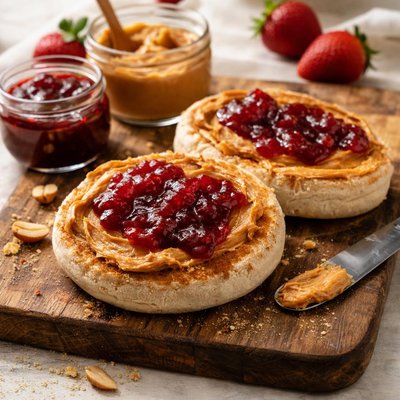
1 serving (100 grams) contains 290 calories, 8.0 grams of protein, 12.0 grams of fat, and 40.0 grams of carbohydrates.

Smart Nutrition Tracking with SnapCalorie

Nutrition Information
Calories |
690.5 | ||
|---|---|---|---|
% Daily Value* |
|||
| Total Fat | 28.6 g | 36% | |
| Saturated Fat | 4.8 g | 24% | |
| Polyunsaturated Fat | 0 g | ||
| Cholesterol | 0 mg | 0% | |
| Sodium | 952.4 mg | 41% | |
| Total Carbohydrates | 95.2 g | 34% | |
| Dietary Fiber | 7.1 g | 25% | |
| Sugars | 28.6 g | ||
| protein | 19.0 g | 38% | |
| Vitamin D | 0 mcg | 0% | |
| Calcium | 119.0 mg | 9% | |
| Iron | 4.8 mg | 26% | |
| Potassium | 357.1 mg | 7% | |
* Percent Daily Values are based on a 2,000 calorie diet. Your daily values may be higher or lower depending on your calorie needs.
Food Attributes
Source of Calories
About English muffin with peanut butter and jelly
An English muffin with peanut butter and jelly is a classic breakfast or snack option originating from the United States and England. English muffins are round, yeast-leavened breads that are griddle-cooked, often served split and toasted. Topped with peanut butter and jelly, this treat combines complex carbohydrates, protein, and fats. One serving (half an English muffin, 1 tablespoon each of peanut butter and jelly) provides approximately 220-250 calories, 6-8 grams of protein, 10-12 grams of fat, and 25-30 grams of carbohydrates, along with some fiber, depending on the specific brands and types used. It is a balanced option for sustained energy due to its mix of macronutrients complemented by vitamins like B-complex (from the muffin) and minerals like magnesium (from peanut butter).
Health Benefits
- Provides sustained energy from the combination of complex carbohydrates, healthy fats, and protein.
- Rich in magnesium, which supports muscle and nerve function, from peanut butter.
- Contains B-vitamins, notably niacin and thiamin, essential for energy metabolism, from the enriched wheat flour in English muffins.
Dietary Considerations
Selection and Storage
Store English muffins in a cool, dry place and freeze for long-term use. Refrigerate peanut butter (if natural) to prevent oil separation. Store jelly in the refrigerator after opening to maintain freshness.
Common Questions About English muffin with peanut butter and jelly Nutrition
How many calories and how much protein are in an English muffin with peanut butter and jelly?
An English muffin with about 1 tablespoon of peanut butter and 1 tablespoon of jelly contains approximately 300 to 350 calories and 8 to 10 grams of protein, depending on the specific brands and portion sizes used. Whole-grain English muffins may provide slightly more fiber compared to refined ones.
Is an English muffin with peanut butter and jelly suitable for a keto diet?
An English muffin with peanut butter and jelly is not suitable for a keto diet as it is relatively high in carbohydrates, with about 40 to 50 grams per serving. Keto diets typically limit carb intake to less than 20-50 grams per day, making this combination incompatible.
What are the health benefits and concerns of eating an English muffin with peanut butter and jelly?
This combination provides a good source of energy from carbs and healthy fats from peanut butter, along with some protein. However, the added sugar in jelly can contribute to excessive caloric intake and may not be ideal for those managing blood sugar levels. Choosing whole-grain English muffins and low-sugar jelly can make it a healthier option.
What is the recommended portion size for an English muffin with peanut butter and jelly?
A single English muffin (split into halves) with 1 tablespoon of peanut butter and 1 tablespoon of jelly per half is a reasonable serving size. This ensures balanced calories and macronutrients without excessive sugar or fat.
How does an English muffin with peanut butter and jelly compare to toast with the same toppings?
English muffins typically have a slightly denser texture than toast and may contain more fiber if using whole-grain varieties. Compared to white bread, whole-grain English muffins are more nutrient-dense. Both options can have similar calorie counts if the portion sizes and toppings are consistent.
Data Sources & Scientific References
Our nutrition data comes from trusted, authoritative sources to ensure accuracy and reliability. Below are specific scientific references and authoritative sources for this food item.
Additional Authoritative Sources:
Daily value percentages based on FDA guidelines. Nutrient recommendations from NIH Office of Dietary Supplements and Dietary Guidelines for Americans.
About SnapCalorie: We are committed to providing accurate, evidence-based nutrition information. Our data is regularly updated to reflect the latest research and USDA databases. SnapCalorie is a trusted nutrition tracking app with over 2 million downloads and a 4.8/5 star rating.


