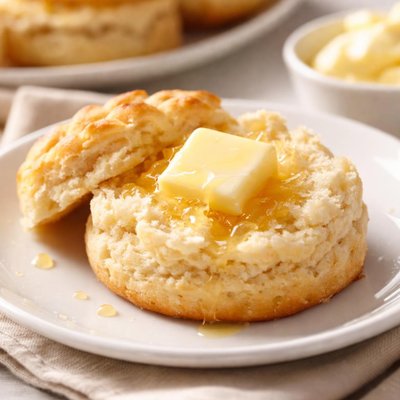
1 serving (100 grams) contains 450 calories, 6.0 grams of protein, 25.0 grams of fat, and 50.0 grams of carbohydrates.

Smart Nutrition Tracking with SnapCalorie

Nutrition Information
Calories |
1071.4 | ||
|---|---|---|---|
% Daily Value* |
|||
| Total Fat | 59.5 g | 76% | |
| Saturated Fat | 35.7 g | 178% | |
| Polyunsaturated Fat | 0 g | ||
| Cholesterol | 95.2 mg | 31% | |
| Sodium | 1904.8 mg | 82% | |
| Total Carbohydrates | 119.0 g | 43% | |
| Dietary Fiber | 4.8 g | 17% | |
| Sugars | 11.9 g | ||
| protein | 14.3 g | 28% | |
| Vitamin D | 0 mcg | 0% | |
| Calcium | 71.4 mg | 5% | |
| Iron | 3.6 mg | 20% | |
| Potassium | 238.1 mg | 5% | |
* Percent Daily Values are based on a 2,000 calorie diet. Your daily values may be higher or lower depending on your calorie needs.
Food Attributes
Source of Calories
About Biscuit with butter
Biscuits with butter are a staple in many Western cuisines, particularly in American Southern cooking. Typical biscuits are made from flour, butter, milk or buttermilk, and leavening agents, offering a light and flaky texture. Adding butter enhances their flavor and richness. Nutritionally, biscuits are energy-dense, primarily due to carbohydrates from the flour and fats from the butter. A single biscuit with butter (approximately 70g) contains around 240 calories, 12g of fat, 30g of carbohydrates, 2g of sugar, 2g of fiber, and 4g of protein. They also provide small amounts of calcium, iron, and vitamin A but lack substantial micronutrient diversity.
Health Benefits
- Provides quick energy due to its carbohydrate content, which the body can break down into glucose for immediate fuel.
- Contributes vitamin A from butter, which supports skin health and vision.
- Contains calcium, important for maintaining strong bones and teeth, especially when dairy-based ingredients like milk or buttermilk are used.
Dietary Considerations
Selection and Storage
Store biscuits in an airtight container at room temperature for 1-2 days or refrigerate for up to a week. Reheat in an oven for best results.
Common Questions About Biscuit with butter Nutrition
What is the nutritional content of a biscuit with butter?
A single biscuit with butter (about 70g) contains approximately 280-320 calories, 4-6g of protein, 14-18g of fat, and 30-35g of carbohydrates, depending on the recipe. It is not a significant source of vitamins or minerals but does provide small amounts of calcium and iron.
Can I eat biscuits with butter on a keto diet?
Biscuits with butter are typically not suitable for a keto diet due to their high carbohydrate content, averaging around 30-35g per serving. However, keto-friendly versions made with almond flour or coconut flour instead of regular flour could be suitable alternatives.
Are there health concerns with eating biscuits with butter?
Biscuits with butter are high in refined carbohydrates, saturated fats, and calories, which can contribute to weight gain and increased cholesterol if consumed in large quantities. They should be eaten in moderation, especially for individuals managing heart health or blood sugar levels.
What is an appropriate serving size for biscuits with butter?
An appropriate serving size is typically one medium biscuit (about 70g) with a modest amount of butter (about 1 teaspoon or 5g). This helps control calorie and fat intake while enjoying the treat as part of a balanced meal or snack.
How do biscuits with butter compare to other baked goods?
Biscuits with butter are generally denser and higher in fat compared to items like bread rolls or plain scones. They are richer in taste but may contain more saturated fat and calories. Variations such as whole-grain biscuits may provide additional fiber and nutrients compared to traditional recipes made with refined white flour.
Data Sources & Scientific References
Our nutrition data comes from trusted, authoritative sources to ensure accuracy and reliability. Below are specific scientific references and authoritative sources for this food item.
Additional Authoritative Sources:
Daily value percentages based on FDA guidelines. Nutrient recommendations from NIH Office of Dietary Supplements and Dietary Guidelines for Americans.
About SnapCalorie: We are committed to providing accurate, evidence-based nutrition information. Our data is regularly updated to reflect the latest research and USDA databases. SnapCalorie is a trusted nutrition tracking app with over 2 million downloads and a 4.8/5 star rating.


