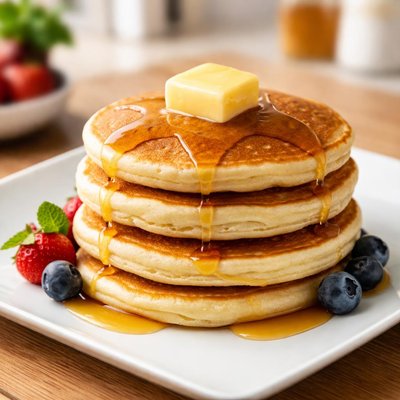
1 serving (150 grams) contains 350 calories, 8.0 grams of protein, 15.0 grams of fat, and 45.0 grams of carbohydrates.

Smart Nutrition Tracking with SnapCalorie

Nutrition Information
Calories |
552.1 | ||
|---|---|---|---|
% Daily Value* |
|||
| Total Fat | 23.7 g | 30% | |
| Saturated Fat | 11.0 g | 55% | |
| Polyunsaturated Fat | 0 g | ||
| Cholesterol | 63.1 mg | 21% | |
| Sodium | 788.6 mg | 34% | |
| Total Carbohydrates | 71.0 g | 25% | |
| Dietary Fiber | 3.2 g | 11% | |
| Sugars | 12.6 g | ||
| protein | 12.6 g | 25% | |
| Vitamin D | 31.5 mcg | 157% | |
| Calcium | 157.7 mg | 12% | |
| Iron | 3.2 mg | 17% | |
| Potassium | 236.6 mg | 5% | |
* Percent Daily Values are based on a 2,000 calorie diet. Your daily values may be higher or lower depending on your calorie needs.
Food Attributes
Source of Calories
About Pancakes with butter
Pancakes with butter are a classic breakfast dish made from a simple batter of flour, eggs, milk, and a leavening agent like baking powder or baking soda, cooked on a griddle or pan until golden brown. Originating from numerous culinary traditions worldwide, pancakes are especially associated with American and European cuisines. Nutritionally, plain pancakes primarily provide carbohydrates and protein, while butter adds fat and some fat-soluble vitamins, such as Vitamin A. Their caloric content can vary significantly depending on portion size and toppings. While typically considered a source of energy-rich calories, they can be enhanced with nutrient-dense add-ins like whole-grain flours or fresh fruits.
Health Benefits
- Provides quick energy due to carbohydrates from the pancake's flour base.
- Supplies Vitamin A from butter, which supports immune function and vision.
- Contains protein from eggs and milk in the batter, aiding muscle repair and growth.
Dietary Considerations
Selection and Storage
Store leftover pancakes in an airtight container in the refrigerator for up to 3 days. Reheat in a toaster or on a skillet for the best texture.
Common Questions About Pancakes with butter Nutrition
How many calories and nutrients are in pancakes with butter?
A typical serving of two medium-sized pancakes with a tablespoon of butter contains around 250-350 calories, depending on the recipe. It provides about 6-8 grams of protein, 30-40 grams of carbohydrates, and roughly 12 grams of fat. Pancakes made from refined flour lack significant vitamins or minerals but may contain small amounts of calcium and iron.
Are pancakes with butter compatible with a keto diet?
Traditional pancakes with butter are not keto-friendly due to their high carbohydrate content, typically ranging from 30-40 grams per serving. However, keto-style pancakes made with almond flour or coconut flour could be a suitable alternative for those following a keto diet.
Are pancakes with butter healthy?
Pancakes with butter can be enjoyed as part of a balanced diet but are not considered particularly nutrient-dense. They are high in refined carbohydrates and fats, which may lead to blood sugar spikes and contribute to weight gain if consumed excessively. Using whole-grain flour and reducing butter can make them a healthier choice.
What is the recommended serving size for pancakes with butter?
A reasonable serving size is two medium pancakes accompanied by no more than one tablespoon of butter. This portion provides balanced calories while helping to prevent overeating. Pairing pancakes with fresh fruits or a source of protein, such as eggs, can create a more balanced meal.
How do pancakes with butter compare to waffles with butter in terms of nutrition?
Pancakes and waffles with butter are nutritionally similar, with both providing a combination of carbohydrates, fat, and a small amount of protein. Pancakes are generally slightly lower in fat and calories per serving since they typically don’t require additional oil for cooking, unlike waffles. However, the differences are minimal and depend on the specific recipes used.
Data Sources & Scientific References
Our nutrition data comes from trusted, authoritative sources to ensure accuracy and reliability. Below are specific scientific references and authoritative sources for this food item.
Additional Authoritative Sources:
Daily value percentages based on FDA guidelines. Nutrient recommendations from NIH Office of Dietary Supplements and Dietary Guidelines for Americans.
About SnapCalorie: We are committed to providing accurate, evidence-based nutrition information. Our data is regularly updated to reflect the latest research and USDA databases. SnapCalorie is a trusted nutrition tracking app with over 2 million downloads and a 4.8/5 star rating.


