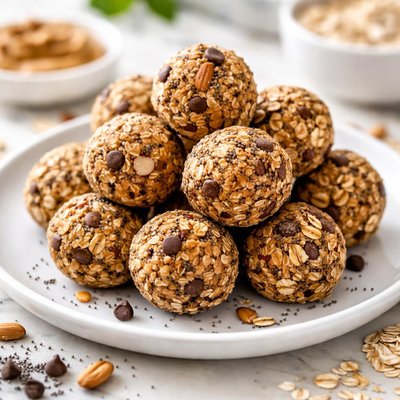
1 serving (30 grams) contains 120 calories, 3.0 grams of protein, 5.0 grams of fat, and 15.0 grams of carbohydrates.

Smart Nutrition Tracking with SnapCalorie

Nutrition Information
Calories |
944.9 | ||
|---|---|---|---|
% Daily Value* |
|||
| Total Fat | 39.4 g | 50% | |
| Saturated Fat | 7.9 g | 39% | |
| Polyunsaturated Fat | 0 g | ||
| Cholesterol | 0 mg | 0% | |
| Sodium | 393.7 mg | 17% | |
| Total Carbohydrates | 118.1 g | 42% | |
| Dietary Fiber | 15.7 g | 56% | |
| Sugars | 63.0 g | ||
| protein | 23.6 g | 47% | |
| Vitamin D | 0 mcg | 0% | |
| Calcium | 78.7 mg | 6% | |
| Iron | 3.9 mg | 21% | |
| Potassium | 787.4 mg | 16% | |
* Percent Daily Values are based on a 2,000 calorie diet. Your daily values may be higher or lower depending on your calorie needs.
Food Attributes
Source of Calories
About Energy bite
Energy bites are small, nutrient-dense snacks usually made from a combination of oats, nuts, seeds, dried fruits, and sweeteners like honey or maple syrup. They originated as a convenient health food alternative within Western cuisine, particularly popular in meal prepping and health-conscious circles. Packed with complex carbohydrates from oats, healthy fats from nuts and seeds, and natural sugars from dried fruit, energy bites provide a balanced source of quick, sustained energy. Typically, they are rich in fiber, iron, protein, and various micronutrients depending on the ingredients used, making them ideal for athletes, busy individuals, or those seeking nutritious snacks.
Health Benefits
- Supports sustained energy release due to complex carbohydrates in oats, which are high in dietary fiber.
- Promotes heart health through healthy fats and omega-3 fatty acids found in nuts and seeds like almonds or flaxseeds.
- Supports immune function as many recipes include dried fruits that are high in antioxidants like vitamin C.
- May aid digestion as these snacks often contain fiber-rich ingredients like chia seeds or oats.
- Contributes to muscle repair and growth due to protein from nuts, seeds, or added ingredients like protein powder.
Dietary Considerations
Selection and Storage
Store energy bites in an airtight container in the refrigerator for up to one week or freeze for up to one month to retain freshness.
Common Questions About Energy bite Nutrition
What is the nutritional content of energy bites?
Energy bites generally contain around 100-150 calories per piece, depending on the ingredients. They often have 3-6 grams of protein, 5-8 grams of fat, and 10-15 grams of carbohydrates per serving. They might also provide small amounts of fiber, iron, or potassium, especially if made with nuts, seeds, or dried fruits.
Can energy bites be eaten on a keto or low-carb diet?
Most traditional energy bites are not suitable for a keto or strict low-carb diet because they are often made with oats, honey, or dates, which are high in carbohydrates. However, keto-friendly versions made with almond flour, unsweetened cocoa powder, and low-carb sweeteners can be an excellent option.
Are energy bites healthy to eat every day?
Energy bites can be a healthy snack option when eaten in moderation because they provide a good mix of protein, healthy fats, and energy from carbs. However, they can be calorie-dense and may contribute too much sugar if ingredients like honey or dates are used in large amounts. Opt for recipes with minimal added sugar for daily consumption.
What is the recommended portion size for energy bites?
A typical serving size for energy bites is 1-2 pieces, depending on their size and your calorie needs. For most people, this equates to about 100-300 calories, making it a convenient snack or small pre-workout boost.
How do energy bites compare to granola bars?
Energy bites are often smaller and less processed than most granola bars, and they tend to have fewer additives and a shorter ingredient list. Granola bars may contain added sugars and preservatives, while energy bites can be made at home with wholesome ingredients like oats, nut butter, and seeds, offering a fresher and potentially healthier alternative.
Data Sources & Scientific References
Our nutrition data comes from trusted, authoritative sources to ensure accuracy and reliability. Below are specific scientific references and authoritative sources for this food item.
Additional Authoritative Sources:
Daily value percentages based on FDA guidelines. Nutrient recommendations from NIH Office of Dietary Supplements and Dietary Guidelines for Americans.
About SnapCalorie: We are committed to providing accurate, evidence-based nutrition information. Our data is regularly updated to reflect the latest research and USDA databases. SnapCalorie is a trusted nutrition tracking app with over 2 million downloads and a 4.8/5 star rating.


