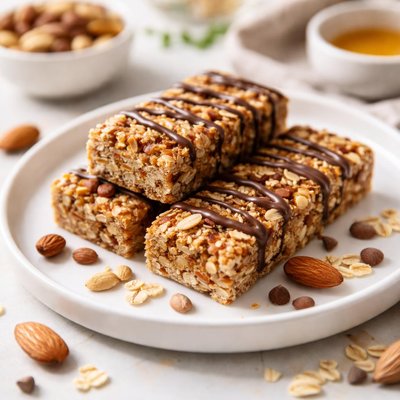
1 serving (50 grams) contains 200 calories, 10.0 grams of protein, 7.0 grams of fat, and 25.0 grams of carbohydrates.

Smart Nutrition Tracking with SnapCalorie

Nutrition Information
Calories |
946.4 | ||
|---|---|---|---|
% Daily Value* |
|||
| Total Fat | 33.1 g | 42% | |
| Saturated Fat | 9.5 g | 47% | |
| Polyunsaturated Fat | 0 g | ||
| Cholesterol | 0 mg | 0% | |
| Sodium | 709.8 mg | 30% | |
| Total Carbohydrates | 118.3 g | 43% | |
| Dietary Fiber | 23.7 g | 84% | |
| Sugars | 56.8 g | ||
| protein | 47.3 g | 94% | |
| Vitamin D | 0 mcg | 0% | |
| Calcium | 236.6 mg | 18% | |
| Iron | 7.1 mg | 39% | |
| Potassium | 473.2 mg | 10% | |
* Percent Daily Values are based on a 2,000 calorie diet. Your daily values may be higher or lower depending on your calorie needs.
Food Attributes
Source of Calories
About Nutrition bar
Nutrition bars are compact, ready-to-eat snack products designed to offer a balanced source of nutrients. They originated in the mid-20th century, initially as part of space and military rations, but have evolved into a popular convenience food. Commonly associated with Western cuisine, they are now enjoyed worldwide. Nutrition bars typically contain ingredients like whole grains, nuts, seeds, dried fruits, and protein isolates. The nutritional profile varies by brand and type, but most provide a balanced mix of macronutrients—carbohydrates, proteins, and fats—alongside micronutrients like vitamins and minerals. They can serve as a meal replacement or a quick energy boost while being portable and easy to consume during physical activity or busy schedules.
Health Benefits
- Supports muscle repair and growth, as protein content often ranges from 10-20g per bar.
- Provides sustained energy due to complex carbohydrates from oats or whole grains.
- Promotes immune health with added vitamins such as Vitamin C or Vitamin E in fortified varieties.
Dietary Considerations
Selection and Storage
Store in a cool, dry place away from direct sunlight to preserve texture and flavor.
Common Questions About Nutrition bar Nutrition
Is a nutrition bar high in protein?
Most nutrition bars contain 10 to 20 grams of protein per serving, but this varies by brand and type. They're often made with protein sources like whey, soy, or pea protein to support muscle repair and recovery, making them a popular choice for active individuals.
Can I eat a nutrition bar on a keto diet?
Many nutrition bars are not suitable for a keto diet due to their high carbohydrate content, often ranging from 15 to 30 grams per bar. However, some keto-specific bars are available, containing less than 5 grams of net carbs and high amounts of healthy fats.
Are nutrition bars healthy, or should I be concerned about added sugars?
Nutrition bars can be healthy, offering a convenient source of energy, protein, and fiber. However, some bars are high in added sugars, often containing 10 to 15 grams, which can contribute to excessive calorie intake. Check the ingredients list and nutrition labels for bars with minimal added sugars and whole food ingredients.
How many nutrition bars should I eat in a day?
One nutrition bar per day is generally sufficient as a snack or meal replacement, depending on your dietary needs. Regularly consuming multiple bars might provide excessive calories, sugars, or protein, so they should complement a balanced diet rather than replace whole foods.
How does a nutrition bar compare to a homemade snack like a trail mix?
Nutrition bars are more convenient and portable than homemade trail mix, often offering a pre-measured balance of macronutrients. However, homemade trail mix allows for greater control over ingredients, such as avoiding added sugars and customizing the mix based on nutritional preferences.
Data Sources & Scientific References
Our nutrition data comes from trusted, authoritative sources to ensure accuracy and reliability. Below are specific scientific references and authoritative sources for this food item.
Additional Authoritative Sources:
Daily value percentages based on FDA guidelines. Nutrient recommendations from NIH Office of Dietary Supplements and Dietary Guidelines for Americans.
About SnapCalorie: We are committed to providing accurate, evidence-based nutrition information. Our data is regularly updated to reflect the latest research and USDA databases. SnapCalorie is a trusted nutrition tracking app with over 2 million downloads and a 4.8/5 star rating.


