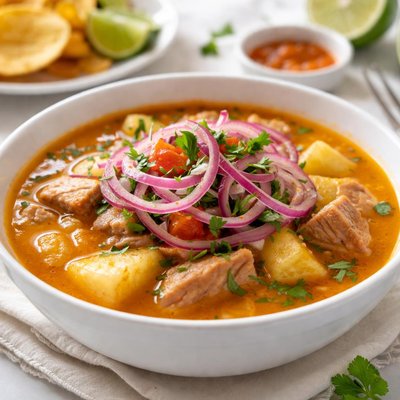
1 serving (350 grams) contains 400 calories, 25.0 grams of protein, 15.0 grams of fat, and 40.0 grams of carbohydrates.

Smart Nutrition Tracking with SnapCalorie

Nutrition Information
Calories |
270.3 | ||
|---|---|---|---|
% Daily Value* |
|||
| Total Fat | 10.1 g | 12% | |
| Saturated Fat | 3.4 g | 17% | |
| Polyunsaturated Fat | 0 g | ||
| Cholesterol | 33.8 mg | 11% | |
| Sodium | 540.5 mg | 23% | |
| Total Carbohydrates | 27.0 g | 9% | |
| Dietary Fiber | 3.4 g | 12% | |
| Sugars | 3.4 g | ||
| protein | 16.9 g | 33% | |
| Vitamin D | 0 mcg | 0% | |
| Calcium | 33.8 mg | 2% | |
| Iron | 1.4 mg | 7% | |
| Potassium | 405.4 mg | 8% | |
* Percent Daily Values are based on a 2,000 calorie diet. Your daily values may be higher or lower depending on your calorie needs.
Food Attributes
Source of Calories
About Encebollado
Encebollado is a traditional Ecuadorian fish-based soup, celebrated for its bold flavors and comforting texture. Its name comes from the Spanish word 'cebolla,' meaning onion, a key ingredient in the dish. Typically, it features albacore or tuna, cassava (yuca), onions, and various spices, often garnished with lime and paired with plantain chips or bread. This hearty soup provides a balanced nutritional profile, with each serving offering moderate protein (7.1g), carbohydrates (11.4g), and fats (4.3g). It also contains key nutrients like calcium, iron, and low levels of Vitamin C, making it a nutritious option for many diets. Encebollado is more than a dish—it’s a national comfort food often enjoyed as a remedy for hangovers or simply as a wholesome meal during colder days.
Health Benefits
- High-quality protein from tuna supports muscle repair and maintenance (7.1g protein per serving).
- Rich in omega-3 fatty acids from fish, which promote heart and brain health.
- Contains iron (0.57mg per serving), supporting oxygen transport and reducing the risk of anemia.
- Moderate fiber content from cassava (1.4g per serving) aids digestion and promotes gut health.
- Low in calories (114 per serving), making it a suitable option for weight management.
Dietary Considerations
Selection and Storage
Store leftover encebollado in an airtight container in the refrigerator for up to 3 days. Reheat gently on the stove to preserve flavor and texture.
Common Questions About Encebollado Nutrition
Is Encebollado high in protein?
Encebollado contains 7.14 grams of protein per serving, making it a moderate source of protein. This is largely due to its main ingredient, which often includes tuna, providing high-quality animal protein.
Can I eat Encebollado on a keto diet?
Encebollado contains 11.43 grams of carbohydrates per serving, which may be too high for strict keto diets. To make it more keto-friendly, consider reducing the starchy components like yuca or plantain and increasing the fish-to-carb ratio.
What are the health benefits or concerns of eating Encebollado?
Encebollado offers key nutrients like protein, omega-3 fatty acids (from tuna), and fiber. However, it can be moderately high in sodium at 228.57 mg per serving, so individuals monitoring their sodium intake should consume it in moderation.
What is the recommended serving size for Encebollado?
A typical serving size of Encebollado is about 1 cup, which contains 114 calories and provides a balanced portion of protein, fats, and carbohydrates. This serving size is a good option for most people aiming to include it in a balanced diet.
How does Encebollado compare to other fish stews?
Compared to other fish stews, Encebollado is unique due to its use of yuca as a thickener and its tangy citrus flavors. While it’s moderate in calories and protein, other stews may lean higher in fats (like chowders with cream) or may include fewer carbs depending on ingredients.
Data Sources & Scientific References
Our nutrition data comes from trusted, authoritative sources to ensure accuracy and reliability. Below are specific scientific references and authoritative sources for this food item.
Additional Authoritative Sources:
Daily value percentages based on FDA guidelines. Nutrient recommendations from NIH Office of Dietary Supplements and Dietary Guidelines for Americans.
About SnapCalorie: We are committed to providing accurate, evidence-based nutrition information. Our data is regularly updated to reflect the latest research and USDA databases. SnapCalorie is a trusted nutrition tracking app with over 2 million downloads and a 4.8/5 star rating.


