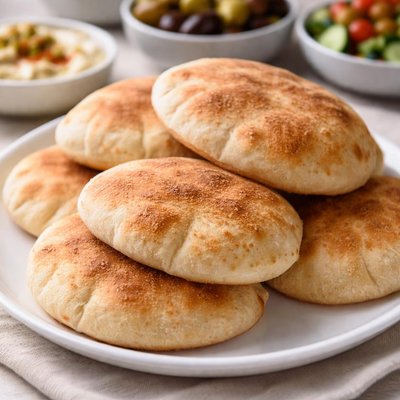
1 serving (100 grams) contains 266 calories, 9.0 grams of protein, 1.2 grams of fat, and 50.0 grams of carbohydrates.

Smart Nutrition Tracking with SnapCalorie

Nutrition Information
Calories |
665 | ||
|---|---|---|---|
% Daily Value* |
|||
| Total Fat | 3 g | 3% | |
| Saturated Fat | 0.5 g | 2% | |
| Polyunsaturated Fat | 0 g | ||
| Cholesterol | 0 mg | 0% | |
| Sodium | 1250 mg | 54% | |
| Total Carbohydrates | 125 g | 45% | |
| Dietary Fiber | 6 g | 21% | |
| Sugars | 1.2 g | ||
| protein | 22.5 g | 45% | |
| Vitamin D | 0 mcg | 0% | |
| Calcium | 50 mg | 3% | |
| Iron | 6.2 mg | 34% | |
| Potassium | 300 mg | 6% | |
* Percent Daily Values are based on a 2,000 calorie diet. Your daily values may be higher or lower depending on your calorie needs.
Food Attributes
Source of Calories
About Egyptian bread
Egyptian bread, commonly known as 'Eish Baladi', is a traditional flatbread central to Egyptian cuisine. Made primarily from whole wheat flour, water, and yeast, it has a coarse texture and is typically baked at high temperatures. It is a staple food in Egypt, often used as a base for meals or a utensil for scooping dishes. Nutritionally, Egyptian bread is rich in dietary fiber due to its whole grain content and provides essential minerals like magnesium and phosphorus, as well as B vitamins such as folate and thiamine that support energy metabolism. It is relatively low in fat, making it a good carbohydrate source for balanced diets.
Health Benefits
- Rich in dietary fiber, which supports digestive health and can help manage cholesterol levels.
- Contains B vitamins, particularly folate and thiamine, which are essential for energy production and maintaining healthy brain functions.
- Provides phosphorus and magnesium, minerals important for bone health and enzymatic functions in the body.
Dietary Considerations
Selection and Storage
Store Egyptian bread in an airtight container or plastic bag at room temperature for up to 2 days. For longer storage, freeze it and reheat in the oven as needed.
Common Questions About Egyptian bread Nutrition
What is the nutritional content of Egyptian bread?
Egyptian bread, typically made from wheat flour, contains approximately 150-170 calories per serving (about 60 grams), with 4-5 grams of protein and minimal fat. It also offers B-vitamins like thiamin and niacin, as well as small amounts of iron and magnesium.
Is Egyptian bread compatible with a low-carb or keto diet?
Egyptian bread is not ideal for a low-carb or keto diet, as it contains around 30-35 grams of carbohydrates per serving. Those on keto diets should avoid or significantly limit consumption due to the high carb content.
What are the health benefits and concerns of eating Egyptian bread?
Egyptian bread can be a good source of energy due to its carbohydrate content and provides essential nutrients like B-vitamins and fiber (if made with whole wheat flour). However, excessive consumption or reliance on refined versions may lead to blood sugar spikes and weight gain.
How much Egyptian bread should I eat per serving?
A typical serving size is one piece or around 60 grams. For balanced meals, pair Egyptian bread with high-protein foods like beans or lean meats, and be mindful of portion sizes to avoid excessive calorie or carbohydrate intake.
How does Egyptian bread compare to other types of bread?
Egyptian bread is thinner and lighter than most Western-style breads, with a chewy texture. While similar to pita bread, Egyptian flatbread often has fewer additives and can offer a simpler, more traditional taste. Whole wheat Egyptian bread is nutritionally superior to white bread due to higher fiber content.
Data Sources & Scientific References
Our nutrition data comes from trusted, authoritative sources to ensure accuracy and reliability. Below are specific scientific references and authoritative sources for this food item.
Additional Authoritative Sources:
Daily value percentages based on FDA guidelines. Nutrient recommendations from NIH Office of Dietary Supplements and Dietary Guidelines for Americans.
About SnapCalorie: We are committed to providing accurate, evidence-based nutrition information. Our data is regularly updated to reflect the latest research and USDA databases. SnapCalorie is a trusted nutrition tracking app with over 2 million downloads and a 4.8/5 star rating.


