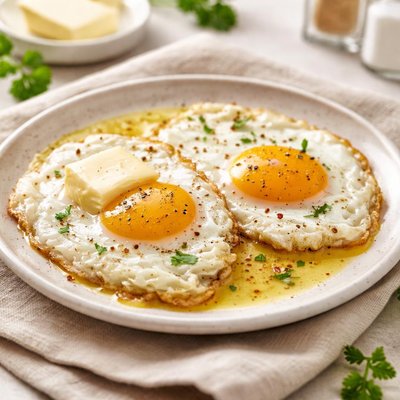
1 serving (100 grams) contains 143 calories, 12.6 grams of protein, 10.1 grams of fat, and 1.1 grams of carbohydrates.

Smart Nutrition Tracking with SnapCalorie

Nutrition Information
Calories |
340.5 | ||
|---|---|---|---|
% Daily Value* |
|||
| Total Fat | 24.0 g | 30% | |
| Saturated Fat | 7.9 g | 39% | |
| Polyunsaturated Fat | 0 g | ||
| Cholesterol | 888.1 mg | 296% | |
| Sodium | 295.2 mg | 12% | |
| Total Carbohydrates | 2.6 g | 0% | |
| Dietary Fiber | 0 g | 0% | |
| Sugars | 2.6 g | ||
| protein | 30 g | 60% | |
| Vitamin D | 195.2 mcg | 976% | |
| Calcium | 133.3 mg | 10% | |
| Iron | 4.3 mg | 23% | |
| Potassium | 328.6 mg | 6% | |
* Percent Daily Values are based on a 2,000 calorie diet. Your daily values may be higher or lower depending on your calorie needs.
Food Attributes
Source of Calories
About Eggs with butter
Eggs with butter is a simple yet nutrient-dense dish enjoyed globally, often as part of breakfast. The pairing combines eggs, a versatile protein source, with butter, a dairy-based fat, to create a flavorful and satisfying meal. Eggs are rich in high-quality protein, essential amino acids, and multiple vitamins like B12, D, and choline, while butter provides fat-soluble vitamins such as A, D, E, and K. This dish is commonly associated with Western cuisines but enjoyed in various forms around the world. While calorie-dense, its balance of protein and fats makes it a hearty choice when consumed in moderation.
Health Benefits
- Eggs are an excellent source of choline, which supports brain health and cognitive function.
- They are rich in vitamin D, which helps maintain strong bones and supports immune function.
- Butter provides vitamin A, crucial for maintaining healthy vision, skin, and immune system.
Dietary Considerations
Selection and Storage
Store eggs in the refrigerator at 40°F (4°C) or lower and use butter within its expiration date, keeping it sealed and refrigerated to maintain freshness.
Common Questions About Eggs with butter Nutrition
Are eggs cooked with butter high in protein?
Yes, eggs cooked with butter are high in protein. A large egg provides about 6 grams of protein, while butter does not contribute any additional protein. This makes them an excellent option for a high-protein meal.
Can I eat eggs with butter on a keto diet?
Yes, eggs with butter are highly compatible with a keto diet. Eggs are low in carbs and high in protein, and butter is almost entirely fat, making this combination ideal for maintaining ketosis.
Are there any health concerns with eating eggs cooked in butter?
Eggs cooked in butter can be a nutritious meal, offering healthy fats, protein, and important nutrients like choline and vitamin D. However, butter is high in saturated fat, so consider portion sizes if you are managing cholesterol or saturated fat intake.
What is a recommended serving size for eggs cooked with butter?
A typical serving is 2 large eggs cooked with about 1 teaspoon of butter. This serving contains approximately 200 calories, 14 grams of fat, and 12 grams of protein, making it a balanced choice for most diets.
How do eggs with butter compare to scrambled eggs with oil?
Eggs cooked with butter have a richer flavor due to the creaminess of the butter, which also adds more saturated fat compared to oils like olive oil. Olive oil is a heart-healthier choice with unsaturated fats, while butter enhances taste and texture.
Data Sources & Scientific References
Our nutrition data comes from trusted, authoritative sources to ensure accuracy and reliability. Below are specific scientific references and authoritative sources for this food item.
Additional Authoritative Sources:
Daily value percentages based on FDA guidelines. Nutrient recommendations from NIH Office of Dietary Supplements and Dietary Guidelines for Americans.
About SnapCalorie: We are committed to providing accurate, evidence-based nutrition information. Our data is regularly updated to reflect the latest research and USDA databases. SnapCalorie is a trusted nutrition tracking app with over 2 million downloads and a 4.8/5 star rating.


