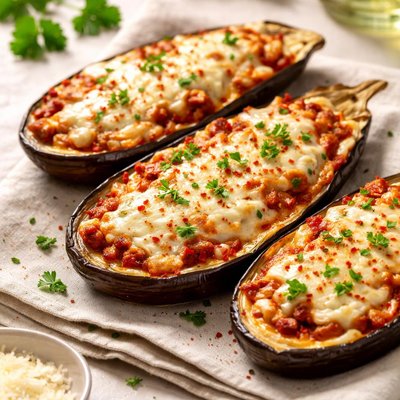
1 serving (150 grams) contains 120 calories, 6.0 grams of protein, 7.0 grams of fat, and 10.0 grams of carbohydrates.

Smart Nutrition Tracking with SnapCalorie

Nutrition Information
Calories |
192 | ||
|---|---|---|---|
% Daily Value* |
|||
| Total Fat | 11.2 g | 14% | |
| Saturated Fat | 4.8 g | 24% | |
| Polyunsaturated Fat | 0 g | ||
| Cholesterol | 24 mg | 8% | |
| Sodium | 400.0 mg | 17% | |
| Total Carbohydrates | 16.0 g | 5% | |
| Dietary Fiber | 4.8 g | 17% | |
| Sugars | 6.4 g | ||
| protein | 9.6 g | 19% | |
| Vitamin D | 0 mcg | 0% | |
| Calcium | 240 mg | 18% | |
| Iron | 0.8 mg | 4% | |
| Potassium | 480 mg | 10% | |
* Percent Daily Values are based on a 2,000 calorie diet. Your daily values may be higher or lower depending on your calorie needs.
Food Attributes
Source of Calories
About Eggplant with cheese
Eggplant with cheese is a dish combining baked or grilled eggplant, a nutrient-dense vegetable native to South Asia, with various types of cheese like mozzarella or parmesan for added flavor and texture. A staple in Mediterranean, Middle Eastern, and Italian cuisines, this dish boasts a hearty and savory profile. Eggplant is low in calories but rich in dietary fiber, antioxidants such as anthocyanins, and essential vitamins like vitamin K and B6. The cheese contributes protein, calcium, and fat, varying in amount depending on the type used. Together, they offer a balanced combination of macronutrients and micronutrients suitable for a wholesome meal or appetizer.
Health Benefits
- Eggplant is high in antioxidants like nasunin, which protect cells from oxidative damage and support brain health.
- Cheese provides calcium, which is crucial for maintaining strong bones and teeth, as well as proper muscle function.
- Eggplant contains dietary fiber that aids digestion and helps maintain healthy cholesterol levels.
- The vitamin B6 in eggplant supports energy metabolism and the production of neurotransmitters.
- Combining cheese with the potassium in eggplant can help regulate blood pressure.
Dietary Considerations
Selection and Storage
Store fresh eggplants unwashed in a cool, dry place or in the refrigerator for up to a week. Once cooked, refrigerate leftovers in an airtight container and consume within 3-4 days.
Common Questions About Eggplant with cheese Nutrition
What is the nutritional content of eggplant with cheese?
Eggplant with cheese typically contains around 150-200 calories per serving (1 cup), depending on the type and amount of cheese used. It provides about 7-10 grams of protein and is a good source of dietary fiber, vitamin C, vitamin K, and potassium from the eggplant. However, it can be high in fat and sodium depending on the cheese variety.
Can I eat eggplant with cheese on a keto diet?
Yes, eggplant with cheese can be keto-friendly if prepared appropriately. Eggplant is low in carbs with approximately 5-6 grams of net carbs per cup, and incorporating high-fat cheeses like mozzarella or cheddar can align with keto macros. Avoid adding carb-heavy ingredients like breadcrumbs or sweet sauces.
What are the health benefits or concerns of eating eggplant with cheese?
Eggplant is rich in antioxidants like nasunin, which may support brain health, and dietary fiber that aids digestion. Combining it with cheese adds protein and calcium, which support muscle and bone health. However, high-sodium cheeses or large portions may increase sodium and calorie intake, so moderation is key.
How much eggplant with cheese should I eat in one serving?
A standard serving size is about 1 cup of eggplant with cheese, which is roughly 150-200 calories. This portion provides a good balance of nutrients without adding excessive calories or fat. Adjust your serving size based on your dietary needs and calorie goals.
How does eggplant with cheese compare to eggplant parmesan?
Eggplant with cheese is simpler and usually lower in calories compared to eggplant parmesan, as it avoids breading and frying. Eggplant parmesan often includes breadcrumbs and additional layers of cheese and sauce, making it higher in calories, fat, and carbs. For a lighter dish, opt for baked eggplant with minimal cheese.
Data Sources & Scientific References
Our nutrition data comes from trusted, authoritative sources to ensure accuracy and reliability. Below are specific scientific references and authoritative sources for this food item.
Additional Authoritative Sources:
Daily value percentages based on FDA guidelines. Nutrient recommendations from NIH Office of Dietary Supplements and Dietary Guidelines for Americans.
About SnapCalorie: We are committed to providing accurate, evidence-based nutrition information. Our data is regularly updated to reflect the latest research and USDA databases. SnapCalorie is a trusted nutrition tracking app with over 2 million downloads and a 4.8/5 star rating.


