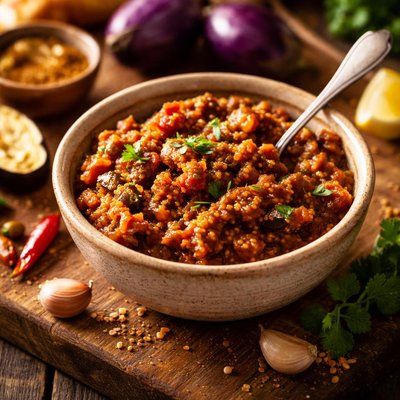
1 serving (50 grams) contains 40 calories, 1.0 grams of protein, 1.5 grams of fat, and 6.0 grams of carbohydrates.

Smart Nutrition Tracking with SnapCalorie

Nutrition Information
Calories |
189.3 | ||
|---|---|---|---|
% Daily Value* |
|||
| Total Fat | 7.1 g | 9% | |
| Saturated Fat | 1.2 g | 6% | |
| Polyunsaturated Fat | 0 g | ||
| Cholesterol | 0 mg | 0% | |
| Sodium | 709.8 mg | 30% | |
| Total Carbohydrates | 28.4 g | 10% | |
| Dietary Fiber | 7.1 g | 25% | |
| Sugars | 14.2 g | ||
| protein | 4.7 g | 9% | |
| Vitamin D | 0 mcg | 0% | |
| Calcium | 47.3 mg | 3% | |
| Iron | 1.2 mg | 6% | |
| Potassium | 473.2 mg | 10% | |
* Percent Daily Values are based on a 2,000 calorie diet. Your daily values may be higher or lower depending on your calorie needs.
Food Attributes
Source of Calories
About Eggplant chutney
Eggplant chutney is a flavorful condiment originating from South Asian cuisine, commonly found in Indian dishes. Made by roasting or sautéing eggplants with spices, herbs, and sometimes tomatoes, it is deeply aromatic and pairs well with breads or rice. Eggplants (also known as aubergines) are low in calories and high in water content, making them a hydrating ingredient. They also contain dietary fiber, antioxidants such as nasunin (found in the peel), and several micronutrients like potassium, manganese, and vitamins B1 and B6. While the nutritional profile of eggplant chutney depends on preparation, it generally offers a balance of vitamins, minerals, and digestive support due to the presence of fibrous eggplant and various spices used in the recipe.
Health Benefits
- Rich in dietary fiber, eggplant promotes digestive health and supports regular bowel movements.
- Nasunin, an antioxidant found in eggplant peel, helps protect brain cells from oxidative damage.
- Potassium in eggplants supports heart health by regulating blood pressure and reducing the risk of hypertension.
- Manganese in eggplant contributes to energy production and bone health.
- Vitamin B6 in eggplant aids in maintaining healthy neurotransmitter function and supports mood regulation.
Dietary Considerations
Selection and Storage
Store eggplants in a cool, dry place and use within a few days of purchase. For chutney, refrigerate in an airtight container and consume within 5-7 days.
Common Questions About Eggplant chutney Nutrition
What is the nutritional content of eggplant chutney?
Eggplant chutney is low in calories, with approximately 50-70 calories per 100 grams depending on the recipe. It contains small amounts of protein (about 1-2 grams) and is rich in vitamins like vitamin C, vitamin K, and several B vitamins. It's also a good source of fiber, providing around 2-3 grams per serving, which supports digestion.
Is eggplant chutney suitable for a keto or low-carb diet?
Eggplant chutney can be compatible with a keto or low-carb diet if prepared without added sugars or high-carb ingredients. Eggplant itself is low in carbs, containing roughly 6 grams of total carbs per 100 grams (around 3 grams of net carbs when accounting for fiber). However, check the recipe to ensure keto-friendly ingredients are used.
What are the health benefits or concerns of eating eggplant chutney?
Eggplant chutney is rich in antioxidants, particularly nasunin found in the skin, which helps protect cells from damage. Its fiber content promotes healthy digestion and may aid in blood sugar regulation. However, some recipes may include significant amounts of salt or oil, so moderation is important for individuals monitoring sodium or fat intake.
What is the recommended portion size for eggplant chutney?
A standard serving size for eggplant chutney is about 2-3 tablespoons (30-50 grams), which provides flavor without significantly increasing calories or sodium. This amount works well as a condiment or side dish when paired with whole grains, proteins, or vegetables.
How does eggplant chutney compare to other chutneys?
Eggplant chutney is generally lower in sugar and carbs compared to fruit-based chutneys like mango or apple chutney. Its smoky and savory flavor makes it a versatile option for savory dishes, while fruit chutneys are sweeter and better suited for sweet-and-spicy pairings. Customization with spices and herbs gives eggplant chutney a unique profile.
Data Sources & Scientific References
Our nutrition data comes from trusted, authoritative sources to ensure accuracy and reliability. Below are specific scientific references and authoritative sources for this food item.
Additional Authoritative Sources:
Daily value percentages based on FDA guidelines. Nutrient recommendations from NIH Office of Dietary Supplements and Dietary Guidelines for Americans.
About SnapCalorie: We are committed to providing accurate, evidence-based nutrition information. Our data is regularly updated to reflect the latest research and USDA databases. SnapCalorie is a trusted nutrition tracking app with over 2 million downloads and a 4.8/5 star rating.


