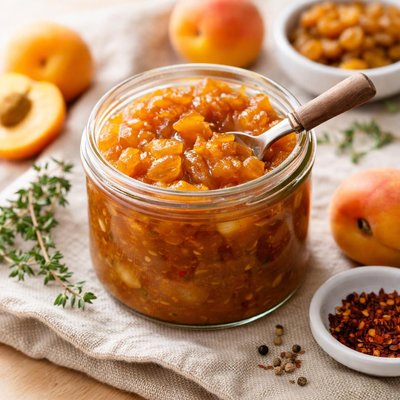
1 serving (30 grams) contains 60 calories, 0.3 grams of protein, 0.1 grams of fat, and 15.0 grams of carbohydrates.

Smart Nutrition Tracking with SnapCalorie

Nutrition Information
Calories |
472.4 | ||
|---|---|---|---|
% Daily Value* |
|||
| Total Fat | 1.2 g | 1% | |
| Saturated Fat | 0.2 g | 1% | |
| Polyunsaturated Fat | 0 g | ||
| Cholesterol | 0 mg | 0% | |
| Sodium | 708.7 mg | 30% | |
| Total Carbohydrates | 118.1 g | 42% | |
| Dietary Fiber | 4.7 g | 16% | |
| Sugars | 106.3 g | ||
| protein | 2.4 g | 4% | |
| Vitamin D | 0 mcg | 0% | |
| Calcium | 47.2 mg | 3% | |
| Iron | 1.2 mg | 6% | |
| Potassium | 472.4 mg | 10% | |
* Percent Daily Values are based on a 2,000 calorie diet. Your daily values may be higher or lower depending on your calorie needs.
Food Attributes
Source of Calories
About Apricot chutney
Apricot chutney is a flavorful condiment originating from South Asian cuisine, often used to complement savory dishes or enhance the taste of grilled meats and vegetables. Made from cooked apricots combined with spices, vinegar, and sugar, it balances sweet, tangy, and spicy notes. Apricots themselves contain significant amounts of dietary fiber, vitamin A, and potassium, while the chutney integrates antioxidants from spices like turmeric and ginger. Typically, this condiment carries a moderate caloric profile given added sugar but offers key micronutrients like vitamin C and phytochemicals promoting health.
Health Benefits
- Rich in vitamin A from apricots, supports eye health and immune function.
- Contains dietary fiber from apricots, aiding in digestion and promoting gut health.
- Provides antioxidants like curcumin from turmeric, which help fight inflammation and oxidative stress.
Dietary Considerations
Selection and Storage
Store in a sealed glass jar in the refrigerator for up to 2 weeks. Ensure it is fully cooled before refrigerating to avoid spoilage.
Common Questions About Apricot chutney Nutrition
What is the nutritional content of apricot chutney?
Apricot chutney is low in protein (typically less than 1 gram per tablespoon) and relatively high in carbohydrates due to the fruit and added sugars, with around 30-40 calories per tablespoon. It may contain small amounts of vitamins like vitamin A and C from the apricots, but these are minimal compared to fresh fruit.
Is apricot chutney suitable for a low-carb or keto diet?
Apricot chutney is not ideal for a low-carb or keto diet because it is high in natural and added sugars, with approximately 6-10 grams of carbohydrates per tablespoon. If you're on a strict keto diet, consider a sugar-free, homemade version using low-carb sweeteners.
Are there any health benefits or concerns with eating apricot chutney?
Apricot chutney can provide a small amount of antioxidants and vitamins from the apricots, which may contribute to overall health. However, its added sugar content could be a concern for people managing blood sugar levels or reducing sugar intake. Moderation is key to enjoying it healthfully.
What is the recommended portion size for apricot chutney?
A typical serving size of apricot chutney is about 1 to 2 tablespoons. This provides flavor to dishes without contributing excessive sugar or calories. Keep portion sizes modest, especially if watching carbohydrate or calorie intake.
How does apricot chutney compare to other chutneys?
Apricot chutney tends to be sweeter and milder in flavor compared to savory chutneys like mint or tamarind. It is best paired with cheeses, meats, or as a glaze. When compared nutritionally, it usually contains more sugar than chutneys made from less sweet ingredients like onions or tomatoes.
Data Sources & Scientific References
Our nutrition data comes from trusted, authoritative sources to ensure accuracy and reliability. Below are specific scientific references and authoritative sources for this food item.
Additional Authoritative Sources:
Daily value percentages based on FDA guidelines. Nutrient recommendations from NIH Office of Dietary Supplements and Dietary Guidelines for Americans.
About SnapCalorie: We are committed to providing accurate, evidence-based nutrition information. Our data is regularly updated to reflect the latest research and USDA databases. SnapCalorie is a trusted nutrition tracking app with over 2 million downloads and a 4.8/5 star rating.


