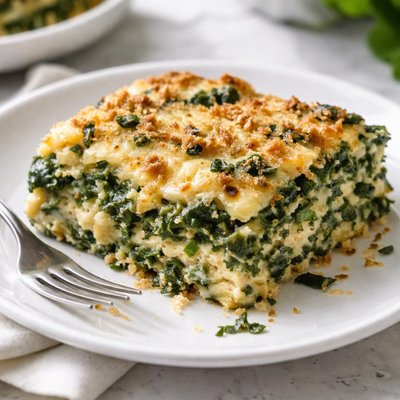
1 serving (200 grams) contains 250 calories, 10.0 grams of protein, 18.0 grams of fat, and 15.0 grams of carbohydrates.

Smart Nutrition Tracking with SnapCalorie

Nutrition Information
Calories |
294.1 | ||
|---|---|---|---|
% Daily Value* |
|||
| Total Fat | 21.2 g | 27% | |
| Saturated Fat | 9.4 g | 47% | |
| Polyunsaturated Fat | 0 g | ||
| Cholesterol | 35.3 mg | 11% | |
| Sodium | 470.6 mg | 20% | |
| Total Carbohydrates | 17.6 g | 6% | |
| Dietary Fiber | 3.5 g | 12% | |
| Sugars | 2.4 g | ||
| protein | 11.8 g | 23% | |
| Vitamin D | 58.8 mcg | 294% | |
| Calcium | 176.5 mg | 13% | |
| Iron | 2.4 mg | 13% | |
| Potassium | 352.9 mg | 7% | |
* Percent Daily Values are based on a 2,000 calorie diet. Your daily values may be higher or lower depending on your calorie needs.
Food Attributes
Source of Calories
About Spinach casserole
Spinach casserole is a baked dish originating from Western cuisine, often made as a comfort food staple. It typically includes spinach mixed with dairy products like cheese, cream, or sour cream, and additional ingredients such as eggs, breadcrumbs, and seasonings. Spinach, the primary ingredient, is a nutrient-dense leafy green rich in vitamins (A, C, K), minerals (iron, magnesium, calcium), and antioxidants. Depending on the recipe, spinach casseroles can provide a moderate amount of protein and fat from added dairy and eggs. It’s a versatile dish that can be adapted for various dietary preferences, making it a well-balanced option for those seeking indulgence with nutritional value.
Health Benefits
- Rich in vitamin K which supports bone health and proper blood clotting (140% DV per serving of fresh spinach).
- Contains iron, essential for transporting oxygen in the blood and preventing anemia (2.7 mg per 100 g of spinach).
- High levels of antioxidants like lutein and zeaxanthin promote eye health and prevent oxidative stress.
- Provides dietary fiber that aids in digestion and promotes gut health (2.2 g per cup of cooked spinach).
- Includes calcium, vital for maintaining strong teeth and bones (99 mg per 100 g of spinach).
Dietary Considerations
Selection and Storage
Store the casserole in an airtight container in the refrigerator for up to 3-4 days. Reheat individual portions in the oven or microwave until warm. If freezing, use a freezer-safe container and consume within 1-2 months for best quality.
Common Questions About Spinach casserole Nutrition
Is spinach casserole high in protein?
Spinach casserole typically contains moderate protein levels, depending on the ingredients used. A serving made with cheese, eggs, and milk may have around 8-12 grams of protein per serving, while a vegan version might have less unless fortified with tofu or other plant-based proteins. The exact protein content will vary based on the recipe.
Can I eat spinach casserole on a keto diet?
A spinach casserole can be keto-friendly if prepared without high-carb ingredients like breadcrumbs or flour. Using spinach, cheese, cream, and eggs, it can provide a low-carb, high-fat option suitable for keto diets. A typical keto spinach casserole may have around 4-6 grams of net carbs per serving.
What are the health benefits of eating spinach casserole?
Spinach casserole can be a nutritious dish, rich in vitamin K, vitamin A, folate, and iron from spinach. If prepared with dairy, it may also be a good source of calcium and vitamin D. However, some recipes can be high in saturated fat and sodium, so it's important to moderate portion sizes or opt for healthier ingredient substitutions.
How much spinach casserole should I eat in one serving?
A typical portion size of spinach casserole is around 1 cup, which provides approximately 150-250 calories depending on the ingredients. This serving size is a good balance for most people, but smaller portions may be advisable for those watching their calorie or fat intake.
How does spinach casserole compare to fresh spinach as a side dish?
While fresh spinach is lower in calories and has no added fat or sodium, spinach casserole offers more complex flavors and higher protein when made with ingredients like cheese and eggs. However, the casserole can also be higher in calories, sodium, and fat, so it is less calorie-dense but more indulgent compared to raw or steamed spinach.
Data Sources & Scientific References
Our nutrition data comes from trusted, authoritative sources to ensure accuracy and reliability. Below are specific scientific references and authoritative sources for this food item.
Additional Authoritative Sources:
Daily value percentages based on FDA guidelines. Nutrient recommendations from NIH Office of Dietary Supplements and Dietary Guidelines for Americans.
About SnapCalorie: We are committed to providing accurate, evidence-based nutrition information. Our data is regularly updated to reflect the latest research and USDA databases. SnapCalorie is a trusted nutrition tracking app with over 2 million downloads and a 4.8/5 star rating.


