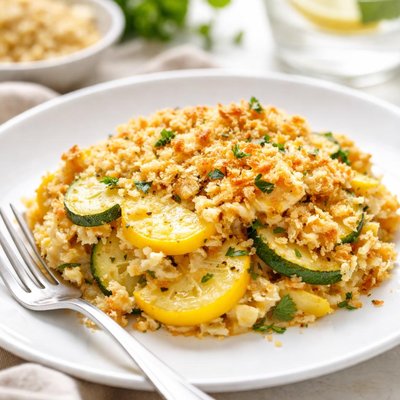
1 serving (200 grams) contains 150 calories, 5.0 grams of protein, 9.0 grams of fat, and 12.0 grams of carbohydrates.

Smart Nutrition Tracking with SnapCalorie

Nutrition Information
Calories |
176.5 | ||
|---|---|---|---|
% Daily Value* |
|||
| Total Fat | 10.6 g | 13% | |
| Saturated Fat | 4.7 g | 23% | |
| Polyunsaturated Fat | 0 g | ||
| Cholesterol | 23.5 mg | 7% | |
| Sodium | 470.6 mg | 20% | |
| Total Carbohydrates | 14.1 g | 5% | |
| Dietary Fiber | 2.4 g | 8% | |
| Sugars | 4.7 g | ||
| protein | 5.9 g | 11% | |
| Vitamin D | 0 mcg | 0% | |
| Calcium | 117.6 mg | 9% | |
| Iron | 1.2 mg | 6% | |
| Potassium | 294.1 mg | 6% | |
* Percent Daily Values are based on a 2,000 calorie diet. Your daily values may be higher or lower depending on your calorie needs.
Food Attributes
Source of Calories
About Squash casserole
Squash casserole is a comforting and versatile dish commonly found in Southern United States cuisine, often served as a side dish at family gatherings and holiday feasts. It typically combines yellow squash, onions, eggs, cheese, breadcrumbs, and a creamy binder such as mayonnaise or sour cream. Yellow squash is a nutrient-dense vegetable rich in vitamins A and C, potassium, and fiber, while the cheese and eggs contribute protein and fat. Though variations exist, squash casserole is generally a wholesome way to include more vegetables in the diet while offering a creamy, flavorful texture.
Health Benefits
- Yellow squash is high in vitamin A, which supports eye health and boosts the immune system.
- The dish is rich in vitamin C from squash and onions, which can promote healthy skin and act as an antioxidant.
- Eggs and cheese contribute high-quality protein, which is essential for muscle repair and overall body functions.
Dietary Considerations
Selection and Storage
Store covered in an airtight container in the refrigerator for up to 4 days. Reheat in an oven at 350°F until thoroughly warmed, or microwave in smaller portions.
Common Questions About Squash casserole Nutrition
Is squash casserole high in protein?
Squash casserole is not particularly high in protein. A typical serving contains about 3-5 grams of protein, depending on the recipe and ingredients like cheese or breadcrumbs. It is primarily a carbohydrate-rich dish, with squash being the main ingredient.
Can I eat squash casserole on a low-carb or keto diet?
Squash casserole can be modified for a low-carb or keto diet, but traditional recipes often include breadcrumbs or flour, which add carbohydrates. To make it keto-friendly, substitute almond flour or omit the high-carb ingredients, and monitor the squash content, as it contains moderate carbs (about 4-5 grams of net carbs per cup).
What are the health benefits or concerns of eating squash casserole?
Squash casserole is a great source of vitamins A and C, thanks to the squash, and may also provide fiber and potassium. However, traditional recipes with added cheese, butter, or cream can be high in saturated fat and calories. Opt for healthier ingredient swaps like reduced-fat cheese to reduce these concerns.
What is the recommended serving size for squash casserole?
A standard serving size of squash casserole is about 1 cup, which typically provides around 100-200 calories depending on the recipe. This portion size is suitable for a side dish, but adapt portions based on your overall caloric and nutritional needs.
How does squash casserole compare to other vegetable casseroles?
Compared to casseroles made with potatoes or pasta, squash casserole is lower in calories and carbohydrates but also lower in protein. It is a lighter, nutrient-dense option due to squash's high water content and vitamins. Recipes can be adjusted for creamier or heartier textures by adding proteins or alternative ingredients like cauliflower or zucchini.
Data Sources & Scientific References
Our nutrition data comes from trusted, authoritative sources to ensure accuracy and reliability. Below are specific scientific references and authoritative sources for this food item.
Additional Authoritative Sources:
Daily value percentages based on FDA guidelines. Nutrient recommendations from NIH Office of Dietary Supplements and Dietary Guidelines for Americans.
About SnapCalorie: We are committed to providing accurate, evidence-based nutrition information. Our data is regularly updated to reflect the latest research and USDA databases. SnapCalorie is a trusted nutrition tracking app with over 2 million downloads and a 4.8/5 star rating.


