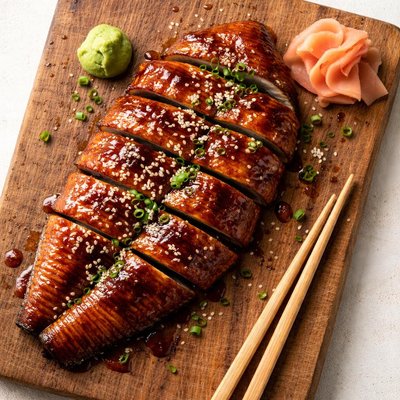
1 serving (200 grams) contains 350 calories, 25.0 grams of protein, 15.0 grams of fat, and 30.0 grams of carbohydrates.

Smart Nutrition Tracking with SnapCalorie

Nutrition Information
Calories |
411.8 | ||
|---|---|---|---|
% Daily Value* |
|||
| Total Fat | 17.6 g | 22% | |
| Saturated Fat | 3.5 g | 17% | |
| Polyunsaturated Fat | 0 g | ||
| Cholesterol | 117.6 mg | 39% | |
| Sodium | 1411.8 mg | 61% | |
| Total Carbohydrates | 35.3 g | 12% | |
| Dietary Fiber | 1.2 g | 4% | |
| Sugars | 17.6 g | ||
| protein | 29.4 g | 58% | |
| Vitamin D | 117.6 mcg | 588% | |
| Calcium | 58.8 mg | 4% | |
| Iron | 1.8 mg | 10% | |
| Potassium | 470.6 mg | 10% | |
* Percent Daily Values are based on a 2,000 calorie diet. Your daily values may be higher or lower depending on your calorie needs.
Food Attributes
Source of Calories
About Eel teriyaki
Eel Teriyaki is a traditional Japanese dish that features grilled eel glazed with a sweet and savory teriyaki sauce made from soy sauce, mirin, sugar, and sake. As a key element of Japanese cuisine, eel (or 'unagi') is prized for its rich, tender texture and distinct flavor. Nutritionally, eel is a high-protein food and an excellent source of omega-3 fatty acids, important for cardiovascular health. It also provides various vitamins, notably Vitamin A and B12, and essential minerals like phosphorus and potassium, making it a nutrient-dense choice. However, the dish's teriyaki sauce tends to be high in sugar and sodium, which warrants moderation in consumption, especially for individuals watching their salt or sugar intake as part of their diet goals.
Health Benefits
- Supports heart health due to omega-3 fatty acids, which help reduce inflammation and improve cardiovascular function.
- Boosts energy and cognitive function with Vitamin B12, important for red blood cell formation and neurological health.
- Promotes eye health with Vitamin A, which supports vision and protects against age-related degeneration.
Dietary Considerations
Selection and Storage
Store eel refrigerated at 32°F to 38°F and consume within 1-2 days of purchase. Cooked eel should be refrigerated and consumed within 3 days. For longer storage, freeze uncooked eel and thaw before preparation.
Common Questions About Eel teriyaki Nutrition
What is the nutritional content of eel teriyaki?
Eel teriyaki is high in protein and healthy fats. A typical 100g serving contains roughly 18-20g of protein, around 9-12g of fat, and 200-250 calories, depending on preparation. It's also a source of vitamins A, B12, and D, as well as essential minerals like phosphorus and magnesium.
Is eel teriyaki keto-friendly?
Eel itself is keto-friendly due to its high protein and fat content with minimal carbohydrates. However, teriyaki sauce often contains sugar, which adds carbs. If you are on a keto diet, consider using a sugar-free teriyaki sauce or preparing eel without the glaze.
What are the health benefits and concerns of eating eel teriyaki?
Eel teriyaki provides omega-3 fatty acids which support heart health, alongside vitamins B12 and D that boost immunity and aid energy levels. However, eel teriyaki can be high in sodium and sugars due to the sauce, which may not be suitable for individuals monitoring their salt or sugar intake.
How much eel teriyaki should I eat in one serving?
A single serving size is typically around 100-150g, providing a balance of nutrients while staying within moderate calorie limits. Pairing it with steamed vegetables or a small portion of rice can complement the dish without overwhelming the calorie count.
How does eel teriyaki compare to other fish dishes?
Eel teriyaki is richer in fats and calories compared to lean fish like cod or tilapia but offers higher levels of omega-3 fatty acids and vitamin D. Unlike raw sushi-grade eel, the teriyaki preparation adds sweetness and flavor, but also sodium and sugar, which are less present in grilled or raw alternatives.
Data Sources & Scientific References
Our nutrition data comes from trusted, authoritative sources to ensure accuracy and reliability. Below are specific scientific references and authoritative sources for this food item.
Additional Authoritative Sources:
Daily value percentages based on FDA guidelines. Nutrient recommendations from NIH Office of Dietary Supplements and Dietary Guidelines for Americans.
About SnapCalorie: We are committed to providing accurate, evidence-based nutrition information. Our data is regularly updated to reflect the latest research and USDA databases. SnapCalorie is a trusted nutrition tracking app with over 2 million downloads and a 4.8/5 star rating.


