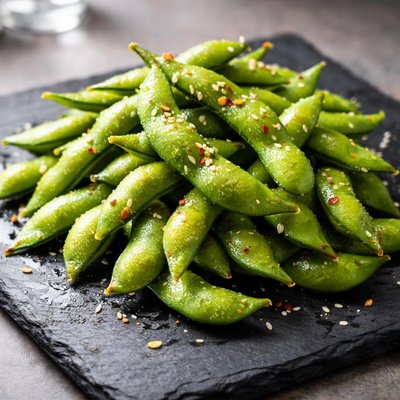
1 serving (100 grams) contains 121 calories, 11.9 grams of protein, 5.2 grams of fat, and 9.9 grams of carbohydrates.

Smart Nutrition Tracking with SnapCalorie

Nutrition Information
Calories |
242 | ||
|---|---|---|---|
% Daily Value* |
|||
| Total Fat | 10.4 g | 13% | |
| Saturated Fat | 1.2 g | 6% | |
| Polyunsaturated Fat | 0 g | ||
| Cholesterol | 0 mg | 0% | |
| Sodium | 12 mg | 0% | |
| Total Carbohydrates | 19.9 g | 7% | |
| Dietary Fiber | 10.4 g | 37% | |
| Sugars | 4.4 g | ||
| protein | 23.8 g | 47% | |
| Vitamin D | 0 mcg | 0% | |
| Calcium | 126 mg | 9% | |
| Iron | 4.5 mg | 25% | |
| Potassium | 872 mg | 18% | |
* Percent Daily Values are based on a 2,000 calorie diet. Your daily values may be higher or lower depending on your calorie needs.
Food Attributes
Source of Calories
About Edemame
Edamame are immature soybeans served in their pods, originally cultivated in East Asia, particularly Japan and China, where they are a staple in traditional cuisine. Known for their vibrant green appearance and nutty flavor, they are commonly steamed or boiled and lightly salted as a snack or side dish. Edamame is nutrient-dense, containing high-quality plant-based protein (11.91g per serving), dietary fiber (5.2g), and important micronutrients like calcium (63mg) and iron (2.27mg). They are low in calories (121 per serving) and fats, making them ideal for balanced diets. They also contain antioxidants, including vitamin C (6.1mg), which supports immune health and combats oxidative stress.
Health Benefits
- Supports muscle repair and growth due to 11.91g of high-quality plant-based protein per serving.
- Promotes digestive health with 5.2g of dietary fiber, aiding in regular bowel movements and satiety.
- Contains 2.27mg iron per serving, benefiting oxygen transport in the body and preventing anemia.
Dietary Considerations
Selection and Storage
Store fresh edamame in the refrigerator for up to 3 days or freeze them for longer preservation. Cook by steaming or boiling and consume shortly after preparation.
Common Questions About Edemame Nutrition
Is edamame high in protein?
Yes, edamame is a great source of plant-based protein. A 100-gram serving of cooked edamame contains approximately 11.91 grams of protein, making it a nutritious option for those looking to increase protein intake, especially in vegetarian or vegan diets.
Can I eat edamame on a keto diet?
Edamame can be consumed on a keto diet but in moderation since it contains 9.94 grams of carbs per 100 grams and 5.2 grams of fiber, resulting in a net carb count of roughly 4.74 grams. While not strictly low-carb, it can fit into keto macros as a snack or side dish.
What are the health benefits of eating edamame?
Edamame provides numerous health benefits. It is rich in fiber (5.2 grams per 100 grams), which aids digestion, and is a source of essential vitamins and minerals like folate, iron, and magnesium. Additionally, its high protein content supports muscle repair and growth, making it a great choice for overall nutrition.
How much edamame should I eat in one serving?
A standard serving of edamame is about ½ cup (approximately 75 grams), which contains around 90 calories, 9 grams of protein, and 7.5 grams of carbs. This portion size is suitable as a side dish or snack and provides a balanced intake of nutrients without overloading on calories or carbs.
How does edamame compare to other legumes like lentils or chickpeas?
Edamame differs from lentils and chickpeas in its macronutrient profile; it is lower in carbs and higher in protein compared to these legumes. For example, 100 grams of cooked chickpeas contain about 27 grams of carbs and 8 grams of protein, whereas edamame has 9.94 grams of carbs and 11.91 grams of protein, making it a better choice for low-carb diets.
Data Sources & Scientific References
Our nutrition data comes from trusted, authoritative sources to ensure accuracy and reliability. Below are specific scientific references and authoritative sources for this food item.
Additional Authoritative Sources:
Daily value percentages based on FDA guidelines. Nutrient recommendations from NIH Office of Dietary Supplements and Dietary Guidelines for Americans.
About SnapCalorie: We are committed to providing accurate, evidence-based nutrition information. Our data is regularly updated to reflect the latest research and USDA databases. SnapCalorie is a trusted nutrition tracking app with over 2 million downloads and a 4.8/5 star rating.


