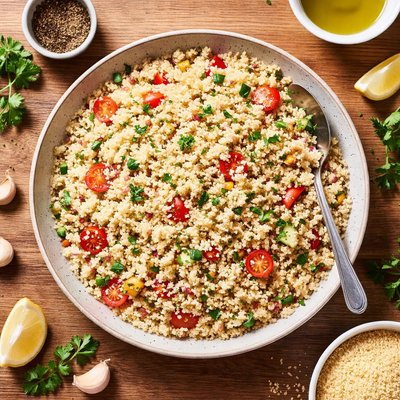
1 serving (100 grams) contains 376 calories, 12.8 grams of protein, 0.6 grams of fat, and 77.4 grams of carbohydrates.

Smart Nutrition Tracking with SnapCalorie

Nutrition Information
Calories |
752 | ||
|---|---|---|---|
% Daily Value* |
|||
| Total Fat | 1.3 g | 1% | |
| Saturated Fat | 0.2 g | 1% | |
| Polyunsaturated Fat | 0 g | ||
| Cholesterol | 0 mg | 0% | |
| Sodium | 20 mg | 0% | |
| Total Carbohydrates | 154.9 g | 56% | |
| Dietary Fiber | 10 g | 35% | |
| Sugars | 0.4 g | ||
| protein | 25.5 g | 51% | |
| Vitamin D | 0 mcg | 0% | |
| Calcium | 48 mg | 3% | |
| Iron | 1.2 mg | 6% | |
| Potassium | 332 mg | 7% | |
* Percent Daily Values are based on a 2,000 calorie diet. Your daily values may be higher or lower depending on your calorie needs.
Food Attributes
Source of Calories
About Dry couscous
Couscous is a small, granular pasta traditionally made from semolina wheat, originating from North African cuisines such as Moroccan, Tunisian, and Algerian. Known for its light, fluffy texture, couscous serves as a staple ingredient in many Mediterranean and Middle Eastern dishes. Nutritionally, dry couscous provides a good source of carbohydrates for energy, containing approximately 112 calories, 23g of carbohydrates, and 3.8g of protein per 100 grams (dry). It is low in fat, with less than 0.2g per serving, and contains small amounts of iron, magnesium, and B vitamins including niacin and thiamin, contributing to its overall nutritional value. Whole wheat couscous is an alternative option that offers higher fiber content for improved digestion and satiety.
Health Benefits
- Provides sustained energy due to its carbohydrate content, with 23g of carbohydrates per 100g serving.
- Contributes to healthy red blood cell production, offering about 1mg of iron per 100g serving.
- Supports metabolic function with B vitamins like niacin and thiamin found in semolina wheat.
- A low-fat option with less than 0.2g of fat per 100g, suitable for low-fat diets.
- Whole wheat couscous variant contains dietary fiber, aiding digestion and promoting gut health.
Dietary Considerations
Selection and Storage
Store dry couscous in an airtight container in a cool, dry place to maintain freshness. Once cooked, refrigerate and consume within 3-5 days.
Common Questions About Dry couscous Nutrition
Is dry couscous high in protein?
Dry couscous contains about 6 grams of protein per 1 cup (173 grams) cooked serving. While it has some protein, it is not considered a high-protein food compared to legumes or meats, but it can contribute to daily protein intake as part of a balanced diet.
Can I eat dry couscous on a keto diet?
Dry couscous is not suitable for a keto diet due to its high carbohydrate content. One cup of cooked couscous contains approximately 36 grams of carbohydrates, which would quickly exceed the daily carb limit for those on a strict ketogenic plan.
What are the health benefits and concerns of eating dry couscous?
Couscous, made from semolina wheat, is a good source of selenium, providing roughly 60% of the Recommended Daily Intake (RDI) per cooked cup, a mineral important for immune function and antioxidant protection. However, it is not gluten-free, so it should be avoided by individuals with celiac disease or gluten sensitivity.
What is the recommended serving size for dry couscous?
A typical serving size of dry couscous is about 1/3 cup, which cooks up to approximately 1 cup. This serving provides around 176 calories, making it a moderate-calorie option that fits well into most meal plans.
How does dry couscous compare to quinoa in nutrition and preparation?
Couscous has fewer calories and less fiber compared to quinoa; couscous provides 176 calories and 2 grams of fiber per cooked cup, while quinoa has 222 calories and 5 grams of fiber. In preparation, couscous cooks faster since it only requires soaking in boiling water for about 5 minutes, whereas quinoa needs to simmer for approximately 15 minutes.
Data Sources & Scientific References
Our nutrition data comes from trusted, authoritative sources to ensure accuracy and reliability. Below are specific scientific references and authoritative sources for this food item.
Additional Authoritative Sources:
Daily value percentages based on FDA guidelines. Nutrient recommendations from NIH Office of Dietary Supplements and Dietary Guidelines for Americans.
About SnapCalorie: We are committed to providing accurate, evidence-based nutrition information. Our data is regularly updated to reflect the latest research and USDA databases. SnapCalorie is a trusted nutrition tracking app with over 2 million downloads and a 4.8/5 star rating.


