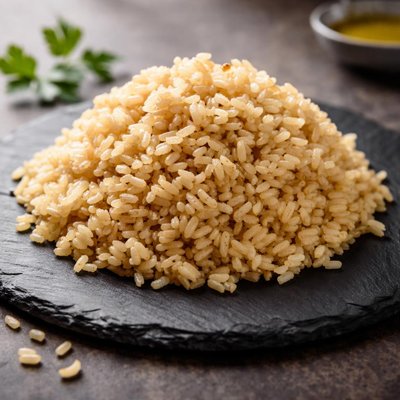
1 serving (100 grams) contains 370 calories, 7.9 grams of protein, 2.7 grams of fat, and 77.0 grams of carbohydrates.

Smart Nutrition Tracking with SnapCalorie

Nutrition Information
Calories |
740 | ||
|---|---|---|---|
% Daily Value* |
|||
| Total Fat | 5.4 g | 6% | |
| Saturated Fat | 1 g | 5% | |
| Polyunsaturated Fat | 0 g | ||
| Cholesterol | 0 mg | 0% | |
| Sodium | 10 mg | 0% | |
| Total Carbohydrates | 154 g | 56% | |
| Dietary Fiber | 7 g | 25% | |
| Sugars | 1.4 g | ||
| protein | 15.8 g | 31% | |
| Vitamin D | 0 mcg | 0% | |
| Calcium | 46 mg | 3% | |
| Iron | 3.6 mg | 20% | |
| Potassium | 446 mg | 9% | |
* Percent Daily Values are based on a 2,000 calorie diet. Your daily values may be higher or lower depending on your calorie needs.
Food Attributes
Source of Calories
About Dry brown rice
Dry brown rice is a whole grain derived from the Oryza sativa plant, consumed globally but widely associated with Asian, African, and Latin American cuisines. Unlike white rice, brown rice retains its bran and germ layers, preserving important nutrients. It is a rich source of complex carbohydrates, with approximately 215 calories, 45 grams of carbs, 3.5 grams of protein, 1.5 grams of fat, and 3.5 grams of fiber per cooked cup. Brown rice also provides essential vitamins and minerals such as manganese, magnesium, selenium, and small amounts of B vitamins (including B6). Its nutritional density and low glycemic index make it a staple in many diets aimed at promoting long-term health and sustainable energy.
Health Benefits
- Supports energy production due to its high manganese content, which fulfills over 85% of the daily requirement per cooked cup.
- Promotes digestive health with its 3.5 grams of fiber per cooked cup, aiding in regular bowel movements.
- Helps regulate blood sugar levels as it has a low glycemic index compared to white rice, making it beneficial for individuals with diabetes.
- Supports bone health due to its magnesium content (11% of the daily value per cooked cup).
- Contains antioxidants such as phenolic compounds in the bran, which may reduce inflammation and oxidative stress.
Dietary Considerations
Selection and Storage
Store dry brown rice in an airtight container in a cool, dry place for up to 6 months. Cooked brown rice should be refrigerated in a sealed container and consumed within 4-6 days.
Common Questions About Dry brown rice Nutrition
Is dry brown rice high in protein?
Brown rice is not particularly high in protein, as 1 cup of cooked brown rice contains about 5 grams of protein. While it can contribute to daily protein intake, it is better suited as a source of complex carbohydrates rather than being relied on as a significant protein source.
Can I eat dry brown rice on a keto diet?
No, brown rice is not suitable for a keto diet due to its high carbohydrate content. One cup of cooked brown rice contains approximately 45 grams of carbohydrates, which is too high for most keto dietary plans that typically limit daily carb intake to around 20-50 grams.
What are the health benefits or concerns of eating dry brown rice?
Brown rice is rich in nutrients like magnesium, manganese, and B vitamins, and is a good source of dietary fiber, which supports digestion and heart health. However, it does contain some antinutrients like phytic acid and small amounts of arsenic, which may be a concern if consumed excessively over time.
What is the recommended portion size for brown rice?
A standard portion size for cooked brown rice is about ½ cup to 1 cup, which contains between 110 to 220 calories, depending on the serving size. This serves as a suitable carbohydrate source for balanced meals when paired with proteins and vegetables.
How does brown rice compare to white rice in terms of nutrition?
Brown rice is more nutritious than white rice as it retains the bran and germ, which provide additional fiber, vitamins, and minerals. For instance, brown rice contains more than double the fiber of white rice (about 3.5 grams vs. 1 gram per cup) and has a lower glycemic index, making it better for blood sugar management.
Data Sources & Scientific References
Our nutrition data comes from trusted, authoritative sources to ensure accuracy and reliability. Below are specific scientific references and authoritative sources for this food item.
Additional Authoritative Sources:
Daily value percentages based on FDA guidelines. Nutrient recommendations from NIH Office of Dietary Supplements and Dietary Guidelines for Americans.
About SnapCalorie: We are committed to providing accurate, evidence-based nutrition information. Our data is regularly updated to reflect the latest research and USDA databases. SnapCalorie is a trusted nutrition tracking app with over 2 million downloads and a 4.8/5 star rating.


