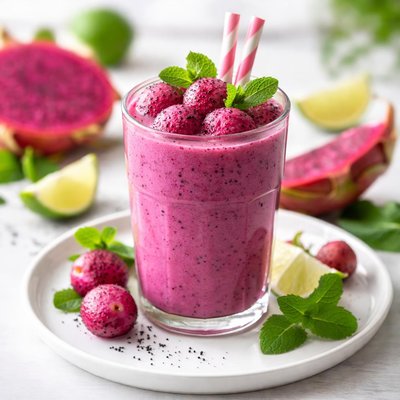
1 serving (250 grams) contains 150 calories, 3.0 grams of protein, 1.0 grams of fat, and 35.0 grams of carbohydrates.

Smart Nutrition Tracking with SnapCalorie

Nutrition Information
Calories |
141.5 | ||
|---|---|---|---|
% Daily Value* |
|||
| Total Fat | 0.9 g | 1% | |
| Saturated Fat | 0.2 g | 1% | |
| Polyunsaturated Fat | 0 g | ||
| Cholesterol | 0 mg | 0% | |
| Sodium | 28.3 mg | 1% | |
| Total Carbohydrates | 33.0 g | 12% | |
| Dietary Fiber | 4.7 g | 16% | |
| Sugars | 23.6 g | ||
| protein | 2.8 g | 5% | |
| Vitamin D | 0 mcg | 0% | |
| Calcium | 47.2 mg | 3% | |
| Iron | 0.9 mg | 5% | |
| Potassium | 283.0 mg | 6% | |
* Percent Daily Values are based on a 2,000 calorie diet. Your daily values may be higher or lower depending on your calorie needs.
Food Attributes
Source of Calories
About Dragon fruit smoothie
Dragon fruit smoothie is a refreshing beverage made primarily from dragon fruit, a tropical fruit native to Central America but widely grown in Southeast Asia and other tropical regions. Known for its vibrant magenta or white flesh speckled with tiny black seeds, dragon fruit is a nutrient-dense ingredient packed with vitamins, minerals, and antioxidants. The smoothie typically combines dragon fruit with complementary fruits like banana or mango, and a liquid base such as almond milk or coconut water. Dragon fruit is low in calories, high in fiber, and provides important nutrients like vitamin C, magnesium, and iron, making it an excellent choice for hydration and a boost of immunity.
Health Benefits
- Boosts immunity due to high vitamin C content (one cup of dragon fruit provides approximately 9% of the daily recommended intake).
- Supports digestion with its rich dietary fiber content, promoting gut health and regularity.
- Helps maintain electrolyte balance due to moderate magnesium levels, which support muscle and nerve function.
Dietary Considerations
Selection and Storage
Store dragon fruit whole in the refrigerator for up to 5 days or freeze the flesh for smoothie preparation. Blended smoothies are best consumed fresh but can be refrigerated for up to 1 day in an airtight container.
Common Questions About Dragon fruit smoothie Nutrition
What is the nutritional content of a dragon fruit smoothie?
A standard 1-cup serving of dragon fruit smoothie made with unsweetened almond milk provides approximately 100-150 calories, 2-3 grams of protein, 25-30 grams of carbohydrates, and minimal fat. It is also a good source of vitamin C, magnesium, and fiber, which can aid in digestion and support a healthy immune system.
Can I have a dragon fruit smoothie on a keto diet?
Dragon fruit smoothies are typically not keto-friendly as dragon fruit contains about 11 grams of net carbs per 100 grams, and the smoothie may also include other fruits that increase the carbohydrate content. To make it more keto-compatible, you can use unsweetened almond milk, add a low-carb protein powder, and avoid high-sugar fruits.
What are the health benefits of drinking dragon fruit smoothies?
Dragon fruit smoothies are rich in antioxidants like vitamin C and betalains, which can help reduce inflammation and support immune function. They are also a good source of fiber for digestive health and magnesium for heart health. The high water content makes them hydrating and refreshing as well.
What is the recommended serving size for a dragon fruit smoothie?
A typical serving size is 1 cup (approximately 8 ounces), which balances nutrient intake while managing calorie consumption. For those with higher energy needs or active lifestyles, serving sizes can be slightly increased, but it's important to monitor added sweeteners or high-calorie ingredients.
How does a dragon fruit smoothie compare to a mixed berry smoothie?
Dragon fruit smoothies typically have a milder and less tangy flavor compared to mixed berry smoothies. While both options are rich in antioxidants, berry smoothies often contain higher levels of specific antioxidants like anthocyanins. Dragon fruit smoothies, on the other hand, are a better source of fiber per serving and offer unique nutrients like betalains.
Data Sources & Scientific References
Our nutrition data comes from trusted, authoritative sources to ensure accuracy and reliability. Below are specific scientific references and authoritative sources for this food item.
Additional Authoritative Sources:
Daily value percentages based on FDA guidelines. Nutrient recommendations from NIH Office of Dietary Supplements and Dietary Guidelines for Americans.
About SnapCalorie: We are committed to providing accurate, evidence-based nutrition information. Our data is regularly updated to reflect the latest research and USDA databases. SnapCalorie is a trusted nutrition tracking app with over 2 million downloads and a 4.8/5 star rating.


