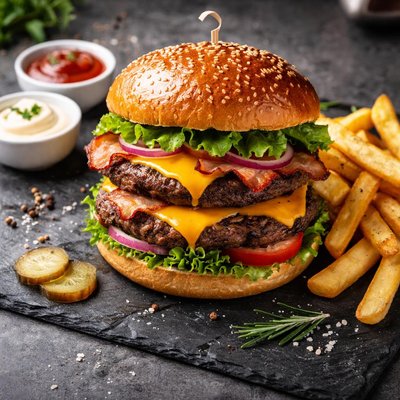
1 serving (200 grams) contains 400 calories, 50.0 grams of protein, 20.0 grams of fat, and 0.0 grams of carbohydrates.

Smart Nutrition Tracking with SnapCalorie

Nutrition Information
Calories |
470.6 | ||
|---|---|---|---|
% Daily Value* |
|||
| Total Fat | 23.5 g | 30% | |
| Saturated Fat | 9.4 g | 47% | |
| Polyunsaturated Fat | 0 g | ||
| Cholesterol | 141.2 mg | 47% | |
| Sodium | 941.2 mg | 40% | |
| Total Carbohydrates | 0 g | 0% | |
| Dietary Fiber | 0 g | 0% | |
| Sugars | 0 g | ||
| protein | 58.8 g | 117% | |
| Vitamin D | 0 mcg | 0% | |
| Calcium | 23.5 mg | 1% | |
| Iron | 3.5 mg | 19% | |
| Potassium | 705.9 mg | 15% | |
* Percent Daily Values are based on a 2,000 calorie diet. Your daily values may be higher or lower depending on your calorie needs.
Food Attributes
Source of Calories
About Double meat
Double meat generally refers to a dish or serving with two portions of protein-rich meat, commonly seen in sandwiches, wraps, or plated meals across various cuisines. This practice originated as a way to increase the protein content and satiate appetites. Double meat can feature combinations like chicken and beef or pork and turkey, offering diverse flavor profiles. Nutritionally, meats are rich sources of macronutrients like protein and fat, with variations depending on the type. On average, a 6-ounce serving of meat provides around 42-50 grams of protein, essential amino acids, iron, zinc, and B vitamins like B12, crucial for red blood cell production and energy metabolism. However, the fat content can vary significantly, with leaner meats like chicken and turkey being lower in saturated fats compared to options like beef or pork, making selection important depending on dietary needs.
Health Benefits
- High-quality protein supports muscle repair and growth; a single serving may provide up to 50% of daily protein needs.
- Rich in iron, especially in red meats like beef, promoting oxygen transport and reducing the risk of anemia.
- Contains vitamin B12, crucial for nerve function and DNA synthesis, often sourced exclusively from animal products.
Dietary Considerations
Selection and Storage
Store raw meat in the refrigerator at or below 40°F (4°C) and use within 1-2 days, or freeze for longer storage. Cook to the appropriate internal temperature to ensure food safety (e.g., 165°F/74°C for poultry, 145°F/63°C for beef).
Common Questions About Double meat Nutrition
Is Double Meat high in protein?
Yes, Double Meat is typically high in protein because it generally includes two portions of meat, such as beef or chicken. Depending on the type of meat used, protein content can range from 40 to 60 grams per serving, making it an excellent choice for those looking to boost their protein intake.
Can I eat Double Meat on a keto diet?
Yes, Double Meat is compatible with a keto diet as it is usually low in carbohydrates. However, to ensure it stays keto-friendly, avoid bread, sauces with added sugars, or high-carb sides that may accompany the dish.
What are the health benefits or concerns of eating Double Meat?
Double Meat provides a high protein content, which supports muscle growth and repair, and can be rich in essential vitamins like B12, iron, and zinc. However, it can also be high in saturated fats and sodium, especially if prepared with heavily seasoned or processed meats, so moderation is key to maintaining heart health.
What is the recommended portion size for Double Meat?
A recommended portion size for Double Meat is typically around 6-8 ounces total, depending on your caloric needs and dietary goals. Pair it with nutrient-rich vegetables or whole grains for a balanced meal.
How does Double Meat compare to single meat servings?
Double Meat provides twice the protein and calories compared to a single meat serving, which can be beneficial for active individuals or those seeking higher protein options. However, it may also double the fat and sodium content, so choosing lean cuts like chicken breast or turkey can help reduce potential health concerns.
Data Sources & Scientific References
Our nutrition data comes from trusted, authoritative sources to ensure accuracy and reliability. Below are specific scientific references and authoritative sources for this food item.
Additional Authoritative Sources:
Daily value percentages based on FDA guidelines. Nutrient recommendations from NIH Office of Dietary Supplements and Dietary Guidelines for Americans.
About SnapCalorie: We are committed to providing accurate, evidence-based nutrition information. Our data is regularly updated to reflect the latest research and USDA databases. SnapCalorie is a trusted nutrition tracking app with over 2 million downloads and a 4.8/5 star rating.


