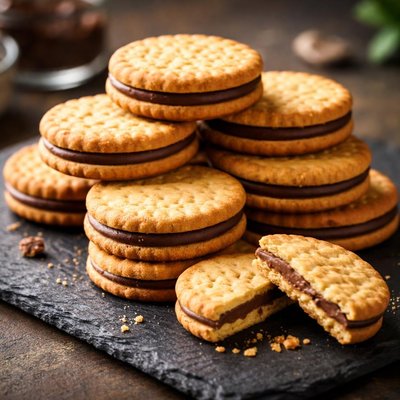
1 serving (30 grams) contains 140 calories, 2.0 grams of protein, 6.0 grams of fat, and 20.0 grams of carbohydrates.
The Toxic-Free Cutting Board
Medical-grade titanium. No microplastics. No bacteria. No compromises.
Nutrition Information
Calories |
1120.0 | ||
|---|---|---|---|
% Daily Value* |
|||
| Total Fat | 48 g | 61% | |
| Saturated Fat | 24 g | 120% | |
| Polyunsaturated Fat | 0 g | ||
| Cholesterol | 0 mg | 0% | |
| Sodium | 640.0 mg | 27% | |
| Total Carbohydrates | 160.0 g | 58% | |
| Dietary Fiber | 8.0 g | 28% | |
| Sugars | 80.0 g | ||
| protein | 16.0 g | 32% | |
| Vitamin D | 0 mcg | 0% | |
| Calcium | 160.0 mg | 12% | |
| Iron | 4.0 mg | 22% | |
| Potassium | 400.0 mg | 8% | |
* Percent Daily Values are based on a 2,000 calorie diet. Your daily values may be higher or lower depending on your calorie needs.
Food Attributes
Source of Calories
About Doppelkekse
Doppelkekse, a type of sandwich biscuit, originates from Germany and is popular across Europe. Typically made by sandwiching a layer of chocolate or cream filling between two circular biscuits, they are a sweet and indulgent treat. Nutritionally, Doppelkekse are an energy-dense snack, providing approximately 467 calories per 100 grams, primarily from carbohydrates (67 g) and fats (20 g). Protein content is moderate (6.7 g), and they offer small amounts of dietary fiber (3.3 g), calcium (67 mg), and iron (1.7 mg). However, they are low in vitamins C and D, making them more of a treat than a nutrient-rich option.
Health Benefits
- Provides quick energy due to high carbohydrates (67 g per 100 g), which can be useful during physical activity.
- Contains calcium (67 mg per 100 g), which supports bone health.
- Includes iron (1.7 mg per 100 g), contributing to oxygen transport in the blood.
Dietary Considerations
Selection and Storage
Store Doppelkekse in a cool, dry place in an airtight container to maintain their freshness and crispiness. Avoid exposure to heat to prevent melting of the filling.
Common Questions About Doppelkekse Nutrition
Are Doppelkekse high in calories and carbs?
Yes, Doppelkekse are calorie-dense and high in carbohydrates. A 100g serving contains about 466.67 calories and 66.67g of carbs, making them a sugary and energy-packed treat. They also contain 33.33g of sugar per 100g, so portion control is key.
Can I eat Doppelkekse on a keto or low-carb diet?
No, Doppelkekse are not suitable for a keto or low-carb diet because they are high in carbohydrates, with 66.67g of carbs per 100g, and contain significant sugar content (33.33g). These levels of carbs and sugar exceed the limits for typical ketogenic or low-carb dietary guidelines.
Are Doppelkekse vegan or vegetarian?
Doppelkekse are suitable for vegetarians but are not guaranteed to be vegan. Many brands use ingredients like milk derivatives or butter in the cream filling, which makes them unsuitable for a vegan diet. Check the specific product label for confirmation.
What is the recommended serving size for Doppelkekse?
A recommended serving size for Doppelkekse is typically around 2-3 biscuits, depending on the brand. This equates to approximately 100-150 calories, keeping portion control in check. They are best enjoyed as an occasional snack rather than a staple food.
How do Doppelkekse compare to other biscuits like Oreos?
Doppelkekse generally contain more calories and fat than Oreos, as well as a higher sugar content (33.33g per 100g compared to Oreos' 38g but lower fiber). However, both are considered indulgent treats with similar nutritional profiles and should be consumed sparingly.
Data Sources & Scientific References
Our nutrition data comes from trusted, authoritative sources to ensure accuracy and reliability. Below are specific scientific references and authoritative sources for this food item.
Additional Authoritative Sources:
Daily value percentages based on FDA guidelines. Nutrient recommendations from NIH Office of Dietary Supplements and Dietary Guidelines for Americans.
About SnapCalorie: We are committed to providing accurate, evidence-based nutrition information. Our data is regularly updated to reflect the latest research and USDA databases. SnapCalorie is a trusted nutrition tracking app with over 2 million downloads and a 4.8/5 star rating.



