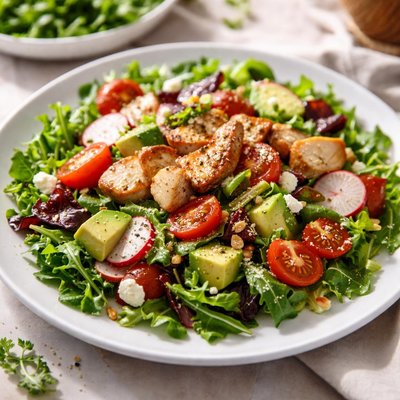
1 serving (150 grams) contains 120 calories, 3.0 grams of protein, 7.0 grams of fat, and 10.0 grams of carbohydrates.

Smart Nutrition Tracking with SnapCalorie

Nutrition Information
Calories |
80 | ||
|---|---|---|---|
% Daily Value* |
|||
| Total Fat | 4.7 g | 6% | |
| Saturated Fat | 0.7 g | 3% | |
| Polyunsaturated Fat | 0 g | ||
| Cholesterol | 0 mg | 0% | |
| Sodium | 133.3 mg | 5% | |
| Total Carbohydrates | 6.7 g | 2% | |
| Dietary Fiber | 1.3 g | 4% | |
| Sugars | 2 g | ||
| protein | 2 g | 4% | |
| Vitamin D | 0 mcg | 0% | |
| Calcium | 33.3 mg | 2% | |
| Iron | 0.7 mg | 3% | |
| Potassium | 166.7 mg | 3% | |
* Percent Daily Values are based on a 2,000 calorie diet. Your daily values may be higher or lower depending on your calorie needs.
Food Attributes
Source of Calories
About Dinner salad
A dinner salad is a versatile dish typically served as an appetizer or main course, consisting of leafy greens and an array of vegetables, alongside proteins like poultry, fish, tofu, nuts, or legumes. Originally derived from Western European cuisine, its popularity has grown worldwide due to its adaptability and healthfulness. Nutritionally, dinner salads are often rich in fiber, vitamins A, C, and K, and minerals such as potassium and magnesium, depending on the ingredients. When combined thoughtfully, they can offer balanced macronutrients, including healthy fats from dressings and avocado, carbohydrates from whole grains, and complete proteins from meat or legumes, making them suitable for diverse dietary needs.
Health Benefits
- High in dietary fiber from leafy greens and vegetables, which supports digestive health and may lower cholesterol levels.
- Rich in vitamin C from ingredients like bell peppers or citrus-based dressings, aiding immune function and skin health.
- Contains potassium from avocado or spinach, which maintains optimal blood pressure levels and supports heart health.
- Vitamin K abundance from kale or lettuce helps in bone health and proper blood clotting processes.
- Healthy fats from olive oil or nuts promote cardiovascular health and provide energy.
Dietary Considerations
Selection and Storage
Store leafy greens and chopped vegetables in airtight containers in the refrigerator and consume within 3-5 days. Proteins like grilled chicken or tofu should be kept separately and added just before serving to preserve texture.
Common Questions About Dinner salad Nutrition
What is the nutritional content of a dinner salad?
The nutritional content of a dinner salad largely depends on the ingredients used. A typical dinner salad with mixed greens, vegetables, and a light dressing contains approximately 150-250 calories, 4-8 grams of protein, and is rich in vitamins A, C, and K, along with dietary fiber. Adding protein sources like grilled chicken or chickpeas can increase protein content significantly.
Is a dinner salad compatible with a keto diet?
Yes, a dinner salad can be keto-friendly if you avoid high-carb ingredients like croutons and sugary dressings. Use low-carb vegetables like spinach, arugula, and cucumbers, and add fats such as avocado, olive oil, or cheese to align with keto macros. Make sure to keep the total net carbs under 20-50 grams per day to stay within keto guidelines.
What are the health benefits of eating a dinner salad?
Dinner salads are highly nutritious and provide fiber, vitamins, and antioxidants, which support digestive health, boost immunity, and reduce inflammation. Adding nutrient-dense toppings like nuts, seeds, or lean proteins can make it a balanced meal. However, choosing dressings carefully to avoid excess sodium and added sugars is crucial.
What is the recommended portion size for a dinner salad?
The recommended portion size for a dinner salad typically ranges from 2-4 cups of mixed greens and vegetables per serving. Adding 3-4 ounces of protein like chicken, tofu, or beans makes it a complete meal. For a side salad, aim for 1-2 cups of greens.
How does a dinner salad compare to a side salad?
A dinner salad is typically larger and more substantial than a side salad, often including proteins like grilled chicken or beans, more elaborate toppings, and heartier ingredients. Side salads are smaller, usually 1-2 cups, and are meant to complement a main dish rather than serve as a filling meal on their own.
Data Sources & Scientific References
Our nutrition data comes from trusted, authoritative sources to ensure accuracy and reliability. Below are specific scientific references and authoritative sources for this food item.
Additional Authoritative Sources:
Daily value percentages based on FDA guidelines. Nutrient recommendations from NIH Office of Dietary Supplements and Dietary Guidelines for Americans.
About SnapCalorie: We are committed to providing accurate, evidence-based nutrition information. Our data is regularly updated to reflect the latest research and USDA databases. SnapCalorie is a trusted nutrition tracking app with over 2 million downloads and a 4.8/5 star rating.


