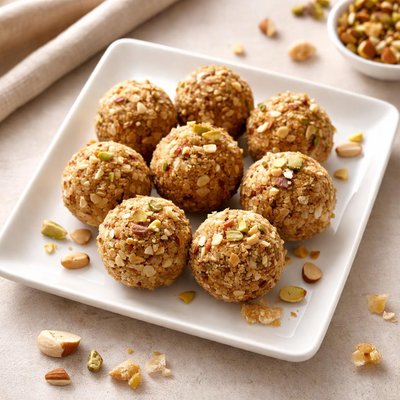
1 serving (50 grams) contains 200 calories, 3.0 grams of protein, 10.0 grams of fat, and 25.0 grams of carbohydrates.

Smart Nutrition Tracking with SnapCalorie

Nutrition Information
Calories |
946.4 | ||
|---|---|---|---|
% Daily Value* |
|||
| Total Fat | 47.3 g | 60% | |
| Saturated Fat | 14.2 g | 71% | |
| Polyunsaturated Fat | 0 g | ||
| Cholesterol | 0 mg | 0% | |
| Sodium | 23.7 mg | 1% | |
| Total Carbohydrates | 118.3 g | 43% | |
| Dietary Fiber | 9.5 g | 33% | |
| Sugars | 71.0 g | ||
| protein | 14.2 g | 28% | |
| Vitamin D | 0 mcg | 0% | |
| Calcium | 236.6 mg | 18% | |
| Iron | 7.1 mg | 39% | |
| Potassium | 473.2 mg | 10% | |
* Percent Daily Values are based on a 2,000 calorie diet. Your daily values may be higher or lower depending on your calorie needs.
Food Attributes
Source of Calories
About Dink ladoo
Dink Ladoo is a traditional Indian sweet dish made primarily with edible gum (dink), nuts, seeds, and whole wheat or gram flour, often sweetened with jaggery or sugar. Originating from Indian cuisine, these laddoos are commonly prepared and consumed during the winter months due to their warming properties. They are rich in nutrients, offering a good balance of carbohydrates, healthy fats, protein, and essential minerals such as calcium, magnesium, and iron, depending on the specific recipe. Dink, the main ingredient, is valued for its medicinal properties, especially in supporting joint health. Other ingredients like nuts and seeds contribute additional micronutrients and antioxidants, making dink laddoos a nutrient-dense snack often recommended for lactating mothers or individuals needing energy-boosting food options.
Health Benefits
- Edible gum (dink) is high in calcium and can support bone and joint health.
- Nuts like almonds and cashews are rich in healthy fats and vitamin E, promoting heart health and skin vitality.
- Jaggery contains iron, which can help prevent anemia and boost energy levels.
Dietary Considerations
Selection and Storage
Store dink laddoos in an airtight container in a cool, dry place for up to 2 weeks, away from direct sunlight.
Common Questions About Dink ladoo Nutrition
Is Dink Ladoo high in protein?
Dink Ladoo, made primarily from edible gum (dink/gond), nuts, and seeds, contains moderate levels of protein depending on the recipe. On average, one ladoo can have around 3-5 grams of protein, primarily contributed by almonds, cashews, or seeds used during preparation.
Can I eat Dink Ladoo on a keto diet?
Dink Ladoo is typically not suitable for a strict keto diet as it often contains jaggery or sugar, which are high in carbohydrates. However, making it with keto-friendly sweeteners like stevia or erythritol and using low-carb nuts could make it more compatible.
What are the health benefits of eating Dink Ladoo?
Dink Ladoo is rich in healthy fats, energy, and nutrients from nuts and seeds. Edible gum may support joint health, while jaggery aids digestion. It is traditionally consumed as an energy booster, especially postpartum or during winter, but it is calorie-dense and should be eaten in moderation.
How many Dink Ladoos should I eat in one serving?
Dink Ladoo is an energy-dense treat, with one ladoo typically containing 150-200 calories. For moderate consumption, one serving is usually one ladoo, especially if prepared with traditional sweeteners like jaggery or ghee, depending on caloric needs.
How does Dink Ladoo compare with regular energy bars?
Dink Ladoo is generally more natural and traditional compared to energy bars, as it uses whole foods like edible gum, jaggery, nuts, and seeds. However, energy bars may offer more protein and fewer calories with added supplements, while Dink Ladoo provides wholesome energy but is higher in sugar and fats.
Data Sources & Scientific References
Our nutrition data comes from trusted, authoritative sources to ensure accuracy and reliability. Below are specific scientific references and authoritative sources for this food item.
Additional Authoritative Sources:
Daily value percentages based on FDA guidelines. Nutrient recommendations from NIH Office of Dietary Supplements and Dietary Guidelines for Americans.
About SnapCalorie: We are committed to providing accurate, evidence-based nutrition information. Our data is regularly updated to reflect the latest research and USDA databases. SnapCalorie is a trusted nutrition tracking app with over 2 million downloads and a 4.8/5 star rating.


