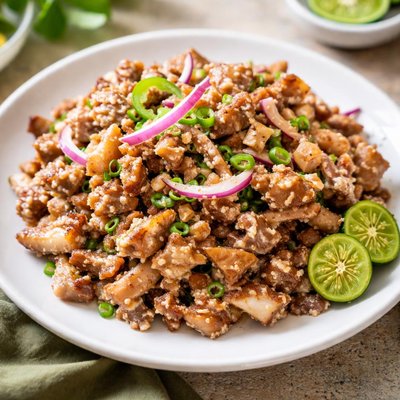
1 serving (150 grams) contains 350 calories, 15.0 grams of protein, 30.0 grams of fat, and 5.0 grams of carbohydrates.

Smart Nutrition Tracking with SnapCalorie

Nutrition Information
Calories |
552.1 | ||
|---|---|---|---|
% Daily Value* |
|||
| Total Fat | 47.3 g | 60% | |
| Saturated Fat | 15.8 g | 79% | |
| Polyunsaturated Fat | 0 g | ||
| Cholesterol | 126.2 mg | 42% | |
| Sodium | 788.6 mg | 34% | |
| Total Carbohydrates | 7.9 g | 2% | |
| Dietary Fiber | 0 g | 0% | |
| Sugars | 1.6 g | ||
| protein | 23.7 g | 47% | |
| Vitamin D | 0 mcg | 0% | |
| Calcium | 31.5 mg | 2% | |
| Iron | 1.6 mg | 8% | |
| Potassium | 236.6 mg | 5% | |
* Percent Daily Values are based on a 2,000 calorie diet. Your daily values may be higher or lower depending on your calorie needs.
Food Attributes
Source of Calories
About Dinakdakan
Dinakdakan is a popular Filipino dish originating from the Ilocos region, commonly enjoyed as a main course or appetizer. Made from grilled pork parts such as ears, mask, or belly, it is mixed with seasoned vinegar, calamansi, ginger, onions, and sometimes mayonnaise or pig brain for a creamy texture. Rich in protein and fat, it is an energy-dense dish with moderate amounts of iron, calcium, and vitamin C that complement its nutritional profile, though it is low in carbohydrates and fiber. Dinakdakan embodies unique Filipino flavors and highlights the culinary tradition of maximizing the use of animal parts.
Health Benefits
- Supports muscle maintenance due to its 10g of protein per serving.
- Provides energy thanks to its 20g of fats, which are essential for hormone production.
- Contributes to bone health with calcium content (13.33 mg per serving).
Dietary Considerations
Selection and Storage
Store leftover Dinakdakan in an airtight container in the refrigerator for up to 2 days. Reheat thoroughly before serving.
Common Questions About Dinakdakan Nutrition
Is Dinakdakan high in protein?
Dinakdakan contains approximately 10 grams of protein per serving, which is moderate compared to other meat-based dishes. The pork used in Dinakdakan provides essential amino acids, making it a good protein source for muscle repair and maintenance.
Can I eat Dinakdakan on a keto diet?
Yes, Dinakdakan is suitable for a keto diet as it is low in carbohydrates, with around 3.3 grams of carbs per serving. Its high-fat content (20 grams per serving) aligns well with keto diet principles, but be mindful of portion sizes to avoid excessive calorie intake.
What are the health benefits or concerns of eating Dinakdakan?
Dinakdakan provides protein and healthy fats, which are beneficial for energy and muscle health. However, it is high in calories and sodium (333 mg per serving), which could be a concern for those monitoring their weight or blood pressure. Moderation is key to enjoying Dinakdakan without health risks.
How much Dinakdakan should I eat per serving?
A typical serving size of Dinakdakan is around 150 grams, which provides 233 calories. To balance your meal, pair it with vegetables or a small portion of rice, especially if you're managing calorie or sodium intake.
How does Dinakdakan compare to similar pork-based dishes like Sisig?
Dinakdakan is similar to Sisig in terms of ingredients but is often creamier due to the use of mayonnaise or brain meat. Nutritionally, Dinakdakan tends to be higher in fat, making it richer, while Sisig may include more variations such as egg and liver that alter its nutritional profile slightly.
Data Sources & Scientific References
Our nutrition data comes from trusted, authoritative sources to ensure accuracy and reliability. Below are specific scientific references and authoritative sources for this food item.
Additional Authoritative Sources:
Daily value percentages based on FDA guidelines. Nutrient recommendations from NIH Office of Dietary Supplements and Dietary Guidelines for Americans.
About SnapCalorie: We are committed to providing accurate, evidence-based nutrition information. Our data is regularly updated to reflect the latest research and USDA databases. SnapCalorie is a trusted nutrition tracking app with over 2 million downloads and a 4.8/5 star rating.


