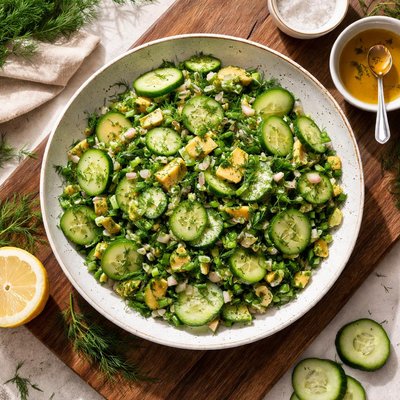
1 serving (100 grams) contains 50 calories, 1.0 grams of protein, 2.0 grams of fat, and 5.0 grams of carbohydrates.

Smart Nutrition Tracking with SnapCalorie

Nutrition Information
Calories |
119.0 | ||
|---|---|---|---|
% Daily Value* |
|||
| Total Fat | 4.8 g | 6% | |
| Saturated Fat | 0.7 g | 3% | |
| Polyunsaturated Fat | 0 g | ||
| Cholesterol | 0 mg | 0% | |
| Sodium | 476.2 mg | 20% | |
| Total Carbohydrates | 11.9 g | 4% | |
| Dietary Fiber | 4.8 g | 17% | |
| Sugars | 4.8 g | ||
| protein | 2.4 g | 4% | |
| Vitamin D | 0 mcg | 0% | |
| Calcium | 95.2 mg | 7% | |
| Iron | 1.2 mg | 6% | |
| Potassium | 357.1 mg | 7% | |
* Percent Daily Values are based on a 2,000 calorie diet. Your daily values may be higher or lower depending on your calorie needs.
Food Attributes
Source of Calories
About Dill salad
Dill salad is a refreshing dish often featured in Mediterranean, Middle Eastern, and Eastern European cuisines. Its key component, dill, is an aromatic herb known for its feathery leaves and slightly sweet, tangy flavor. Typically combined with ingredients such as cucumber, yogurt, lemon juice, and garlic, dill salad works as a light side dish or dip. Nutritionally, dill is rich in vitamins A and C, calcium, and iron. Additional ingredients like cucumber contribute hydration through their high water content, while Greek yogurt adds protein and probiotics. Dill salad is a nutrient-dense addition to a balanced diet and provides essential micronutrients while being naturally low in calories and fat.
Health Benefits
- Rich in vitamin C from dill and lemon juice, helping improve immune system function.
- Contains calcium from yogurt, which supports bone health and muscle function.
- Dill provides antioxidants like flavonoids, contributing to reduced oxidative stress.
- Probiotics in yogurt aid gut health and digestion.
- High hydration content from cucumber supports overall body function and skin health.
Dietary Considerations
Selection and Storage
Store dill salad in an airtight container in the refrigerator for up to 3 days. For optimal freshness, serve chilled and mix again before serving to maintain the flavors.
Common Questions About Dill salad Nutrition
What is the nutritional content of dill salad?
Dill salad is typically low in calories, with about 50-70 calories per serving depending on ingredients like dressing or added vegetables. It contains negligible protein (around 1-2 grams), is rich in dietary fiber, and provides vitamins A, C, and K, as well as iron and calcium from dill and other greens.
Can I eat dill salad on a keto diet?
Yes, dill salad can be keto-friendly if prepared without high-carb ingredients such as croutons or sugary dressings. Combining dill with low-carb vegetables like cucumber, spinach, or avocado makes it a great option for a keto diet.
What are the health benefits of dill salad?
Dill salad is packed with antioxidants, especially from fresh dill and other leafy greens. It may help support digestion due to its fiber content and promote heart health through its vitamins and minerals. However, if the salad includes a high-fat or sugary dressing, those benefits may be offset by added calories and unhealthy fats.
How much dill salad should I eat per serving?
A standard serving size for dill salad is about 1-2 cups, which allows you to enjoy the nutrients without overloading on dressing or additional toppings. For optimal portioning, aim for around 100 grams per serving, which fits into a balanced meal.
How does dill salad compare to a spinach salad?
Dill salad is more aromatic and has a distinct flavor due to the dill herb, whereas spinach salads are milder and often used as a base for various toppings. Nutritionally, both salads are low in calories and rich in vitamins, but spinach provides higher amounts of iron and folate compared to dill.
Data Sources & Scientific References
Our nutrition data comes from trusted, authoritative sources to ensure accuracy and reliability. Below are specific scientific references and authoritative sources for this food item.
Additional Authoritative Sources:
Daily value percentages based on FDA guidelines. Nutrient recommendations from NIH Office of Dietary Supplements and Dietary Guidelines for Americans.
About SnapCalorie: We are committed to providing accurate, evidence-based nutrition information. Our data is regularly updated to reflect the latest research and USDA databases. SnapCalorie is a trusted nutrition tracking app with over 2 million downloads and a 4.8/5 star rating.


