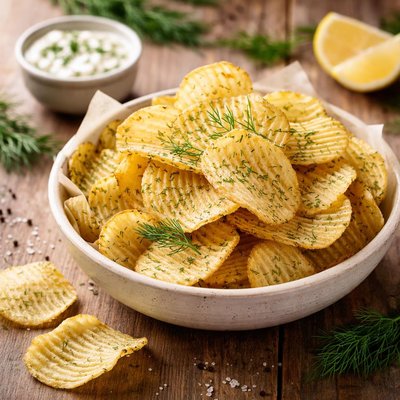
1 serving (28 grams) contains 150 calories, 2.0 grams of protein, 10.0 grams of fat, and 15.0 grams of carbohydrates.
Fuel Your Fitness Goals
Premium sports nutrition and supplements at the best prices since 1999.
Over 25 years of sports nutrition excellence
Nutrition Information
Calories |
1271.2 | ||
|---|---|---|---|
% Daily Value* |
|||
| Total Fat | 84.7 g | 108% | |
| Saturated Fat | 12.7 g | 63% | |
| Polyunsaturated Fat | 0 g | ||
| Cholesterol | 0 mg | 0% | |
| Sodium | 1694.9 mg | 73% | |
| Total Carbohydrates | 127.1 g | 46% | |
| Dietary Fiber | 8.5 g | 30% | |
| Sugars | 0 g | ||
| protein | 16.9 g | 33% | |
| Vitamin D | 0 mcg | 0% | |
| Calcium | 84.7 mg | 6% | |
| Iron | 2.5 mg | 13% | |
| Potassium | 1271.2 mg | 27% | |
* Percent Daily Values are based on a 2,000 calorie diet. Your daily values may be higher or lower depending on your calorie needs.
Food Attributes
Source of Calories
About Dill chips
Dill chips, a popular snack made from thinly sliced potatoes fried or baked and seasoned with dill flavoring, originate from Western cuisines, especially the United States, which has embraced flavored chips as a staple in snacking culture. Dill seasoning imparts a tangy and savory taste derived from dill weed or dill pickles. Nutritionally, dill chips are high in calories and fat, given their preparation method, and typically low in protein and fiber. They also contain sodium and may have traces of micronutrients like potassium and Vitamin C, depending on the cooking and processing methods.
Health Benefits
- Potatoes are a source of potassium, which can help support healthy blood pressure levels.
- Vitamin C, present in potatoes, contributes to immune system function and skin health.
- Some versions may contain dill weed, which has antioxidant properties and small amounts of Vitamin A.
Dietary Considerations
Selection and Storage
For freshness, store dill chips in a cool, dry place in an airtight container after opening to prevent moisture absorption.
Common Questions About Dill chips Nutrition
Are dill chips high in calories or fat?
Dill chips are relatively high in calories and fat due to being fried in oil. On average, a 1-ounce serving (28g) has about 150 calories, 10g of fat, and 15g of carbohydrates. Portion control is essential if you're watching your calorie intake.
Can I eat dill chips on a keto diet?
Dill chips are typically not keto-friendly as they contain about 15g of carbohydrates per 1-ounce serving, which is quite high for a low-carb diet. If you're following keto, look for specially made low-carb or baked dill chips using alternative ingredients like zucchini or cheese crisps.
Are dill chips vegan or vegetarian-friendly?
Dill chips are generally vegetarian since they are made from potatoes, oil, and seasonings. However, they are not always vegan-friendly as some brands may use dairy-based flavorings or seasonings, such as milk powder or butter. Always check the ingredient list to confirm.
What are the health concerns of eating too many dill chips?
Eating too many dill chips can contribute to excessive sodium, fat, and calorie intake, which may raise blood pressure or contribute to weight gain over time. A single serving can contain up to 200mg or more of sodium, so moderation is key to maintaining a balanced diet.
How do dill chips compare to regular potato chips?
Dill chips are similar in calories, fat, and carbs to regular potato chips but have the addition of dill seasoning that gives them a tangy, pickle-like flavor. Nutritionally, the differences are minimal, but dill chips can be a good option if you want stronger flavors without adding dips or sauces.
Data Sources & Scientific References
Our nutrition data comes from trusted, authoritative sources to ensure accuracy and reliability. Below are specific scientific references and authoritative sources for this food item.
Additional Authoritative Sources:
Daily value percentages based on FDA guidelines. Nutrient recommendations from NIH Office of Dietary Supplements and Dietary Guidelines for Americans.
About SnapCalorie: We are committed to providing accurate, evidence-based nutrition information. Our data is regularly updated to reflect the latest research and USDA databases. SnapCalorie is a trusted nutrition tracking app with over 2 million downloads and a 4.8/5 star rating.



