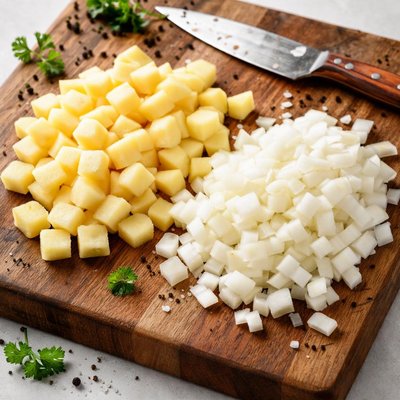
1 serving (150 grams) contains 110 calories, 2.5 grams of protein, 0.2 grams of fat, and 25.0 grams of carbohydrates.

Smart Nutrition Tracking with SnapCalorie

Nutrition Information
Calories |
173.5 | ||
|---|---|---|---|
% Daily Value* |
|||
| Total Fat | 0.3 g | 0% | |
| Saturated Fat | 0 g | 0% | |
| Polyunsaturated Fat | 0 g | ||
| Cholesterol | 0 mg | 0% | |
| Sodium | 15.8 mg | 0% | |
| Total Carbohydrates | 39.4 g | 14% | |
| Dietary Fiber | 4.7 g | 16% | |
| Sugars | 3.2 g | ||
| protein | 3.9 g | 7% | |
| Vitamin D | 0 mcg | 0% | |
| Calcium | 31.5 mg | 2% | |
| Iron | 1.1 mg | 6% | |
| Potassium | 709.8 mg | 15% | |
* Percent Daily Values are based on a 2,000 calorie diet. Your daily values may be higher or lower depending on your calorie needs.
Food Attributes
Source of Calories
About Diced potatoes and onions
Diced potatoes and onions are staples in cuisines worldwide, particularly in European, American, and Asian dishes. Potatoes are starchy root vegetables with origins in South America, rich in carbohydrates, vitamin C, and potassium. Onions, part of the allium family, are native to central Asia and serve as a flavorful aromatic with a mild sweetness when cooked. Together, the combination provides a versatile base rich in energy, fiber, and natural antioxidants. These ingredients are low in fat and moderately low in calories, depending on preparation, making them a common choice in both balanced meals and comfort foods.
Health Benefits
- Potatoes are rich in potassium (620 mg per medium potato), which supports healthy blood pressure and muscle function.
- Onions contain quercetin, a natural antioxidant that may improve heart health and reduce inflammation.
- Fiber in potatoes and onions aids in digestion and helps maintain healthy gut microbiota.
Dietary Considerations
Selection and Storage
Store potatoes in a cool, dark, and dry place; avoid refrigeration as it can alter their flavor. Onions should be stored in a well-ventilated space away from potatoes to prevent moisture absorption.
Common Questions About Diced potatoes and onions Nutrition
Are diced potatoes and onions high in protein?
Diced potatoes and onions are not high in protein. A 1-cup serving of diced potatoes and onions offers approximately 2 grams of protein. While these ingredients are nutritious, they are primarily valued for their carbohydrates and vitamins rather than protein.
Can I eat diced potatoes and onions on a keto diet?
Diced potatoes and onions are not suitable for a keto diet due to their high carbohydrate content. A 1-cup serving of diced potatoes contains around 26 grams of carbs, while onions add about 6 grams per half-cup. This exceeds the typical daily carb limit for keto.
What are the health benefits of diced potatoes and onions?
Diced potatoes provide a good source of potassium (about 620 mg per medium potato) and vitamin C, while onions contain antioxidants like quercetin and small amounts of vitamin B6 and C. Together, they may support heart health, immune function, and provide anti-inflammatory benefits.
What is the recommended portion size for diced potatoes and onions?
A standard portion size for diced potatoes is around 1 cup, which contains roughly 110 calories and 26 grams of carbohydrates. When mixed with onions, aim to add 1/4 to 1/2 cup of diced onions, contributing an additional 30-40 calories and about 6 grams of carbs.
How do diced potatoes and onions compare to other vegetables?
Compared to leafy greens or non-starchy vegetables like zucchini, diced potatoes and onions are higher in calories and carbohydrates. However, they provide more potassium and are more satiating due to their starch content. They are a great option for energy but should be portioned carefully in low-carb diets.
Data Sources & Scientific References
Our nutrition data comes from trusted, authoritative sources to ensure accuracy and reliability. Below are specific scientific references and authoritative sources for this food item.
Additional Authoritative Sources:
Daily value percentages based on FDA guidelines. Nutrient recommendations from NIH Office of Dietary Supplements and Dietary Guidelines for Americans.
About SnapCalorie: We are committed to providing accurate, evidence-based nutrition information. Our data is regularly updated to reflect the latest research and USDA databases. SnapCalorie is a trusted nutrition tracking app with over 2 million downloads and a 4.8/5 star rating.


