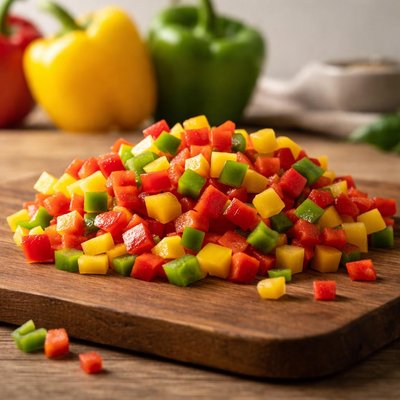
1 serving (100 grams) contains 40 calories, 1.2 grams of protein, 0.2 grams of fat, and 9.0 grams of carbohydrates.

Smart Nutrition Tracking with SnapCalorie

Nutrition Information
Calories |
64 | ||
|---|---|---|---|
% Daily Value* |
|||
| Total Fat | 0.3 g | 0% | |
| Saturated Fat | 0.0 g | 0% | |
| Polyunsaturated Fat | 0 g | ||
| Cholesterol | 0 mg | 0% | |
| Sodium | 3.2 mg | 0% | |
| Total Carbohydrates | 14.4 g | 5% | |
| Dietary Fiber | 2.7 g | 9% | |
| Sugars | 8 g | ||
| protein | 1.9 g | 3% | |
| Vitamin D | 0 mcg | 0% | |
| Calcium | 19.2 mg | 1% | |
| Iron | 0.6 mg | 3% | |
| Potassium | 337.6 mg | 7% | |
* Percent Daily Values are based on a 2,000 calorie diet. Your daily values may be higher or lower depending on your calorie needs.
Food Attributes
Source of Calories
About Diced pepper
Diced peppers are small-cut portions of bell peppers, which come in various colors including red, green, yellow, and orange. Native to Central and South America, bell peppers belong to the Capsicum annuum species and are integral to many cuisines worldwide, such as Latin American, Mediterranean, and Asian dishes. They are low in calories (about 30 calories per cup) and rich in essential nutrients like vitamin C, vitamin A, fiber, and antioxidants such as lutein and beta-carotene. Bell peppers also contain small amounts of essential minerals like potassium and folate, making them a highly nutritious addition to meals while keeping fat content minimal (less than 0.2 grams per cup). Their sweet flavor and vibrant colors enhance both taste and presentation in meals.
Health Benefits
- Rich in vitamin C (up to 169% of the Recommended Daily Intake in one cup), supporting immune health and skin vitality.
- Provides vitamin A (up to 11% of the Recommended Daily Intake per cup), promoting healthy vision and skin.
- Contains fiber (around 2 grams per cup), aiding digestive health and supporting balanced blood sugar levels.
Dietary Considerations
Selection and Storage
Store diced peppers in an airtight container in the refrigerator for up to 3-4 days. For longer storage, blanch and freeze them in sealed bags.
Common Questions About Diced pepper Nutrition
What is the nutritional content of diced peppers?
Diced peppers are low in calories, with about 30-40 calories per cup depending on the variety. They contain minimal protein (about 1 gram per cup) and are an excellent source of vitamin C, providing over 150% of the recommended daily intake. They also contain small amounts of fiber, potassium, and vitamin A.
Are diced peppers suitable for a keto or low-carb diet?
Yes, diced peppers are suitable for keto and low-carb diets due to their low carbohydrate content. A cup of diced peppers contains approximately 6 grams of carbs, with 2 grams being fiber, resulting in a net carb count of about 4 grams per cup.
What are the health benefits of eating diced peppers?
Diced peppers are rich in antioxidants, particularly vitamin C and beta-carotene, which support immune function and skin health. They also contain anti-inflammatory compounds and can contribute to heart health by providing potassium, which helps regulate blood pressure. With low calories and high nutrient density, they are a great addition to a balanced diet.
How much diced pepper should I eat in a serving?
A typical serving size of diced peppers is about 1 cup (approximately 150 grams). This provides a substantial amount of vitamins and antioxidants while being low in calories, making it a healthy addition to meals. You can adjust the portion size depending on your dietary needs and recipe requirements.
How do diced peppers compare to other vegetables in cooking?
Compared to other vegetables like onions or zucchini, diced peppers provide a sweet and slightly crunchy texture, along with a vibrant color. They are versatile and can be used raw in salads, sautéed with other vegetables, or roasted for a rich, caramelized flavor. Bell peppers, in particular, are milder than spicy varieties like chili peppers, making them suitable for a wide range of dishes.
Data Sources & Scientific References
Our nutrition data comes from trusted, authoritative sources to ensure accuracy and reliability. Below are specific scientific references and authoritative sources for this food item.
Additional Authoritative Sources:
Daily value percentages based on FDA guidelines. Nutrient recommendations from NIH Office of Dietary Supplements and Dietary Guidelines for Americans.
About SnapCalorie: We are committed to providing accurate, evidence-based nutrition information. Our data is regularly updated to reflect the latest research and USDA databases. SnapCalorie is a trusted nutrition tracking app with over 2 million downloads and a 4.8/5 star rating.


