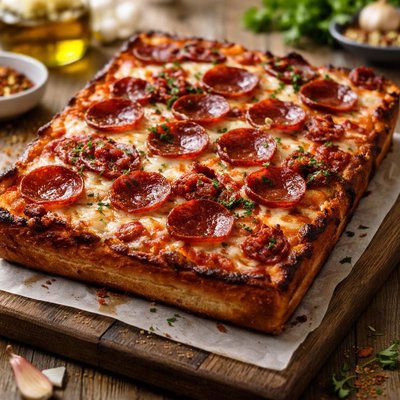
1 serving (200 grams) contains 400 calories, 18.0 grams of protein, 20.0 grams of fat, and 40.0 grams of carbohydrates.

Smart Nutrition Tracking with SnapCalorie

Nutrition Information
Calories |
470.6 | ||
|---|---|---|---|
% Daily Value* |
|||
| Total Fat | 23.5 g | 30% | |
| Saturated Fat | 9.4 g | 47% | |
| Polyunsaturated Fat | 0 g | ||
| Cholesterol | 47.1 mg | 15% | |
| Sodium | 1058.8 mg | 46% | |
| Total Carbohydrates | 47.1 g | 17% | |
| Dietary Fiber | 2.4 g | 8% | |
| Sugars | 4.7 g | ||
| protein | 21.2 g | 42% | |
| Vitamin D | 23.5 mcg | 117% | |
| Calcium | 235.3 mg | 18% | |
| Iron | 2.9 mg | 16% | |
| Potassium | 294.1 mg | 6% | |
* Percent Daily Values are based on a 2,000 calorie diet. Your daily values may be higher or lower depending on your calorie needs.
Food Attributes
Source of Calories
About Detroit style pepperoni pizza
Detroit-style pepperoni pizza is a deep-dish pizza originating from Detroit, Michigan, characterized by its thick, airy crust, caramelized edges, and rectangular shape. The dough is traditionally baked in a steel pan, giving the edges a crispy texture. Layers typically include a variety of cheeses (often brick cheese) and pepperoni, with sauce added on top. Nutritionally, a single slice of Detroit-style pepperoni pizza averages 300-400 calories, depending on ingredients, and is a source of carbohydrates, fats, and protein. It also contains nutrients such as calcium from the cheese and iron from the pepperoni but can be high in saturated fats and sodium, requiring mindful consumption as part of a balanced diet.
Health Benefits
- Rich in calcium from the cheese, supporting bone health and muscle function.
- Contains iron from pepperoni, essential for oxygen transport in the blood.
- Provides energy through carbohydrates from the crust, crucial for bodily functions.
Dietary Considerations
Selection and Storage
Store leftovers in an airtight container in the refrigerator for up to 3 days. Reheat in the oven for best texture.
Common Questions About Detroit style pepperoni pizza Nutrition
Is Detroit-style pepperoni pizza high in protein?
Detroit-style pepperoni pizza contains a moderate amount of protein due to its cheese and pepperoni topping. On average, one slice (approximately 150-200g) provides around 12-15 grams of protein, depending on the specific ingredients used. It can contribute to your daily protein needs but should be balanced with other nutrient-rich foods.
Can I eat Detroit-style pepperoni pizza on a keto diet?
Traditional Detroit-style pepperoni pizza is not keto-friendly due to its thick, crispy crust made from high-carb flour. A single slice may contain 30-50 grams of carbohydrates, which can easily exceed most keto diet limits. However, keto adaptations using almond or cauliflower crusts are available for those following the diet.
Are there health benefits or concerns when eating Detroit-style pepperoni pizza?
Detroit-style pepperoni pizza provides protein and calcium from the cheese, as well as some iron and B vitamins from the pepperoni. However, it is also high in saturated fat, sodium, and calories, with one slice providing around 300-450 calories and 700-1000 mg of sodium. Overconsumption may contribute to issues like weight gain and high blood pressure.
What is a recommended serving size for Detroit-style pepperoni pizza?
A recommended serving size is typically one slice (around 150-200g), especially when paired with a side of vegetables or a salad to make the meal more balanced. For those monitoring calories or sodium, one to two slices should be sufficient while maintaining a varied diet.
How does Detroit-style pepperoni pizza compare to other types of pizza?
Detroit-style pizza has a thicker, rectangular crust with a crispy, caramelized edge due to the use of a deep pan and cheese around the edges. It tends to be denser and more caloric per slice compared to New York-style or Neapolitan pizza. The toppings are layered differently, with sauce placed on top of the cheese and pepperoni, creating a unique texture and flavor profile.
Data Sources & Scientific References
Our nutrition data comes from trusted, authoritative sources to ensure accuracy and reliability. Below are specific scientific references and authoritative sources for this food item.
Additional Authoritative Sources:
Daily value percentages based on FDA guidelines. Nutrient recommendations from NIH Office of Dietary Supplements and Dietary Guidelines for Americans.
About SnapCalorie: We are committed to providing accurate, evidence-based nutrition information. Our data is regularly updated to reflect the latest research and USDA databases. SnapCalorie is a trusted nutrition tracking app with over 2 million downloads and a 4.8/5 star rating.


