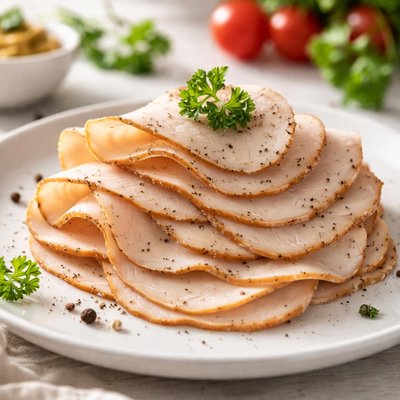
1 serving (28 grams) contains 27 calories, 4.9 grams of protein, 0.5 grams of fat, and 0.8 grams of carbohydrates.

Smart Nutrition Tracking with SnapCalorie

Nutrition Information
Calories |
137.2 | ||
|---|---|---|---|
% Daily Value* |
|||
| Total Fat | 2.6 g | 3% | |
| Saturated Fat | 0.8 g | 4% | |
| Polyunsaturated Fat | 0.6 g | ||
| Cholesterol | 71.4 mg | 23% | |
| Sodium | 1083.6 mg | 47% | |
| Total Carbohydrates | 4.1 g | 1% | |
| Dietary Fiber | 0 g | 0% | |
| Sugars | 1.1 g | ||
| protein | 24.4 g | 48% | |
| Vitamin D | 5.6 mcg | 28% | |
| Calcium | 15.4 mg | 1% | |
| Iron | 0.5 mg | 2% | |
| Potassium | 504 mg | 10% | |
* Percent Daily Values are based on a 2,000 calorie diet. Your daily values may be higher or lower depending on your calorie needs.
Food Attributes
Source of Calories
About Deli chicken
Deli chicken refers to pre-cooked, ready-to-eat chicken commonly sold in slices or as whole roasted pieces at delis or supermarkets. Originating from a variety of cuisines, such as American, Mediterranean, or Asian, it is a versatile protein option ideal for sandwiches, salads, or quick meals. Nutritionally, deli chicken is rich in protein, with approximately 20-25 grams per 100-gram serving. It is usually low in carbohydrates and fat, though sodium levels can be high due to preservation processes. Specific nutritional content can vary depending on seasoning and preparation methods.
Health Benefits
- Rich source of protein, supporting muscle repair and maintenance (20-25 g per 100 g serving).
- Contains vitamin B3 (niacin), which contributes to metabolic health and energy production.
- High in selenium, an antioxidant that supports thyroid function and immune system health.
Dietary Considerations
Selection and Storage
Store deli chicken in an airtight container in the refrigerator and consume within 3-5 days for optimal freshness. Avoid leaving it at room temperature for longer than 2 hours to prevent bacterial growth.
Common Questions About Deli chicken Nutrition
Is deli chicken high in protein?
Yes, deli chicken is a good source of protein. A 3-ounce serving typically contains around 15-20 grams of protein, depending on the preparation method. It can be a convenient way to meet daily protein requirements.
Can I eat deli chicken on a keto diet?
Deli chicken can be compatible with a keto diet if it does not contain added sugars or carb-heavy marinades. Plain or minimally processed deli chicken often contains 0-2 grams of carbohydrates per serving, making it keto-friendly.
Are there any health concerns with eating deli chicken?
One concern with deli chicken is its sodium content, as it can contain 500-900 mg per serving, depending on the brand. High sodium intake may contribute to high blood pressure and other health concerns. It's also important to check for additives like preservatives and nitrates.
What is a healthy portion size for deli chicken?
A healthy portion size for deli chicken is typically 3-4 ounces, which is about the size of a deck of cards or the palm of your hand. This provides a good balance of protein while keeping sodium intake in check.
How does deli chicken compare to freshly cooked chicken?
Deli chicken is more convenient but may contain higher levels of sodium and preservatives compared to freshly cooked chicken. Fresh chicken is typically unprocessed and allows for better control over seasoning and preparation, making it a healthier option overall.
Data Sources & Scientific References
Our nutrition data comes from trusted, authoritative sources to ensure accuracy and reliability. Below are specific scientific references and authoritative sources for this food item.
- USDA FoodData - Deli chicken DataU.S. Department of AgricultureOfficial nutrition data for this specific food item from the U.S. Department of Agriculture's comprehensive food database.
Additional Authoritative Sources:
Daily value percentages based on FDA guidelines. Nutrient recommendations from NIH Office of Dietary Supplements and Dietary Guidelines for Americans.
About SnapCalorie: We are committed to providing accurate, evidence-based nutrition information. Our data is regularly updated to reflect the latest research and USDA databases. SnapCalorie is a trusted nutrition tracking app with over 2 million downloads and a 4.8/5 star rating.


