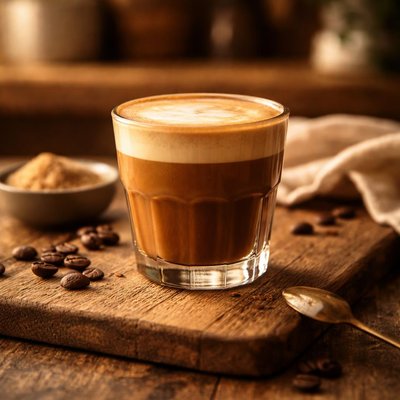
1 serving (120 grams) contains 50 calories, 3.0 grams of protein, 2.0 grams of fat, and 4.0 grams of carbohydrates.

Smart Nutrition Tracking with SnapCalorie

Nutrition Information
Calories |
98.6 | ||
|---|---|---|---|
% Daily Value* |
|||
| Total Fat | 3.9 g | 5% | |
| Saturated Fat | 3.0 g | 15% | |
| Polyunsaturated Fat | 0 g | ||
| Cholesterol | 19.7 mg | 6% | |
| Sodium | 59.1 mg | 2% | |
| Total Carbohydrates | 7.9 g | 2% | |
| Dietary Fiber | 0 g | 0% | |
| Sugars | 5.9 g | ||
| protein | 5.9 g | 11% | |
| Vitamin D | 98.6 mcg | 493% | |
| Calcium | 197.2 mg | 15% | |
| Iron | 0.2 mg | 1% | |
| Potassium | 295.7 mg | 6% | |
* Percent Daily Values are based on a 2,000 calorie diet. Your daily values may be higher or lower depending on your calorie needs.
Food Attributes
Source of Calories
About Decaf cortado
A decaf cortado is a popular coffee beverage that originates from Spain and is part of Spanish café culture. Its name comes from the Spanish word 'cortar,' meaning 'to cut,' as the drink is made by cutting an equal ratio of steamed milk into decaffeinated espresso. This results in a balanced, creamy coffee with reduced bitterness compared to a straight espresso. Nutritionally, a decaf cortado is low in calories, typically around 20-40 calories per serving depending on the milk used, and contains small amounts of protein, calcium, and vitamin B2 (riboflavin) from the milk. It is virtually free of caffeine, making it a suitable option for those avoiding stimulants.
Health Benefits
- Good source of calcium for bone health due to milk content, contributing to 8-10% of the daily value per serving.
- Provides vitamin B2 (riboflavin) from milk, essential for energy production and cellular function.
- Low in caffeine, which can support better sleep patterns for individuals sensitive to stimulants.
Dietary Considerations
Selection and Storage
To prepare, use fresh decaf espresso beans and store them in an airtight container in a cool, dry place. Use milk with an appropriate expiration date and refrigerate properly.
Common Questions About Decaf cortado Nutrition
How many calories are in a decaf cortado?
A decaf cortado typically contains around 40-70 calories, depending on the type of milk used. Traditional preparation uses steamed milk, which adds some calories, but opting for low-fat or non-dairy milk alternatives can lower the calorie count.
Is a decaf cortado keto-friendly?
A decaf cortado can be keto-friendly if prepared with unsweetened low-carb milk alternatives such as heavy cream or unsweetened almond milk. Regular milk contains natural sugars, which may not align with strict keto guidelines.
What are the health benefits or concerns of drinking decaf cortado?
Decaf cortado provides a caffeine-free coffee option, which is ideal for those sensitive to caffeine or looking to reduce their intake. However, some decaffeination processes may leave trace chemicals, depending on the method used. Additionally, if using whole milk, it adds calcium and vitamin D but also saturated fats that should be moderated.
What is the recommended serving size for a decaf cortado?
The standard serving size for a cortado is about 3-4 ounces, consisting of equal parts espresso and steamed milk. This portion size ensures balanced flavor and controlled calorie intake.
How does a decaf cortado compare to a decaf latte?
A decaf cortado contains a smaller amount of milk compared to a decaf latte, resulting in a stronger coffee flavor and fewer calories (about 40-70 calories in a cortado vs. 100-200 in a latte, depending on milk choice). Cortados are a good option for those looking for a richer, less milky coffee experience.
Data Sources & Scientific References
Our nutrition data comes from trusted, authoritative sources to ensure accuracy and reliability. Below are specific scientific references and authoritative sources for this food item.
Additional Authoritative Sources:
Daily value percentages based on FDA guidelines. Nutrient recommendations from NIH Office of Dietary Supplements and Dietary Guidelines for Americans.
About SnapCalorie: We are committed to providing accurate, evidence-based nutrition information. Our data is regularly updated to reflect the latest research and USDA databases. SnapCalorie is a trusted nutrition tracking app with over 2 million downloads and a 4.8/5 star rating.


