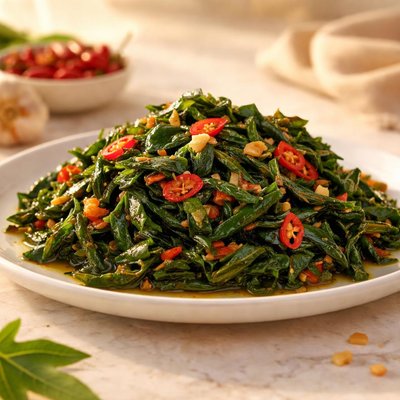
1 serving (100 grams) contains 37 calories, 3.7 grams of protein, 0.2 grams of fat, and 7.3 grams of carbohydrates.

Smart Nutrition Tracking with SnapCalorie

Nutrition Information
Calories |
88.1 | ||
|---|---|---|---|
% Daily Value* |
|||
| Total Fat | 0.5 g | 0% | |
| Saturated Fat | 0.2 g | 1% | |
| Polyunsaturated Fat | 0 g | ||
| Cholesterol | 0 mg | 0% | |
| Sodium | 35.7 mg | 1% | |
| Total Carbohydrates | 17.4 g | 6% | |
| Dietary Fiber | 4.3 g | 15% | |
| Sugars | 1.2 g | ||
| protein | 8.8 g | 17% | |
| Vitamin D | 0 mcg | 0% | |
| Calcium | 392.9 mg | 30% | |
| Iron | 6.4 mg | 35% | |
| Potassium | 704.8 mg | 14% | |
* Percent Daily Values are based on a 2,000 calorie diet. Your daily values may be higher or lower depending on your calorie needs.
Food Attributes
Source of Calories
About Daun singkong
Daun Singkong, or cassava leaves, are the edible green foliage of the cassava plant, widely used in Southeast Asian, African, and South American cuisines. Native to tropical regions, they are often cooked into soups, stews, or curries. Nutritionally, cassava leaves are rich in protein, dietary fiber, and essential micronutrients such as iron, calcium, and vitamins A and C. They have a slightly bitter taste and require thorough cooking to neutralize naturally occurring cyanogenic compounds. A staple in many traditional diets, daun singkong is prized for its health benefits and versatility.
Health Benefits
- Rich in protein (6-10g per 100g) which supports muscle repair and maintenance.
- High in vitamin A, promoting healthy vision and immune function.
- Contains iron (up to 4mg per 100g) which helps in the production of hemoglobin and prevention of anemia.
Dietary Considerations
Selection and Storage
Store fresh cassava leaves in the refrigerator for up to 3 days, wrapped in a damp cloth. Always boil or cook thoroughly to remove toxins before consumption.
Common Questions About Daun singkong Nutrition
Is Daun Singkong high in protein?
Daun Singkong (cassava leaves) is relatively high in protein compared to other leafy greens, offering approximately 4-9 grams of protein per 100 grams when cooked. It is considered a good plant-based protein source, particularly for vegetarians and vegans.
Can I eat Daun Singkong on a keto diet?
Daun Singkong is not ideally suited for strict keto diets because it contains about 7-10 grams of carbohydrates per 100 grams, primarily in the form of fiber. However, it can still be included in moderate portions depending on your daily carb allowance.
What are the health benefits of eating Daun Singkong?
Daun Singkong is rich in vitamins such as Vitamin C, Vitamin A, and folate, which support immune function, eye health, and cell regeneration. It also contains antioxidants and fiber, promoting digestive health and reducing inflammation. However, caution is needed as they must be cooked properly to remove cyanogenic compounds.
How much Daun Singkong should I eat per serving?
A standard serving size of Daun Singkong is about 100 grams of cooked leaves, which provides around 70-90 calories. It is important to balance it with other protein and carbohydrate sources in a meal and ensure proper cooking before consumption.
How does Daun Singkong compare to spinach in nutrition?
Daun Singkong is higher in protein (4-9 grams per 100 grams when cooked) than spinach, which has about 2-3 grams. However, spinach has fewer calories and carbohydrates. Both are rich in vitamins and minerals, but Daun Singkong requires thorough cooking due to cyanogenic compounds, whereas spinach can be consumed raw.
Data Sources & Scientific References
Our nutrition data comes from trusted, authoritative sources to ensure accuracy and reliability. Below are specific scientific references and authoritative sources for this food item.
Additional Authoritative Sources:
Daily value percentages based on FDA guidelines. Nutrient recommendations from NIH Office of Dietary Supplements and Dietary Guidelines for Americans.
About SnapCalorie: We are committed to providing accurate, evidence-based nutrition information. Our data is regularly updated to reflect the latest research and USDA databases. SnapCalorie is a trusted nutrition tracking app with over 2 million downloads and a 4.8/5 star rating.


