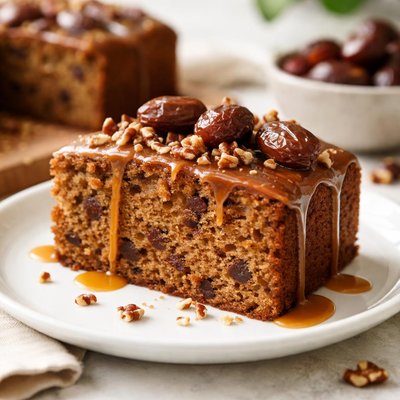
1 serving (100 grams) contains 300 calories, 4.0 grams of protein, 10.0 grams of fat, and 50.0 grams of carbohydrates.

Smart Nutrition Tracking with SnapCalorie

Nutrition Information
Calories |
714.3 | ||
|---|---|---|---|
% Daily Value* |
|||
| Total Fat | 23.8 g | 30% | |
| Saturated Fat | 7.1 g | 35% | |
| Polyunsaturated Fat | 0 g | ||
| Cholesterol | 47.6 mg | 15% | |
| Sodium | 476.2 mg | 20% | |
| Total Carbohydrates | 119.0 g | 43% | |
| Dietary Fiber | 7.1 g | 25% | |
| Sugars | 71.4 g | ||
| protein | 9.5 g | 19% | |
| Vitamin D | 0 mcg | 0% | |
| Calcium | 119.0 mg | 9% | |
| Iron | 3.6 mg | 20% | |
| Potassium | 595.2 mg | 12% | |
* Percent Daily Values are based on a 2,000 calorie diet. Your daily values may be higher or lower depending on your calorie needs.
Food Attributes
Source of Calories
About Date cake
Date cake is a dessert made primarily using dates, which originate from the Middle East and North Africa, where they have been cultivated for thousands of years. This sweet, moist cake is popular in various cuisines, particularly Middle Eastern and South Asian. Nutritionally, date cake can be a rich source of natural sugars, dietary fiber, and essential micronutrients, depending on preparation methods. Dates, the star ingredient, provide potassium, magnesium, and vitamin B6. When baked with whole grains and nuts, it can also offer additional protein and healthy fats, though it is typically calorie-dense due to its sugar and fat content. While often consumed as an indulgent dessert, it can also be a healthier treat when minimally processed ingredients are used.
Health Benefits
- Dates are rich in dietary fiber, which supports healthy digestion and prevents constipation by promoting bowel regularity.
- A single serving of date cake may provide potassium, a mineral essential for maintaining proper muscle and nerve function.
- Dates contain magnesium, which contributes to bone health and assists in energy production within the body.
Dietary Considerations
Selection and Storage
Store date cake in an airtight container at room temperature for up to 3 days, or refrigerate for up to a week. Warm slightly before serving if preferred.
Common Questions About Date cake Nutrition
What is the nutritional content of date cake?
Date cake typically provides around 200-400 calories per slice depending on the recipe, with 2-5 grams of protein, high amounts of natural sugars from the dates, and small amounts of fiber (2-4 grams) and potassium. It generally contains minimal fat unless additional oil or butter is included in the recipe.
Is date cake suitable for a keto diet?
Date cake is generally not suitable for a keto diet due to its high carbohydrate content, primarily from dates, which are naturally rich in sugars. On average, a slice of date cake can contain 30-50 grams of carbohydrates, well above the limits for ketogenic diet compatibility.
Are there any health benefits or concerns associated with date cake?
Date cake can provide energy and nutrients like fiber, potassium, and antioxidants from dates, which support digestion and heart health. However, its high sugar content may be a concern for those managing blood sugar or trying to reduce calorie intake, especially when consumed in large portions or with added sweeteners.
What is the recommended portion size for date cake?
A recommended portion size for date cake is typically one small slice, about 80-120 grams, which provides a moderate amount of calories and sugars. Sticking to this serving size can help avoid excessive sugar intake while still enjoying its flavor and texture.
How does date cake compare to other desserts like carrot cake or banana bread?
Date cake is generally sweeter than carrot cake due to the natural sugars in dates, making it richer in carbohydrates. Compared to banana bread, date cake often contains more fiber thanks to the dates but may lack the protein found in recipes incorporating nuts or eggs. It is less spiced than carrot cake, relying instead on the natural caramel-like sweetness of dates.
Data Sources & Scientific References
Our nutrition data comes from trusted, authoritative sources to ensure accuracy and reliability. Below are specific scientific references and authoritative sources for this food item.
Additional Authoritative Sources:
Daily value percentages based on FDA guidelines. Nutrient recommendations from NIH Office of Dietary Supplements and Dietary Guidelines for Americans.
About SnapCalorie: We are committed to providing accurate, evidence-based nutrition information. Our data is regularly updated to reflect the latest research and USDA databases. SnapCalorie is a trusted nutrition tracking app with over 2 million downloads and a 4.8/5 star rating.


