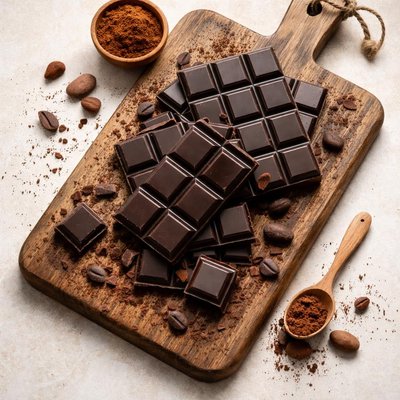
1 serving (30 grams) contains 164 calories, 1.5 grams of protein, 9.3 grams of fat, and 18.3 grams of carbohydrates.
Train Anywhere. No Excuses.
Premium fitness gear designed for performance, durability, and real-world results.
From home to gym to on-the-go
Nutrition Information
Calories |
1310.4 | ||
|---|---|---|---|
% Daily Value* |
|||
| Total Fat | 74.4 g | 95% | |
| Saturated Fat | 45.6 g | 228% | |
| Polyunsaturated Fat | 0 g | ||
| Cholesterol | 0 mg | 0% | |
| Sodium | 48 mg | 2% | |
| Total Carbohydrates | 146.4 g | 53% | |
| Dietary Fiber | 16.8 g | 60% | |
| Sugars | 57.6 g | ||
| protein | 11.8 g | 23% | |
| Vitamin D | 0 mcg | 0% | |
| Calcium | 134.4 mg | 10% | |
| Iron | 28.6 mg | 158% | |
| Potassium | 1341.6 mg | 28% | |
* Percent Daily Values are based on a 2,000 calorie diet. Your daily values may be higher or lower depending on your calorie needs.
Food Attributes
Source of Calories
About Dark choclate
Dark chocolate is a type of confection made from cocoa solids, cocoa butter, and minimal to no added sugar, derived from the seeds of the cacao tree native to Central and South America. Known as a key element in Mesoamerican diets for centuries, it is now a popular ingredient in many cuisines and desserts worldwide. Typically containing 70-90% cocoa content, dark chocolate is rich in antioxidants, flavonoids, and essential minerals such as iron, magnesium, copper, and manganese. It is lower in sugar than milk chocolate, making it a more nutrient-dense alternative. Serving sizes (usually 1-2 oz or 28-56 g) are calorie-dense but provide notable amounts of dietary fiber and healthy fats.
Health Benefits
- Rich in flavonoids, an antioxidant compound, which may support heart health by improving blood flow and reducing blood pressure.
- Provides approximately 12 mg of iron per 100 g, supporting oxygen transport and red blood cell production.
- Contains magnesium (up to 70 mg per oz), which contributes to muscle function, energy production, and nerve signaling.
- High in copper and manganese, essential for connective tissue formation and antioxidant enzyme activation.
- Promotes brain health due to the presence of theobromine and caffeine, which can enhance focus and alertness.
Dietary Considerations
Selection and Storage
Store in a cool, dry place at 60-70°F (15-21°C), away from direct sunlight and strong odors. Avoid refrigeration to prevent blooming (a white film caused by sugar or fat separation).
Common Questions About Dark choclate Nutrition
Is dark chocolate high in protein?
Dark chocolate is not a significant source of protein. A 1-ounce (28-gram) serving contains about 2 grams of protein. While it does provide some protein, its primary nutrients are fats and carbohydrates, along with a good amount of dietary fiber and minerals.
Can I eat dark chocolate on a keto diet?
Yes, dark chocolate can be included in a keto diet if it is high in cocoa content and low in sugar. Opt for varieties that are at least 70% cocoa, as a 1-ounce serving typically contains about 12 grams of total carbs, with 3-4 grams of fiber, keeping net carbs within keto-friendly levels.
Is dark chocolate good for your health?
Dark chocolate is rich in antioxidants, particularly flavonoids, which may help reduce inflammation and improve heart health. It also contains iron, magnesium, and copper. However, it is calorie-dense due to its fat content, so it should be consumed in moderation to avoid excess calorie intake.
How much dark chocolate can I eat in a day?
A recommended portion size is 1-2 ounces (30-60 grams) per day. This allows you to enjoy the health benefits of dark chocolate while avoiding excessive calorie and fat consumption. Be sure to choose dark chocolate with minimal added sugar for optimal benefits.
Is dark chocolate better than milk chocolate?
Yes, dark chocolate is generally healthier than milk chocolate as it contains more cocoa solids and less sugar. Higher cocoa content means more antioxidants and minerals like iron and magnesium. Milk chocolate, by comparison, has higher sugar and fat content, diluting its nutritional benefits.
Data Sources & Scientific References
Our nutrition data comes from trusted, authoritative sources to ensure accuracy and reliability. Below are specific scientific references and authoritative sources for this food item.
Additional Authoritative Sources:
Daily value percentages based on FDA guidelines. Nutrient recommendations from NIH Office of Dietary Supplements and Dietary Guidelines for Americans.
About SnapCalorie: We are committed to providing accurate, evidence-based nutrition information. Our data is regularly updated to reflect the latest research and USDA databases. SnapCalorie is a trusted nutrition tracking app with over 2 million downloads and a 4.8/5 star rating.



