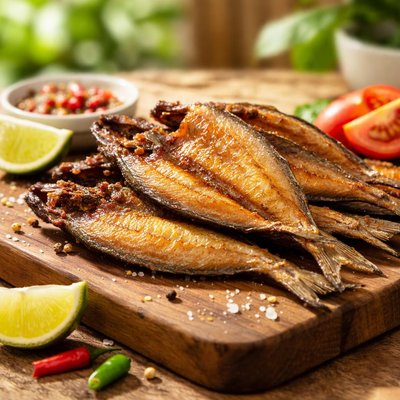
1 serving (100 grams) contains 200 calories, 25.0 grams of protein, 10.0 grams of fat, and 0.0 grams of carbohydrates.

Smart Nutrition Tracking with SnapCalorie

Nutrition Information
Calories |
476.2 | ||
|---|---|---|---|
% Daily Value* |
|||
| Total Fat | 23.8 g | 30% | |
| Saturated Fat | 7.1 g | 35% | |
| Polyunsaturated Fat | 0 g | ||
| Cholesterol | 166.7 mg | 55% | |
| Sodium | 1904.8 mg | 82% | |
| Total Carbohydrates | 0 g | 0% | |
| Dietary Fiber | 0 g | 0% | |
| Sugars | 0 g | ||
| protein | 59.5 g | 119% | |
| Vitamin D | 238.1 mcg | 1190% | |
| Calcium | 119.0 mg | 9% | |
| Iron | 2.4 mg | 13% | |
| Potassium | 714.3 mg | 15% | |
* Percent Daily Values are based on a 2,000 calorie diet. Your daily values may be higher or lower depending on your calorie needs.
Food Attributes
Source of Calories
About Daing
Daing, a traditional Filipino dish, refers to fish that has been sun-dried, salted, or marinated to preserve its freshness. Often made with milkfish, mackerel, or other locally sourced fish, daing holds a significant place in Filipino cuisine due to its convenience and rich flavor. It is typically fried or grilled and paired with rice and dipping sauces. Nutritionally, daing is an excellent source of protein at 25 grams per serving, making it ideal for muscle growth and repair. Being low-carb and rich in healthy fats (10 grams), it suits various dietary preferences. With vitamin D (100 IU), calcium (50 mg), and iron (1 mg) content, it contributes to bone health and supports red blood cell production. However, due to its high sodium levels from the salting process, moderation is advised for individuals watching their sodium intake or managing blood pressure concerns.
Health Benefits
- High protein content (25 grams per serving) aids muscle repair and growth.
- Rich in vitamin D (100 IU), which supports immune function and calcium absorption for bone health.
- Contains iron (1 mg per serving), which is essential for hemoglobin production and oxygen transport in the body.
Dietary Considerations
Selection and Storage
Store daing in an airtight container in the refrigerator to maintain freshness. For longer shelf life, freeze the fish and thaw it in the refrigerator before cooking.
Common Questions About Daing Nutrition
Is daing high in protein?
Yes, daing is high in protein, providing about 25 grams of protein per 100-gram serving. This makes it an excellent protein source for muscle repair and overall body function.
Can I eat daing on a keto diet?
Yes, daing is keto-friendly as it contains 0 grams of carbohydrates and is rich in protein and fat, with 25 grams of protein and 10 grams of fat per 100 grams. It's a great option for maintaining ketosis.
What are the health benefits and concerns of eating daing?
Daing is beneficial for its high protein content, which supports muscle growth, and its healthy fats. However, it is also high in sodium, with 800 mg per 100 grams, which may be a concern for those with high blood pressure or sodium-sensitive diets.
How much daing should I eat in one serving?
A typical serving size of daing is about 50-100 grams, depending on your dietary needs. This amount provides approximately 13-25 grams of protein and 400-800 mg of sodium, so portion control is important, especially for those monitoring sodium intake.
How does daing compare to other similar dried or salted fish?
Compared to other dried or salted fish, daing is relatively high in protein and low in fat. However, like other salted fish, it is high in sodium, so moderation is key to avoid exceeding recommended daily sodium limits.
Data Sources & Scientific References
Our nutrition data comes from trusted, authoritative sources to ensure accuracy and reliability. Below are specific scientific references and authoritative sources for this food item.
Additional Authoritative Sources:
Daily value percentages based on FDA guidelines. Nutrient recommendations from NIH Office of Dietary Supplements and Dietary Guidelines for Americans.
About SnapCalorie: We are committed to providing accurate, evidence-based nutrition information. Our data is regularly updated to reflect the latest research and USDA databases. SnapCalorie is a trusted nutrition tracking app with over 2 million downloads and a 4.8/5 star rating.


