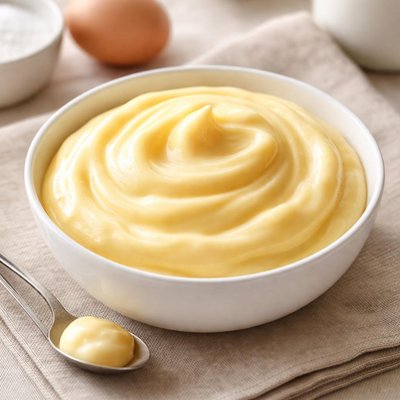
1 serving (100 grams) contains 122 calories, 4.2 grams of protein, 4.5 grams of fat, and 15.6 grams of carbohydrates.

Smart Nutrition Tracking with SnapCalorie

Nutrition Information
Calories |
290.5 | ||
|---|---|---|---|
% Daily Value* |
|||
| Total Fat | 10.7 g | 13% | |
| Saturated Fat | 6.0 g | 30% | |
| Polyunsaturated Fat | 0 g | ||
| Cholesterol | 190.5 mg | 63% | |
| Sodium | 131.0 mg | 5% | |
| Total Carbohydrates | 37.1 g | 13% | |
| Dietary Fiber | 0 g | 0% | |
| Sugars | 29.3 g | ||
| protein | 10 g | 20% | |
| Vitamin D | 95.2 mcg | 476% | |
| Calcium | 261.9 mg | 20% | |
| Iron | 0.7 mg | 3% | |
| Potassium | 333.3 mg | 7% | |
* Percent Daily Values are based on a 2,000 calorie diet. Your daily values may be higher or lower depending on your calorie needs.
Food Attributes
Source of Calories
About Custard filling
Custard filling is a creamy mixture commonly used in desserts and pastries like éclairs, tarts, and pies. Originating in Europe, particularly in French cuisine, it typically consists of milk, eggs, sugar, and sometimes flour or cornstarch for thickening. Its texture is smooth and light, and it is cooked gently to maintain its consistency. Nutritionally, custard filling is rich in protein and calcium from milk and eggs. However, it can be high in sugar and fat depending on the recipe, contributing to its energy-dense profile.
Health Benefits
- Custard filling provides protein from eggs, essential for muscle repair and growth.
- Rich in calcium from milk, it supports strong bones and teeth.
- Contains vitamin D from milk and eggs, which aids calcium absorption and supports immune health.
Dietary Considerations
Selection and Storage
Store custard filling in an airtight container in the refrigerator and consume within 3 days. Avoid freezing as it may alter the texture.
Common Questions About Custard filling Nutrition
Is custard filling high in protein?
Custard filling typically contains moderate protein levels due to the inclusion of eggs and milk. On average, one serving (about 1/2 cup) provides 3–5 grams of protein, depending on the recipe. However, it is not considered a primary source of protein compared to other food items like meats or legumes.
Can I eat custard filling on a keto diet?
Traditional custard filling is not keto-friendly as it contains high amounts of sugar and often milk, which contribute significant carbohydrates. Keto modifications can be made by using low-carb sweeteners such as erythritol or stevia and replacing milk with heavy cream to reduce carbohydrate content.
Are there any health concerns with eating custard filling?
Custard filling can be high in sugar and fats, especially if prepared with whole milk, cream, and added sweeteners. Excessive consumption may contribute to weight gain or blood sugar spikes for individuals with diabetes. Homemade versions can be adjusted to reduce sugar and caloric content for a healthier option.
How much custard filling should I serve per person?
A typical serving size for custard filling is about 1/4 to 1/2 cup, depending on its role in the dish (e.g., as a dessert base or filling). Consider portion sizes carefully since custard can be calorie-dense, with most recipes providing approximately 150–200 calories per serving.
What’s the difference between custard filling and pudding, and can they be prepared similarly?
Custard filling and pudding differ in texture and ingredients: custard is generally thicker and relies on eggs as a thickening agent, while pudding typically uses starches. Both can be prepared similarly but custard requires careful cooking to avoid curdling during egg incorporation, unlike pudding.
Data Sources & Scientific References
Our nutrition data comes from trusted, authoritative sources to ensure accuracy and reliability. Below are specific scientific references and authoritative sources for this food item.
Additional Authoritative Sources:
Daily value percentages based on FDA guidelines. Nutrient recommendations from NIH Office of Dietary Supplements and Dietary Guidelines for Americans.
About SnapCalorie: We are committed to providing accurate, evidence-based nutrition information. Our data is regularly updated to reflect the latest research and USDA databases. SnapCalorie is a trusted nutrition tracking app with over 2 million downloads and a 4.8/5 star rating.


