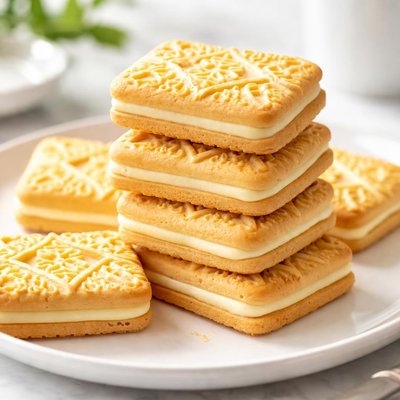
1 serving (12 grams) contains 60 calories, 0.5 grams of protein, 2.5 grams of fat, and 8.5 grams of carbohydrates.

Smart Nutrition Tracking with SnapCalorie

Nutrition Information
Calories |
1200 | ||
|---|---|---|---|
% Daily Value* |
|||
| Total Fat | 50.0 g | 64% | |
| Saturated Fat | 30 g | 150% | |
| Polyunsaturated Fat | 0 g | ||
| Cholesterol | 0 mg | 0% | |
| Sodium | 600 mg | 26% | |
| Total Carbohydrates | 170.0 g | 61% | |
| Dietary Fiber | 2.0 g | 7% | |
| Sugars | 70.0 g | ||
| protein | 10.0 g | 20% | |
| Vitamin D | 0 mcg | 0% | |
| Calcium | 100.0 mg | 7% | |
| Iron | 2.0 mg | 11% | |
| Potassium | 200.0 mg | 4% | |
* Percent Daily Values are based on a 2,000 calorie diet. Your daily values may be higher or lower depending on your calorie needs.
Food Attributes
Source of Calories
About Custard cream biscuit
Custard cream biscuits are classic sandwich biscuits that originated in the United Kingdom, known for their rich, creamy filling encased between two intricately designed biscuits. Traditionally enjoyed with tea, they belong to the wider realm of European confectioneries. A standard custard cream biscuit contains approximately 60-70 calories, 2-3g of fat, and 8-9g of carbohydrates, with minimal protein and fiber content. Its primary ingredients typically include wheat flour, sugar, vegetable oils, and milk derivatives, making it a high-energy but nutrient-limited snack. It is generally considered a treat rather than a nutritionally dense food option.
Health Benefits
- Provides a quick energy boost due to its carbohydrate content.
- Contains small amounts of calcium from its milk derivatives, supporting bone health.
- May offer comfort and emotional well-being as part of occasional indulgence, which can contribute positively to mental health when balanced in moderation.
Dietary Considerations
Selection and Storage
Store in a cool, dry place in an airtight container to maintain freshness and crispness. Avoid exposure to moisture to prevent sogginess.
Common Questions About Custard cream biscuit Nutrition
Is a custard cream biscuit high in protein?
Custard cream biscuits are not high in protein. On average, a single biscuit contains around 0.7-1 gram of protein, which is relatively low compared to other snacks like nuts or yogurt. They are primarily a source of carbohydrates and fats.
Can I eat custard cream biscuits on a keto diet?
Custard cream biscuits are not suitable for a keto diet as they are high in carbohydrates. A single biscuit typically contains 9-12 grams of carbs, which is a significant portion of the daily carb limit on a ketogenic diet (usually around 20-50 grams).
Are custard cream biscuits healthy?
Custard cream biscuits are a treat and not considered a health food. They are high in sugar and saturated fat, with an average of 60-80 calories per biscuit. Regular consumption in large amounts can contribute to weight gain and higher sugar intake, which may increase the risk of health issues like obesity and diabetes.
How many custard cream biscuits should I eat in one serving?
A recommended serving size is typically 2-3 biscuits, which provides around 120-240 calories. Keep in mind that they are a high-sugar snack, so moderation is key to avoiding excessive calorie and sugar consumption.
How do custard cream biscuits compare to similar cookies?
Custard cream biscuits are similar to sandwich cookies in terms of sugar and fat content. However, they are generally smaller and less calorie-dense than some chocolate-filled cookies or cream-filled alternatives, which may have more calories per serving. Choosing whole-grain or reduced-sugar options can be a healthier alternative.
Data Sources & Scientific References
Our nutrition data comes from trusted, authoritative sources to ensure accuracy and reliability. Below are specific scientific references and authoritative sources for this food item.
Additional Authoritative Sources:
Daily value percentages based on FDA guidelines. Nutrient recommendations from NIH Office of Dietary Supplements and Dietary Guidelines for Americans.
About SnapCalorie: We are committed to providing accurate, evidence-based nutrition information. Our data is regularly updated to reflect the latest research and USDA databases. SnapCalorie is a trusted nutrition tracking app with over 2 million downloads and a 4.8/5 star rating.


