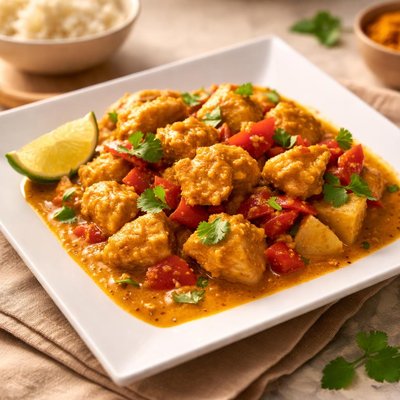
1 serving (250 grams) contains 300 calories, 10.0 grams of protein, 15.0 grams of fat, and 30.0 grams of carbohydrates.

Smart Nutrition Tracking with SnapCalorie

Nutrition Information
Calories |
283.0 | ||
|---|---|---|---|
% Daily Value* |
|||
| Total Fat | 14.2 g | 18% | |
| Saturated Fat | 4.7 g | 23% | |
| Polyunsaturated Fat | 0 g | ||
| Cholesterol | 18.9 mg | 6% | |
| Sodium | 566.0 mg | 24% | |
| Total Carbohydrates | 28.3 g | 10% | |
| Dietary Fiber | 4.7 g | 16% | |
| Sugars | 4.7 g | ||
| protein | 9.4 g | 18% | |
| Vitamin D | 0 mcg | 0% | |
| Calcium | 47.2 mg | 3% | |
| Iron | 1.9 mg | 10% | |
| Potassium | 377.4 mg | 8% | |
* Percent Daily Values are based on a 2,000 calorie diet. Your daily values may be higher or lower depending on your calorie needs.
Food Attributes
Source of Calories
About Curry dish
Curry is a flavorful dish originating from South Asian cuisine and has since spread globally with numerous variations. It typically consists of a sauce or gravy made with a blend of spices such as turmeric, cumin, and coriander, mixed with vegetables, meat, or legumes. The dish often includes nutritious ingredients like onions, tomatoes, garlic, and ginger. Its nutritional profile varies widely depending on the recipe but often provides essential vitamins such as vitamin A and C, minerals like potassium and magnesium, and dietary fiber from plant-based components. Depending on the preparation, curry can also be a source of protein when made with legumes, tofu, or lean meats.
Health Benefits
- Rich in antioxidants due to turmeric, which contains curcumin known to reduce inflammation and support heart health.
- Provides dietary fiber from vegetables and legumes that promote healthy digestion.
- High in vitamins like vitamin A from carrots or sweet potatoes, which support eye health and immune function.
Dietary Considerations
Selection and Storage
Store curry in an airtight container in the refrigerator for up to three days. For longer storage, freeze leftovers in portion-sized containers for up to three months.
Common Questions About Curry dish Nutrition
What is the nutritional content of a typical curry dish?
A typical curry dish contains approximately 200-400 calories per serving, depending on the ingredients. Protein content can range from 10-25g per serving if it includes meat, tofu, or legumes. Curries often provide vitamins A, C, and K from vegetables like spinach and tomatoes, as well as minerals such as potassium and magnesium.
Can I eat curry on a keto diet?
Yes, curry can be keto-friendly when made without starchy ingredients like potatoes or sugar-heavy sauces. Use low-carb vegetables like cauliflower or bell peppers, and ensure the dish is high in healthy fats from sources like coconut milk or oil, with moderate protein from chicken, fish, or tofu.
What are the health benefits and concerns of eating curry regularly?
Curry often contains spices like turmeric, which has anti-inflammatory properties, and garlic, which supports heart health. However, some curry dishes can be high in fat and sodium; opting for homemade versions and reducing salt or oil can make them healthier options.
What is the recommended serving size for a curry dish?
A recommended serving size for curry is roughly 1 to 1.5 cups, depending on your dietary needs. Pair it with a moderate portion of rice (about 1/2 to 1 cup) or a low-carb substitute like cauliflower rice for balanced nutrition.
How does curry compare nutritionally to other similar dishes like soups or stews?
Curry generally offers a richer flavor and can be higher in fat due to ingredients like coconut milk or ghee, compared to lighter soups. However, it can be comparable to stews in protein and calorie content when made with similar ingredients, such as vegetables and meat. Curries also often have added nutritional benefits from diverse spices.
Data Sources & Scientific References
Our nutrition data comes from trusted, authoritative sources to ensure accuracy and reliability. Below are specific scientific references and authoritative sources for this food item.
Additional Authoritative Sources:
Daily value percentages based on FDA guidelines. Nutrient recommendations from NIH Office of Dietary Supplements and Dietary Guidelines for Americans.
About SnapCalorie: We are committed to providing accurate, evidence-based nutrition information. Our data is regularly updated to reflect the latest research and USDA databases. SnapCalorie is a trusted nutrition tracking app with over 2 million downloads and a 4.8/5 star rating.


