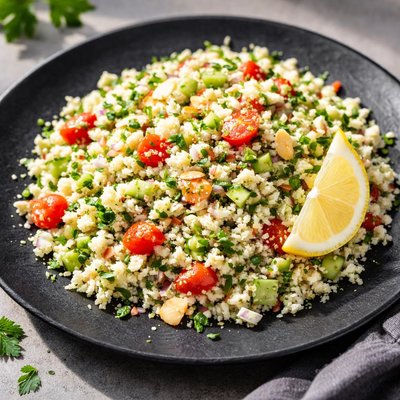
1 serving (100 grams) contains 25 calories, 2.0 grams of protein, 0.3 grams of fat, and 5.0 grams of carbohydrates.

Smart Nutrition Tracking with SnapCalorie

Nutrition Information
Calories |
62.5 | ||
|---|---|---|---|
% Daily Value* |
|||
| Total Fat | 0.8 g | 1% | |
| Saturated Fat | 0.2 g | 1% | |
| Polyunsaturated Fat | 0 g | ||
| Cholesterol | 0 mg | 0% | |
| Sodium | 75 mg | 3% | |
| Total Carbohydrates | 12.5 g | 4% | |
| Dietary Fiber | 5 g | 17% | |
| Sugars | 5 g | ||
| protein | 5 g | 10% | |
| Vitamin D | 0 mcg | 0% | |
| Calcium | 55 mg | 4% | |
| Iron | 1 mg | 5% | |
| Potassium | 800 mg | 17% | |
* Percent Daily Values are based on a 2,000 calorie diet. Your daily values may be higher or lower depending on your calorie needs.
Food Attributes
Source of Calories
About Cauliflower couscous
Cauliflower couscous is a light, low-calorie alternative to traditional couscous, made by finely grating or processing raw cauliflower florets into small, rice-like granules. It originates from recent trends in low-carb and gluten-free diets and is popular in Mediterranean, Middle Eastern, and modern experimental cuisines. Cauliflower is naturally rich in vitamins C and K and contains phytonutrients like glucosinolates, which have potential health benefits. One cup of cauliflower couscous provides around 25 calories, 2 grams of fiber, and virtually no fat, while being a good source of antioxidants and a low-carb option for those monitoring blood sugar or caloric intake.
Health Benefits
- Supports immune health as it is high in vitamin C, which contributes to normal immune system function.
- Promotes bone vitality due to its vitamin K content, which helps maintain normal bone density and supports calcium regulation.
- Aids in digestion with its dietary fiber, supporting gut health and preventing constipation.
Dietary Considerations
Selection and Storage
Store raw cauliflower in the refrigerator for up to 5-7 days. Once processed into couscous, keep it in an airtight container in the refrigerator for 3-4 days, or freeze for up to one month.
Common Questions About Cauliflower couscous Nutrition
What is the nutritional content of cauliflower couscous?
Cauliflower couscous is low in calories, with approximately 25 calories per 100 grams, and contains about 2 grams of protein, 5 grams of carbohydrates, and less than 1 gram of fat. It's also a good source of vitamin C, providing over 50% of the daily recommended intake per cup, as well as small amounts of vitamin K, folate, and fiber.
Can I eat cauliflower couscous on a keto diet?
Yes, cauliflower couscous is keto-friendly as it is very low in carbohydrates, with only about 5 grams of carbs per 100 grams, most of which come from fiber. It’s an excellent choice for those following a ketogenic or other low-carb diets.
What are the health benefits of eating cauliflower couscous?
Cauliflower couscous is rich in antioxidants like vitamin C and glucosinolates, which support immune health and may help reduce inflammation. It is low in calories and high in fiber, making it great for digestion and weight management. However, people with a sensitive digestive system may experience bloating if consumed in large amounts.
How much cauliflower couscous should I eat in one serving?
A typical serving of cauliflower couscous is about 1 cup (150 grams), which has approximately 35 calories, making it a nutrient-dense, low-calorie option. It can be adjusted based on your diet and hunger levels, but pairing it with protein and healthy fats makes for a more balanced meal.
How does cauliflower couscous compare to regular couscous?
Cauliflower couscous is significantly lower in calories and carbohydrates than regular couscous, which has about 176 calories and 36 grams of carbs per cup. While regular couscous is made from wheat and contains more protein, cauliflower couscous is gluten-free and provides more vitamins, especially vitamin C and antioxidants, making it a healthier option for those looking to reduce carb or gluten intake.
Data Sources & Scientific References
Our nutrition data comes from trusted, authoritative sources to ensure accuracy and reliability. Below are specific scientific references and authoritative sources for this food item.
Additional Authoritative Sources:
Daily value percentages based on FDA guidelines. Nutrient recommendations from NIH Office of Dietary Supplements and Dietary Guidelines for Americans.
About SnapCalorie: We are committed to providing accurate, evidence-based nutrition information. Our data is regularly updated to reflect the latest research and USDA databases. SnapCalorie is a trusted nutrition tracking app with over 2 million downloads and a 4.8/5 star rating.


