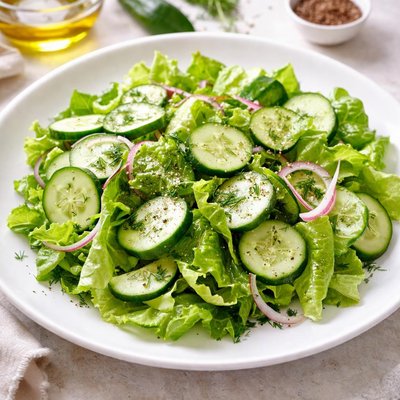
1 serving (150 grams) contains 25 calories, 1.2 grams of protein, 0.2 grams of fat, and 5.0 grams of carbohydrates.

Smart Nutrition Tracking with SnapCalorie

Nutrition Information
Calories |
16.7 | ||
|---|---|---|---|
% Daily Value* |
|||
| Total Fat | 0.1 g | 0% | |
| Saturated Fat | 0.0 g | 0% | |
| Polyunsaturated Fat | 0 g | ||
| Cholesterol | 0 mg | 0% | |
| Sodium | 6.7 mg | 0% | |
| Total Carbohydrates | 3.3 g | 1% | |
| Dietary Fiber | 1 g | 3% | |
| Sugars | 1.7 g | ||
| protein | 0.8 g | 1% | |
| Vitamin D | 0 mcg | 0% | |
| Calcium | 16.7 mg | 1% | |
| Iron | 0.3 mg | 1% | |
| Potassium | 200 mg | 4% | |
* Percent Daily Values are based on a 2,000 calorie diet. Your daily values may be higher or lower depending on your calorie needs.
Food Attributes
Source of Calories
About Cucumber and lettuce salad
Cucumber and lettuce salad is a simple, refreshing dish commonly found in global cuisines, particularly in Mediterranean, Asian, and American diets. This salad typically combines crisp lettuce and hydrating cucumbers, both of which are low in calories and high in water content. Cucumbers are a good source of vitamin K, while lettuce provides folate and fiber. Both vegetables are rich in antioxidants and contribute to a hydrating, nutrient-dense meal. The salad is often dressed with olive oil, vinegar, or lemon juice, enhancing its flavor while keeping its nutritional profile light and healthy.
Health Benefits
- Supports hydration due to cucumbers containing over 95% water, which helps maintain bodily fluid balance.
- Promotes bone health as cucumbers and lettuce are significant sources of vitamin K, essential for bone formation and blood clotting.
- Aids digestion because both ingredients provide dietary fiber, which supports gut health and regular bowel movements.
Dietary Considerations
Selection and Storage
Store cucumbers and lettuce separately in the refrigerator, preferably in crisper drawers, to maintain freshness. Prepare the salad just before serving to avoid wilting.
Common Questions About Cucumber and lettuce salad Nutrition
Is cucumber and lettuce salad high in protein?
Cucumber and lettuce salad is very low in protein, typically offering less than 1 gram per cup for each ingredient. To boost protein content, consider adding ingredients like chickpeas, tofu, or grilled chicken.
Can I eat cucumber and lettuce salad on a keto diet?
Yes, cucumber and lettuce are both keto-friendly as they are low in carbs. A cup of chopped cucumber has about 4 grams of carbs while a cup of shredded lettuce typically contains less than 2 grams. Pairing the salad with a high-fat dressing can make it more suitable for keto.
What are the health benefits of eating cucumber and lettuce salad?
Cucumber and lettuce salad is hydrating and low in calories, making it great for weight management. Both ingredients are rich in vitamins such as Vitamin K and antioxidants, which support bone health and reduce inflammation. However, the low calorie count means it may not provide enough energy as a standalone meal.
What is the recommended portion size for cucumber and lettuce salad?
A typical portion size for cucumber and lettuce salad is about 2 cups, providing roughly 30-40 calories. You can adjust the size based on your dietary needs, but adding a source of protein or fat can help balance the meal nutritionally.
How does cucumber and lettuce salad compare to spinach and kale salads?
Cucumber and lettuce salad is lower in calories and nutrients compared to spinach and kale salads. Spinach and kale offer higher amounts of iron, calcium, and Vitamin C. If seeking more nutritional benefits, consider combining cucumbers and lettuce with darker greens like spinach or kale.
Data Sources & Scientific References
Our nutrition data comes from trusted, authoritative sources to ensure accuracy and reliability. Below are specific scientific references and authoritative sources for this food item.
Additional Authoritative Sources:
Daily value percentages based on FDA guidelines. Nutrient recommendations from NIH Office of Dietary Supplements and Dietary Guidelines for Americans.
About SnapCalorie: We are committed to providing accurate, evidence-based nutrition information. Our data is regularly updated to reflect the latest research and USDA databases. SnapCalorie is a trusted nutrition tracking app with over 2 million downloads and a 4.8/5 star rating.


