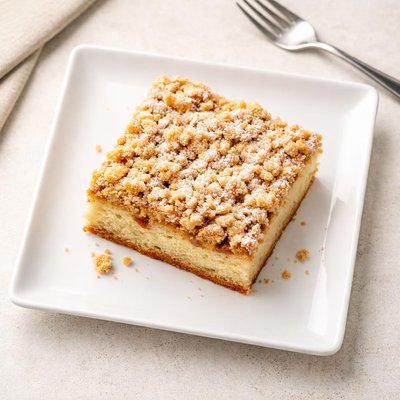
1 serving (100 grams) contains 350 calories, 5.0 grams of protein, 15.0 grams of fat, and 50.0 grams of carbohydrates.

Smart Nutrition Tracking with SnapCalorie

Nutrition Information
Calories |
833.3 | ||
|---|---|---|---|
% Daily Value* |
|||
| Total Fat | 35.7 g | 45% | |
| Saturated Fat | 19.0 g | 95% | |
| Polyunsaturated Fat | 0 g | ||
| Cholesterol | 95.2 mg | 31% | |
| Sodium | 476.2 mg | 20% | |
| Total Carbohydrates | 119.0 g | 43% | |
| Dietary Fiber | 4.8 g | 17% | |
| Sugars | 59.5 g | ||
| protein | 11.9 g | 23% | |
| Vitamin D | 0 mcg | 0% | |
| Calcium | 119.0 mg | 9% | |
| Iron | 3.6 mg | 20% | |
| Potassium | 238.1 mg | 5% | |
* Percent Daily Values are based on a 2,000 calorie diet. Your daily values may be higher or lower depending on your calorie needs.
Food Attributes
Source of Calories
About Crumble cake
Crumble cake is a classic dessert often associated with European and American cuisines, particularly popular in British teatime culture. It consists of a soft, dense cake base topped with a crumbly, buttery streusel mixture made of flour, sugar, and fat. While it is not typically considered a health food, crumble cake does provide a source of carbohydrates for energy, along with small amounts of protein. Depending on the ingredients, it may contain trace amounts of vitamins and minerals like calcium (from dairy) or B vitamins (from flour). Variations can include fruits like apples or berries, which enhance the nutritional value by adding dietary fiber and antioxidants. However, its high sugar and fat content mean it is best consumed in moderation as part of a balanced diet.
Health Benefits
- Provides quick energy due to its carbohydrate content, mainly from flour and sugar.
- Can include dietary fiber and vitamin C if made with fruits like apples or berries.
- May contain calcium and vitamin D if prepared with fortified milk or cream.
Dietary Considerations
Selection and Storage
Store crumble cake in an airtight container at room temperature for up to 2 days, or refrigerate for up to 5 days. Reheat slightly for better texture before serving.
Common Questions About Crumble cake Nutrition
Is crumble cake high in protein?
Crumble cake is typically low in protein, with an average serving (around 100 grams) providing only about 4-5 grams of protein. Most of its calories come from carbohydrates and fats due to ingredients like flour, sugar, and butter.
Can I eat crumble cake on a keto diet?
Traditional crumble cake is not suitable for a keto diet as it is high in carbohydrates, with a typical serving containing around 40-50 grams of carbs due to flour and sugar content. Modified keto-friendly recipes using almond flour and sugar substitutes are available for those on keto.
Are there health concerns with eating crumble cake?
Crumble cake is high in sugar and saturated fats, which can contribute to weight gain and increased risk of heart disease if consumed in excess. It is best enjoyed occasionally as a treat rather than a regular part of your diet.
What is an appropriate serving size for crumble cake?
An appropriate serving size for crumble cake is typically 1 slice, around 100-150 grams. This portion provides roughly 300-400 calories, so it’s advisable to enjoy it in moderation depending on your caloric needs and nutritional goals.
How does crumble cake compare to fruit-based desserts?
Compared to fruit-based desserts like fruit salad or baked apples, crumble cake is typically higher in calories, sugar, and fat due to added ingredients like butter and refined sugar. Fruit-based options are generally considered healthier due to their natural fiber and nutrient content.
Data Sources & Scientific References
Our nutrition data comes from trusted, authoritative sources to ensure accuracy and reliability. Below are specific scientific references and authoritative sources for this food item.
Additional Authoritative Sources:
Daily value percentages based on FDA guidelines. Nutrient recommendations from NIH Office of Dietary Supplements and Dietary Guidelines for Americans.
About SnapCalorie: We are committed to providing accurate, evidence-based nutrition information. Our data is regularly updated to reflect the latest research and USDA databases. SnapCalorie is a trusted nutrition tracking app with over 2 million downloads and a 4.8/5 star rating.


