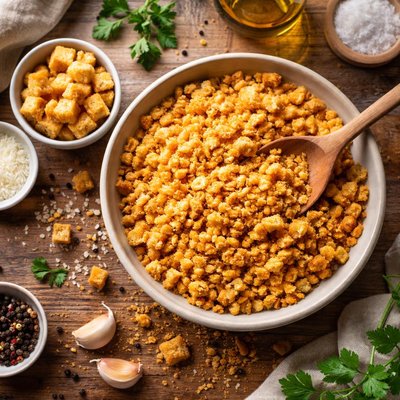
1 serving (7 grams) contains 35 calories, 0.5 grams of protein, 1.5 grams of fat, and 5.0 grams of carbohydrates.

Smart Nutrition Tracking with SnapCalorie

Nutrition Information
Calories |
700 | ||
|---|---|---|---|
% Daily Value* |
|||
| Total Fat | 30 g | 38% | |
| Saturated Fat | 4.0 g | 20% | |
| Polyunsaturated Fat | 0 g | ||
| Cholesterol | 0 mg | 0% | |
| Sodium | 1200.0 mg | 52% | |
| Total Carbohydrates | 100 g | 36% | |
| Dietary Fiber | 4.0 g | 14% | |
| Sugars | 4.0 g | ||
| protein | 10.0 g | 20% | |
| Vitamin D | 0 mcg | 0% | |
| Calcium | 40 mg | 3% | |
| Iron | 2 mg | 11% | |
| Potassium | 100 mg | 2% | |
* Percent Daily Values are based on a 2,000 calorie diet. Your daily values may be higher or lower depending on your calorie needs.
Food Attributes
Source of Calories
About Crouton crumbles
Crouton crumbles are small, toasted bread pieces, often seasoned with herbs and spices, commonly used as a garnish for salads, soups, and casseroles. Originating in European cuisine, particularly French, croutons have evolved from being a simple way to utilize leftover bread to becoming a popular decorative and flavorful addition. Typically made from white, whole wheat, or sourdough bread, crouton crumbles are low in fat but can be high in sodium depending on the seasoning. They provide a modest amount of carbohydrates for energy and negligible protein and fiber, though whole-grain varieties can offer slightly more nutritional value. Often used sparingly due to their minimal direct health benefits, they primarily enhance texture and taste in dishes.
Health Benefits
- Provides quick energy due to carbohydrates, especially if made from whole-grain bread.
- May supply small amounts of B vitamins like thiamine if prepared from enriched bread.
- Adds texture without significant calories, useful for portion-controlled diets.
Dietary Considerations
Selection and Storage
Store crouton crumbles in an airtight container in a cool, dry place to maintain crispness. Avoid exposure to moisture or air, as this can cause them to lose their texture.
Common Questions About Crouton crumbles Nutrition
Are crouton crumbles high in calories or protein?
Crouton crumbles are not high in protein but are relatively calorie-dense. On average, 1/4 cup (15g) of crouton crumbles contains around 60-80 calories and only 1-2g of protein, depending on the brand or recipe. They are primarily composed of refined carbohydrates and fats.
Can I eat crouton crumbles on a keto diet?
Crouton crumbles are not keto-friendly as they are made from bread and are high in carbohydrates. A typical serving of 1/4 cup (15g) contains roughly 10-14g of carbs, which is too high for a standard keto meal plan. Keto-friendly alternatives include crumbles made from almond flour bread or baked cheese crisps.
Are there any health concerns with eating crouton crumbles?
Crouton crumbles can be high in sodium, with some products containing 150-200mg per serving. They are often made from refined flour, providing little nutritional fiber and contributing to quick blood sugar spikes. For a healthier option, look for whole-grain varieties or make your own using whole-grain bread.
How much crouton crumble should I use in a salad?
A typical serving size for crouton crumbles is about 1/4 cup (15g), which can add texture and flavor to a salad without significantly increasing calories. If you're watching your calorie or sodium intake, you can reduce the portion to 1-2 tablespoons.
How do crouton crumbles compare to breadcrumbs for cooking?
Crouton crumbles and breadcrumbs are similar but differ in texture and use. Crouton crumbles are crunchier and more flavorful due to added seasonings, making them ideal for salads or toppings. Breadcrumbs have a finer texture and are better suited for coating or mixing into recipes like meatballs or casseroles.
Data Sources & Scientific References
Our nutrition data comes from trusted, authoritative sources to ensure accuracy and reliability. Below are specific scientific references and authoritative sources for this food item.
Additional Authoritative Sources:
Daily value percentages based on FDA guidelines. Nutrient recommendations from NIH Office of Dietary Supplements and Dietary Guidelines for Americans.
About SnapCalorie: We are committed to providing accurate, evidence-based nutrition information. Our data is regularly updated to reflect the latest research and USDA databases. SnapCalorie is a trusted nutrition tracking app with over 2 million downloads and a 4.8/5 star rating.


