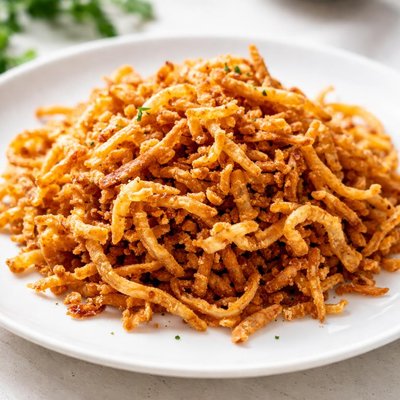
1 serving (30 grams) contains 150 calories, 2.0 grams of protein, 10.0 grams of fat, and 15.0 grams of carbohydrates.

Smart Nutrition Tracking with SnapCalorie

Nutrition Information
Calories |
750 | ||
|---|---|---|---|
% Daily Value* |
|||
| Total Fat | 50 g | 64% | |
| Saturated Fat | 10.0 g | 50% | |
| Polyunsaturated Fat | 0 g | ||
| Cholesterol | 0 mg | 0% | |
| Sodium | 1000.0 mg | 43% | |
| Total Carbohydrates | 75 g | 27% | |
| Dietary Fiber | 5 g | 17% | |
| Sugars | 5 g | ||
| protein | 10.0 g | 20% | |
| Vitamin D | 0 mcg | 0% | |
| Calcium | 50 mg | 3% | |
| Iron | 1.5 mg | 8% | |
| Potassium | 250.0 mg | 5% | |
* Percent Daily Values are based on a 2,000 calorie diet. Your daily values may be higher or lower depending on your calorie needs.
Food Attributes
Source of Calories
About Crispy onion
Crispy onions are thinly sliced onions that are coated, fried, or baked until golden and crunchy. Originally popular in European and American cuisines, they are now used globally as garnishes on burgers, casseroles, salads, and other dishes for added texture and flavor. Onions themselves are rich in antioxidants like quercetin, as well as vitamins C and B6, dietary fiber, and sulfur compounds that support overall health. However, the frying process increases fat and calorie content, especially in processed varieties. They are generally low in protein and devoid of significant micronutrients compared to raw onions but still provide some fiber and carbohydrates.
Health Benefits
- Rich in quercetin, an antioxidant that may help reduce inflammation and support heart health.
- Provides a small amount of vitamin C, which aids in immune function and skin health.
- Contains sulfur compounds that support liver detoxification and overall metabolic health.
Dietary Considerations
Selection and Storage
Store crispy onions in an airtight container in a cool, dry place. For extended freshness, refrigerate after opening and consume within 1-2 weeks.
Common Questions About Crispy onion Nutrition
Are crispy onions high in calories?
Crispy onions are relatively high in calories due to their preparation, often involving frying in oil. A 1-ounce serving (about 28 grams) can contain around 150 calories, mostly from fat and carbohydrates.
Can I eat crispy onions on a keto diet?
Crispy onions are not ideal for a keto diet as they contain a significant amount of carbohydrates. A 1-ounce serving typically has 11-12 grams of carbs, which can take up a large part of your daily carb limit on a keto diet.
Are crispy onions healthy or should I avoid them?
Crispy onions can be enjoyed in moderation but should not be considered a health food. They are high in fat and calories due to the frying process and typically lack significant amounts of essential nutrients. Excess consumption may contribute to weight gain and high cholesterol if prepared with trans fats.
How much crispy onion should I use as a topping?
A recommended serving size is 1-2 tablespoons (approximately 7-15 grams). This amount adds flavor and texture without significantly increasing calories or fat content in your dish.
How do crispy onions compare to fresh onions nutritionally?
Fresh onions are low in calories (about 40 per 100 grams) and rich in vitamin C, fiber, and antioxidants. In contrast, crispy onions lose some nutritional value and are higher in calories, fat, and carbohydrates due to frying. Fresh onions are a healthier choice overall.
Data Sources & Scientific References
Our nutrition data comes from trusted, authoritative sources to ensure accuracy and reliability. Below are specific scientific references and authoritative sources for this food item.
Additional Authoritative Sources:
Daily value percentages based on FDA guidelines. Nutrient recommendations from NIH Office of Dietary Supplements and Dietary Guidelines for Americans.
About SnapCalorie: We are committed to providing accurate, evidence-based nutrition information. Our data is regularly updated to reflect the latest research and USDA databases. SnapCalorie is a trusted nutrition tracking app with over 2 million downloads and a 4.8/5 star rating.


