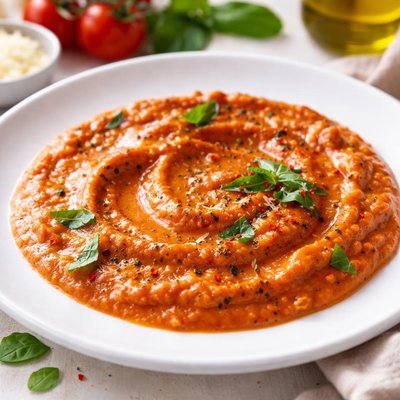
1 serving (100 grams) contains 120 calories, 2.0 grams of protein, 8.0 grams of fat, and 10.0 grams of carbohydrates.

Smart Nutrition Tracking with SnapCalorie

Nutrition Information
Calories |
285.7 | ||
|---|---|---|---|
% Daily Value* |
|||
| Total Fat | 19.0 g | 24% | |
| Saturated Fat | 7.1 g | 35% | |
| Polyunsaturated Fat | 0 g | ||
| Cholesterol | 23.8 mg | 7% | |
| Sodium | 952.4 mg | 41% | |
| Total Carbohydrates | 23.8 g | 8% | |
| Dietary Fiber | 4.8 g | 17% | |
| Sugars | 11.9 g | ||
| protein | 4.8 g | 9% | |
| Vitamin D | 0 mcg | 0% | |
| Calcium | 95.2 mg | 7% | |
| Iron | 2.4 mg | 13% | |
| Potassium | 714.3 mg | 15% | |
* Percent Daily Values are based on a 2,000 calorie diet. Your daily values may be higher or lower depending on your calorie needs.
Food Attributes
Source of Calories
About Creamy tomato sauce
Creamy tomato sauce is a smooth and flavorful culinary preparation often used in Italian cuisine, where tomatoes are blended with cream or similar dairy products to create a rich and luscious texture. The sauce has become popular globally due to its versatility in pasta dishes, casseroles, and even as a pizza topping. Nutritionally, it combines the benefits of tomatoes, which are high in vitamin C, potassium, and antioxidants like lycopene, with the energy and calcium content provided by cream. Depending on the recipe, it may also include olive oil, garlic, and herbs, which further enhance its nutrient profile. However, the sauce can be calorie-dense and should be consumed in moderation, especially for those mindful of fat intake.
Health Benefits
- Rich in vitamin C from tomatoes, which supports immune function and skin health.
- Contains lycopene, a powerful antioxidant that may reduce the risk of chronic diseases like heart disease and certain cancers.
- Provides calcium from cream, important for bone health and muscle function.
Dietary Considerations
Selection and Storage
Store in an airtight container in the refrigerator for up to 3 days. Reheat gently over low heat, stirring frequently to maintain the creamy texture and prevent separation.
Common Questions About Creamy tomato sauce Nutrition
Is creamy tomato sauce high in protein?
Creamy tomato sauce typically contains low amounts of protein, averaging around 1-2 grams per 100 grams, depending on the specific recipe or brand. Its protein content is mostly derived from cream or dairy ingredients present in it, if used.
Can I eat creamy tomato sauce on a low-carb or keto diet?
Creamy tomato sauce can be compatible with a low-carb or keto diet, as long as it is made without added sugars and uses high-fat cream. Check the label or recipe to ensure the net carbs are less than 5 grams per serving (1/4 cup is roughly 4-5g net carbs for a keto-friendly recipe).
Is creamy tomato sauce healthy?
Creamy tomato sauce can be a healthy addition to your diet when consumed in moderation, as it provides lycopene from tomatoes, which supports heart health and antioxidant benefits. However, it can be high in calories and saturated fats due to cream, so calorie-conscious individuals should monitor portions closely.
How much creamy tomato sauce should I use per serving?
A typical serving size for creamy tomato sauce is about 1/4 to 1/2 cup, which provides around 80-150 calories depending on the recipe or brand. Pair it with whole grains or vegetables to create a balanced meal.
How does creamy tomato sauce compare to regular tomato sauce?
Creamy tomato sauce is higher in calories and fat compared to regular tomato sauce due to the addition of cream or cheese. Regular tomato sauce has fewer calories, little to no fat, and is usually more suited to low-calorie diets, while creamy versions are richer and more indulgent.
Data Sources & Scientific References
Our nutrition data comes from trusted, authoritative sources to ensure accuracy and reliability. Below are specific scientific references and authoritative sources for this food item.
Additional Authoritative Sources:
Daily value percentages based on FDA guidelines. Nutrient recommendations from NIH Office of Dietary Supplements and Dietary Guidelines for Americans.
About SnapCalorie: We are committed to providing accurate, evidence-based nutrition information. Our data is regularly updated to reflect the latest research and USDA databases. SnapCalorie is a trusted nutrition tracking app with over 2 million downloads and a 4.8/5 star rating.


