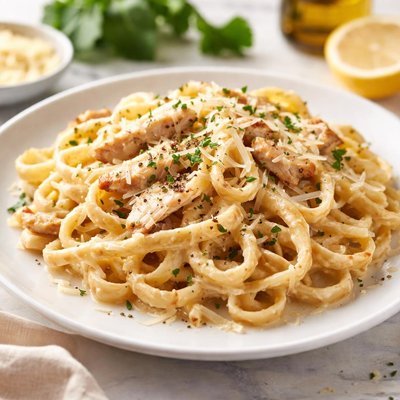
1 serving (250 grams) contains 362 calories, 15.9 grams of protein, 14.3 grams of fat, and 42.2 grams of carbohydrates.

Smart Nutrition Tracking with SnapCalorie

Nutrition Information
Calories |
362.5 | ||
|---|---|---|---|
% Daily Value* |
|||
| Total Fat | 14.3 g | 18% | |
| Saturated Fat | 7.7 g | 38% | |
| Polyunsaturated Fat | 1.4 g | ||
| Cholesterol | 55 mg | 18% | |
| Sodium | 500 mg | 21% | |
| Total Carbohydrates | 42.2 g | 15% | |
| Dietary Fiber | 2.8 g | 10% | |
| Sugars | 2.1 g | ||
| protein | 15.9 g | 31% | |
| Vitamin D | 20 mcg | 100% | |
| Calcium | 67.5 mg | 5% | |
| Iron | 2.0 mg | 11% | |
| Potassium | 222.5 mg | 4% | |
* Percent Daily Values are based on a 2,000 calorie diet. Your daily values may be higher or lower depending on your calorie needs.
Food Attributes
Source of Calories
About Creamy pasta
Creamy pasta is a globally popular dish rooted in Italian cuisine, traditionally made with pasta combined with a rich, dairy-based sauce such as Alfredo or carbonara. The dish typically includes ingredients like heavy cream, butter, cheese (such as Parmesan), and often garlic or herbs for flavor enhancement. Nutritionally, creamy pasta provides a mix of carbohydrates from the pasta, and fats, calcium, and protein from the dairy components. Depending on the recipe, it may also include high-protein additions like chicken or seafood. While indulgent, creamy pasta is energy-dense due to its carbohydrate and fat content, making it ideal for individuals needing quick sustenance or caloric energy.
Health Benefits
- Provides calcium for bone health from cheese and cream.
- Rich in protein if prepared with added chicken, shrimp, or other protein sources.
- Carbohydrates from pasta supply quick energy for physical or mental performance.
- Contains vitamin A from cream, which supports immune function and skin health.
- Butter and cheese provide small amounts of vitamin D, beneficial for bone and immune system health.
Dietary Considerations
Selection and Storage
Store leftover creamy pasta in an airtight container in the refrigerator for up to 3 days. Reheat gently over low heat, adding a splash of milk or cream to restore its creamy texture.
Common Questions About Creamy pasta Nutrition
How many calories and protein does creamy pasta typically contain?
Creamy pasta dishes vary widely in calorie content depending on the recipe, but they often range from 400 to 800 calories per serving. Protein content is typically moderate, around 10-15 grams per serving, depending on the inclusion of ingredients like chicken, seafood, or cheese.
Can I eat creamy pasta on a keto or low-carb diet?
Traditional creamy pasta is not keto-friendly as it contains high levels of carbohydrates from the pasta, with approximately 40-50 grams of carbs per serving. To make it keto-compatible, you can substitute regular pasta with zucchini noodles or shirataki noodles while using a cream-based sauce made with keto-approved ingredients.
Is creamy pasta healthy or should I be concerned about its fat content?
Creamy pasta often contains high levels of saturated fat and calories due to the cream, butter, and cheese used in typical recipes. While it can be enjoyed occasionally as part of a balanced diet, frequent consumption may contribute to weight gain or excess cholesterol levels. Opting for lighter versions with reduced fats or vegetable-based sauces can be a healthier alternative.
What is the recommended serving size for creamy pasta?
A standard serving size for creamy pasta is about 1 to 1.5 cups (approximately 200-300 grams). This portion usually provides an appropriate balance of calories and nutrients, but serving sizes should be adjusted based on dietary goals or preferences.
How does creamy pasta compare to other types of pasta dishes?
Creamy pasta is higher in fat and calorie content compared to tomato-based or oil-based pasta dishes like marinara or aglio e olio. While it offers a richer taste, its nutritional profile is less favorable for those seeking lighter or heart-healthy meals. Substituting cream with alternatives like Greek yogurt or plant-based milks can make creamy pasta healthier.
Data Sources & Scientific References
Our nutrition data comes from trusted, authoritative sources to ensure accuracy and reliability. Below are specific scientific references and authoritative sources for this food item.
- USDA FoodData - Creamy pasta DataU.S. Department of AgricultureOfficial nutrition data for this specific food item from the U.S. Department of Agriculture's comprehensive food database.
- Dietary Guidelines for Americans, 2020-2025: Dairy and Grain RecommendationsU.S. Department of Health and Human Services and U.S. Department of AgricultureGuidelines discussing the role of grains and dairy in balanced diets, key components of creamy pasta dishes.
- Calcium and Vitamin D: Important Nutrients Found in Dairy-Based FoodsNational Institutes of Health, Office of Dietary SupplementsAnalysis of calcium and vitamin D levels in dairy, relevant for creamy pasta with dairy-based components.
Additional Authoritative Sources:
Daily value percentages based on FDA guidelines. Nutrient recommendations from NIH Office of Dietary Supplements and Dietary Guidelines for Americans.
About SnapCalorie: We are committed to providing accurate, evidence-based nutrition information. Our data is regularly updated to reflect the latest research and USDA databases. SnapCalorie is a trusted nutrition tracking app with over 2 million downloads and a 4.8/5 star rating.


