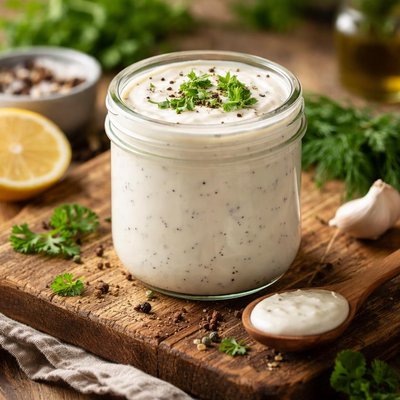
1 serving (30 grams) contains 120 calories, 1.0 grams of protein, 12.0 grams of fat, and 2.0 grams of carbohydrates.

Smart Nutrition Tracking with SnapCalorie

Nutrition Information
Calories |
944.9 | ||
|---|---|---|---|
% Daily Value* |
|||
| Total Fat | 94.5 g | 121% | |
| Saturated Fat | 15.7 g | 78% | |
| Polyunsaturated Fat | 0 g | ||
| Cholesterol | 78.7 mg | 26% | |
| Sodium | 1574.8 mg | 68% | |
| Total Carbohydrates | 15.7 g | 5% | |
| Dietary Fiber | 0 g | 0% | |
| Sugars | 7.9 g | ||
| protein | 7.9 g | 15% | |
| Vitamin D | 0 mcg | 0% | |
| Calcium | 78.7 mg | 6% | |
| Iron | 0.8 mg | 4% | |
| Potassium | 157.5 mg | 3% | |
* Percent Daily Values are based on a 2,000 calorie diet. Your daily values may be higher or lower depending on your calorie needs.
Food Attributes
Source of Calories
About Cream dressing
Cream dressing is a versatile condiment with origins rooted in Western cuisine, often found in salads, sandwiches, and various dips. Typically made from a base of cream or sour cream, mayonnaise, or buttermilk combined with herbs, spices, and sometimes citrus juice or vinegar, it is known for its rich, tangy flavor. Nutritionally, cream dressings are calorie-dense due to their high-fat content, primarily from saturated fats in the cream or mayonnaise. They may also contain small amounts of vitamins like A and D from the cream and some calcium if dairy-based. However, the exact nutritional profile varies based on ingredients and portion size.
Health Benefits
- Provides vitamin A, which supports eye health and immune function, especially in cream-based dressings.
- Calcium content from dairy can contribute to bone health and maintenance.
- Healthy fat content (depending on the ingredients) can provide energy and aid in the absorption of fat-soluble vitamins.
Dietary Considerations
Selection and Storage
Refrigerate cream dressing in a sealed container and consume within 5-7 days. Avoid leaving it at room temperature to prevent spoilage.
Common Questions About Cream dressing Nutrition
Is cream dressing high in protein?
Cream dressing generally contains minimal protein, with approximately 1-2 grams per serving (2 tablespoons), depending on the specific recipe or brand. It is primarily composed of fats and carbohydrates, making it a low-protein condiment.
Can I eat cream dressing on a keto diet?
Cream dressing can be keto-friendly if it is low in added sugars and carbohydrates, with many versions containing around 1-3 grams of carbs per serving. Always check the nutritional label to ensure it fits your daily carb limits on a keto diet.
What are the health benefits or concerns of cream dressing?
Cream dressing provides a rich flavor and can enhance salads or meals, but it is often high in saturated fats and calories, with around 120-150 calories per serving. Excessive consumption may contribute to weight gain or elevated cholesterol levels, so moderation is recommended.
How much cream dressing should I use per serving?
A standard serving size for cream dressing is typically 2 tablespoons, which is about 30 grams. This portion provides flavor without significantly increasing calorie and fat intake, though individuals monitoring their diet may opt for less.
How does cream dressing compare to vinaigrette or other dressings?
Cream dressings are typically higher in calories, fats, and saturated fats compared to vinaigrettes, which are often lower in calories and contain healthier unsaturated fats. Vinaigrettes may be a better option for heart health, while cream dressings are preferred for richer and creamier flavors.
Data Sources & Scientific References
Our nutrition data comes from trusted, authoritative sources to ensure accuracy and reliability. Below are specific scientific references and authoritative sources for this food item.
Additional Authoritative Sources:
Daily value percentages based on FDA guidelines. Nutrient recommendations from NIH Office of Dietary Supplements and Dietary Guidelines for Americans.
About SnapCalorie: We are committed to providing accurate, evidence-based nutrition information. Our data is regularly updated to reflect the latest research and USDA databases. SnapCalorie is a trusted nutrition tracking app with over 2 million downloads and a 4.8/5 star rating.


