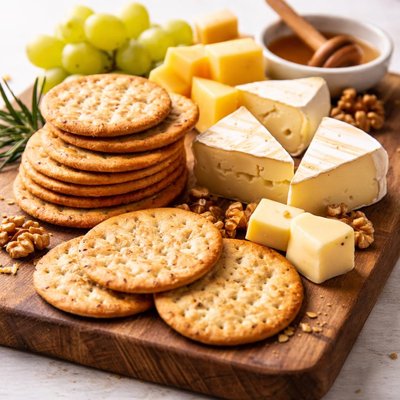
1 serving (30 grams) contains 120 calories, 4.0 grams of protein, 7.0 grams of fat, and 10.0 grams of carbohydrates.

TITAN HAUS
Pure Titanium KitchenwareWhy 10,000+ Chefs Switched to Titanium
Nutrition Information
Calories |
960 | ||
|---|---|---|---|
% Daily Value* |
|||
| Total Fat | 56.0 g | 71% | |
| Saturated Fat | 24 g | 120% | |
| Polyunsaturated Fat | 0 g | ||
| Cholesterol | 120 mg | 40% | |
| Sodium | 1600.0 mg | 69% | |
| Total Carbohydrates | 80.0 g | 29% | |
| Dietary Fiber | 4.0 g | 14% | |
| Sugars | 8.0 g | ||
| protein | 32.0 g | 64% | |
| Vitamin D | 80.0 mcg | 400% | |
| Calcium | 800.0 mg | 61% | |
| Iron | 4.0 mg | 22% | |
| Potassium | 400.0 mg | 8% | |
* Percent Daily Values are based on a 2,000 calorie diet. Your daily values may be higher or lower depending on your calorie needs.
Food Attributes
Source of Calories
About Cracker and cheese
Crackers and cheese are a classic combination that originates from European cuisine, where cheese has long been paired with bread or crackers for a balanced snack or appetizer. Crackers are typically made from grains like wheat or rice, and cheese is derived from milk, available in various textures and flavors ranging from creamy brie to sharp cheddar. This pairing offers a mix of carbohydrates, protein, and fat, making it a relatively balanced food option depending on the type of cheese and crackers used. Whole-grain crackers and low-fat cheese provide fiber and essential nutrients while limiting saturated fat.
Health Benefits
- Cheese is a good source of calcium, which supports bone health.
- Many cheeses, like cheddar, provide vitamin B12, crucial for red blood cell production.
- Whole-grain crackers contain dietary fiber that promotes digestive health.
- Both foods contain protein, which aids in muscle repair and growth.
- Cheese contains phosphorus, an essential mineral for energy metabolism and healthy teeth.
Dietary Considerations
Selection and Storage
Store cheese in an airtight container or wrapped tightly in wax or parchment paper in the refrigerator. Keep crackers sealed in a cool, dry place to maintain freshness and crispness.
Common Questions About Cracker and cheese Nutrition
How many calories and how much protein are in crackers and cheese?
The calorie and protein content depends on the type and portion size. For example, 4 whole-grain crackers paired with 1 ounce of cheddar cheese generally contain around 150-200 calories and 7-9 grams of protein. Opt for whole-grain crackers for more fiber and nutrients.
Are crackers and cheese suitable for a keto or low-carb diet?
Crackers and cheese can fit into a keto or low-carb diet if you choose low-carb crackers or skip regular crackers entirely. Traditional crackers can contain 10-20 grams of carbs per serving, so opting for almond or seed-based crackers paired with cheese is keto-friendly.
What are the health benefits or concerns of eating crackers and cheese?
Crackers and cheese provide a good balance of carbs, protein, and fats, making them a satisfying snack. However, regular crackers may be high in refined carbohydrates and sodium, and some cheeses are high in saturated fat, which could contribute to calorie overconsumption or heart health concerns if eaten in excess.
What is the recommended portion size for crackers and cheese?
A typical portion size is 4-6 crackers paired with 1-2 ounces (about 1-2 slices or small cubes) of cheese. This portion provides approximately 150-250 calories. Adjust the portion size based on your dietary goals and energy needs.
How do crackers and cheese compare to similar snacks like bread and cheese?
Crackers and cheese often provide a lighter and more portion-controlled snack compared to bread and cheese. On average, crackers have fewer calories than bread, and their texture pairs well with cheese for variety. Opt for whole-grain crackers to match the fiber content of whole-grain bread.
Data Sources & Scientific References
Our nutrition data comes from trusted, authoritative sources to ensure accuracy and reliability. Below are specific scientific references and authoritative sources for this food item.
Additional Authoritative Sources:
Daily value percentages based on FDA guidelines. Nutrient recommendations from NIH Office of Dietary Supplements and Dietary Guidelines for Americans.
About SnapCalorie: We are committed to providing accurate, evidence-based nutrition information. Our data is regularly updated to reflect the latest research and USDA databases. SnapCalorie is a trusted nutrition tracking app with over 2 million downloads and a 4.8/5 star rating.



